Who Needs Small Group Reading Instruction, and How Often?

This post may contain affiliate links, and I will earn a commission if you purchase through these links. Please read the disclosure policy for more details.
Picture a 60 minute small group block with five groups on the schedule. After transitions, each group gets about ten minutes with you. The students who need you most get the same ten minutes as the students who are already reading the skill.
I feel like people think that they need to have every kid in small groups, and that’s not the case. Small groups are for catching up the students who are not getting it from whole group instruction.
Below, I’ll walk through which students need a small group and which ones don’t. Then we’ll get into how often and how long your groups should meet.
Where “Every Child, Every Day” Came From
Rotating every student through a small group every day is a guided reading habit. In that model, the class is sorted into leveled groups and the teacher meets with each one, so every child ends up at the table.
When schools moved to the science of reading, a lot of teachers swapped the leveled books for decodables and kept the rotation. The books changed, but the schedule stayed the same.
Timothy Shanahan and Mike Schmoker took this on in a 2025 Education Week piece. They pointed out that splitting a literacy block across four or five groups shrinks the teaching time each student gets. They argued that small groups should be used “sparingly” and “strategically.” You can keep small groups and still take that point about time seriously.
Grab your FREE guide with the 5 tools you need to get started with SOR!
What Whole Group Already Does for Students on Track
If your whole group lesson is explicit, students who are on track are getting what they need there. Explicit instruction means you model the skill first, and then students practice it with you while you give feedback.
Add cumulative review, which means going back to skills from earlier weeks so they don’t fade. Your on level students then get the new skill and the old ones in the same lesson.
That’s why whole group holds grade level. I wrote about this in How to Teach Grade-Level Phonics When Half Your Class Is Below It. You keep whole group moving and use small group to catch up the students who need more.
If you pull an on level student into a group for a skill they are already mastering, they get the lesson twice. Meanwhile, a student who needs that seat waits until tomorrow.
Who Needs a Small Group
These are the students who belong at your table:
- Students who aren’t making progress with this week’s skill in whole group. You taught the sh digraph on Monday. On Wednesday’s dictation, four students write sip for ship. Those four need a small group this week.
- Students below the current skill in your scope and sequence. A second grader who still mixes up short vowel sounds can’t keep up while the class works on vowel teams. They need instruction that starts at the lowest skill they haven’t mastered. If you’re not sure where a student is, Ehri’s Phases: How to Find a Student’s Reading Phase in 5 Minutes walks you through it.
- Students who are accurate but slow. They read ship correctly, but they sound it out every single time. They need more practice to build automaticity, which means reading the word quickly without sounding it out.
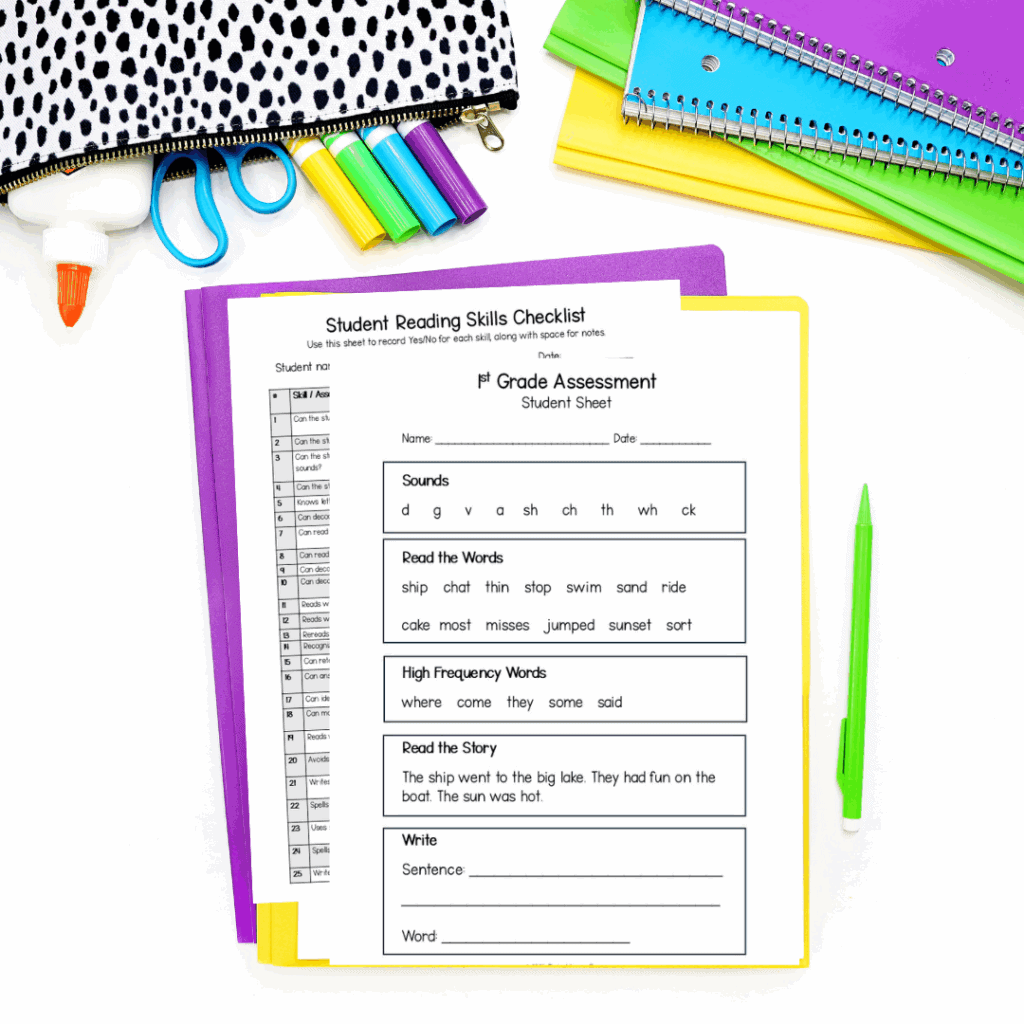
Before I set my groups, I ask one question about each student: did they show this skill in whole group this week? If yes, they practice independently. If not, they’re in my group.
Who Doesn’t Need a Small Group (and What They Do Instead)
If kids are performing as expected or above, they do not need small groups. That includes your advanced readers.
These other kids do need enrichment, but that’s not the same as small group instruction. Enrichment is more challenging practice they can do without you sitting next to them.
The easiest way to set this up is to keep your centers the same and change the content. Use the same 2 or 3 center formats all year, and only the words change. If your word chain center uses CVC words for the class, the students who already have CVC words do the same chain with blends. If your fluency center uses a decodable passage, they get a longer passage and write a response to it.
Because the format stays the same, students don’t spend center time learning new directions. They spend it practicing.

How Often and How Long Should Small Groups Meet?
Plan for 15 to 20 minutes per group, three to five days a week.
The frequency comes from the What Works Clearinghouse practice guide on reading intervention (Gersten et al., 2009). It covers Tier 2, which is extra small group instruction for students who scored below benchmark on a screener, on top of their regular reading block. Those groups typically meet three to five times a week for 20 to 40 minutes. In many schools, classroom small groups are where Tier 2 happens, so this is the closest research we have for classroom groups too. If your school counts your small group as Tier 2, check how many minutes it requires.
No study has pinned down the perfect schedule. A meta-analysis of 72 Tier 2 studies in kindergarten through third grade (Wanzek et al.) found sessions ranging from 10 to 60 minutes. The effects didn’t differ based on the number of intervention hours.
Spacing has stronger evidence behind it. Dunlosky and colleagues (2013) reviewed ten common learning techniques. Distributed practice, which means spreading practice out over time, was one of only two that earned their highest rating. Practice spread across more days sticks better than the same amount crammed into fewer.
So I’d rather see a group four days a week for 15 minutes than twice a week for 30. Students get the skill back in front of them more often, and a 15 minute lesson is easier to keep in your schedule. A standard literacy block gives you 1 to 2 small group slots a day, so short and frequent is also what fits. My literacy block scheduling post shows where those slots go.
Your Groups Should Change
A small group isn’t a placement for the year. When a student masters the skill, they leave the group, and their seat goes to someone who needs it.
Reassess every few weeks, or sooner when you notice a student is ready. This is the R in my READS method: Respond to Data. You can’t decide it ahead of time, because it depends on what your students did this week.
Two tools make this easier to track:
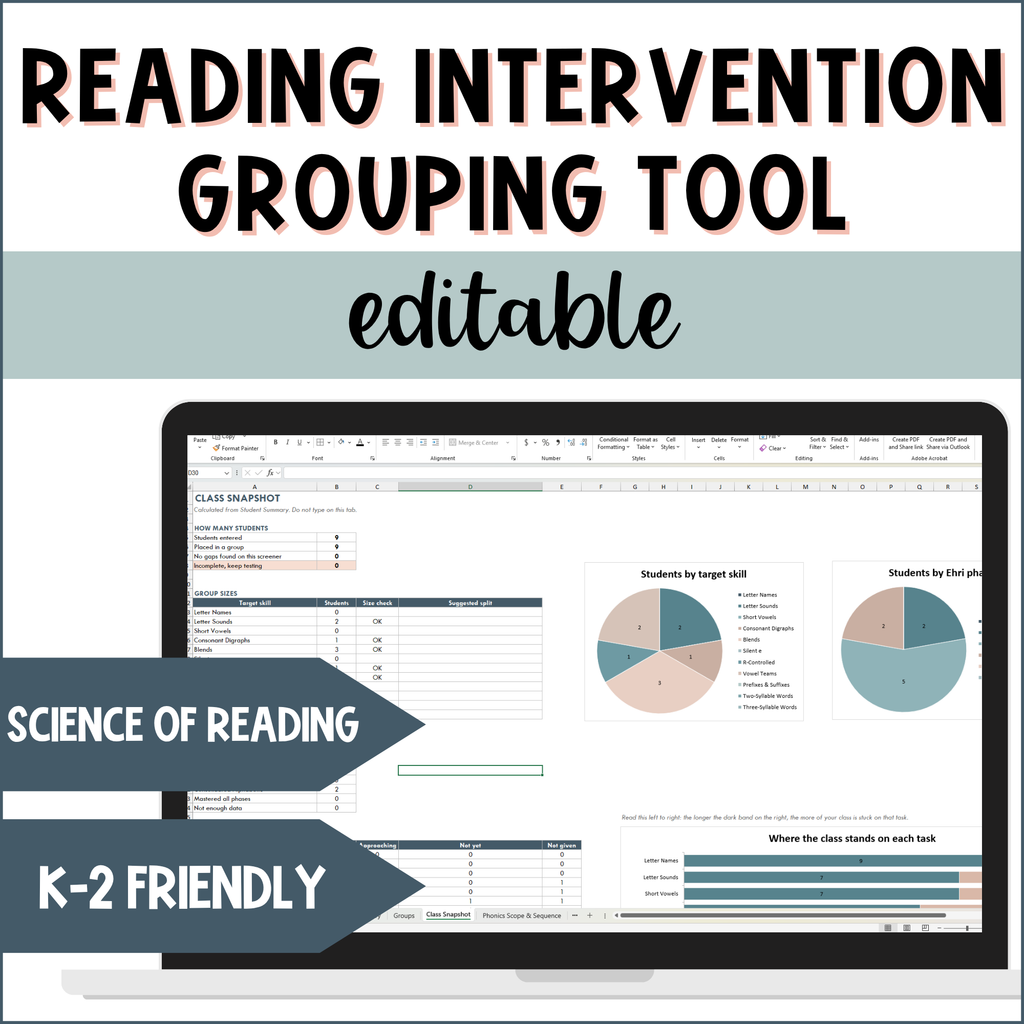
- The Reading Skills Grouping Tool sorts your class into groups from the screening data you collect a few times a year.
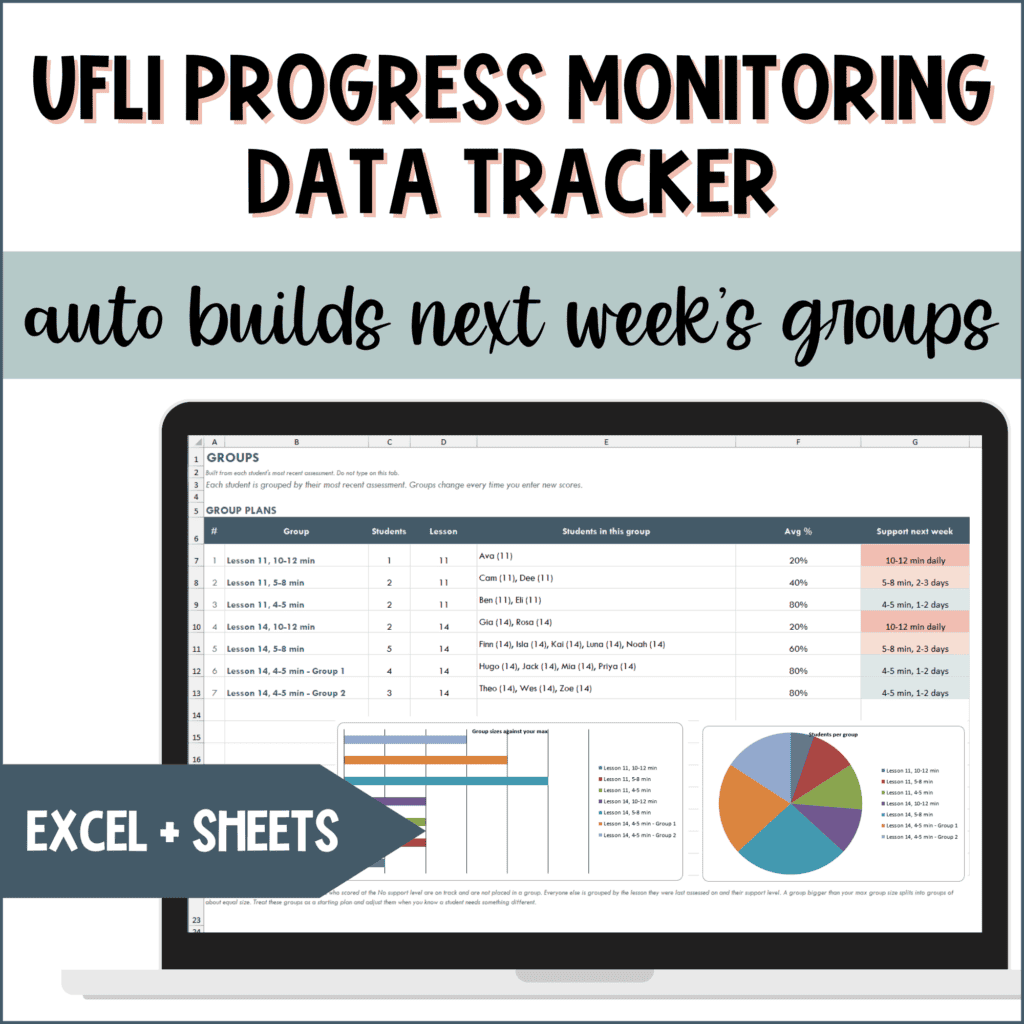
- The UFLI Progress Monitoring Tracker is for weekly tracking, so you can see who’s ready to leave a group (it groups them for you).
For the full process, read How to Use Data to Keep Your Reading Groups on Target. If you’re still grouping by reading level, start with Grouping by Skills, Not Levels.
Try This Before Monday
Write your class list on one page. Next to each name, answer one question: did this student show that they could read and spell week’s words in whole group?
Every yes goes to extension work in centers, and every no goes in your group. Your small group list will probably be shorter than the one you’re running now, and the students on it will get more time with you.
Grab your FREE guide with the 5 tools you need to get started with SOR!