How to Tell If a Science of Reading Product Is Actually Aligned

This post may contain affiliate links, and I will earn a commission if you purchase through these links. Please read the disclosure policy for more details.
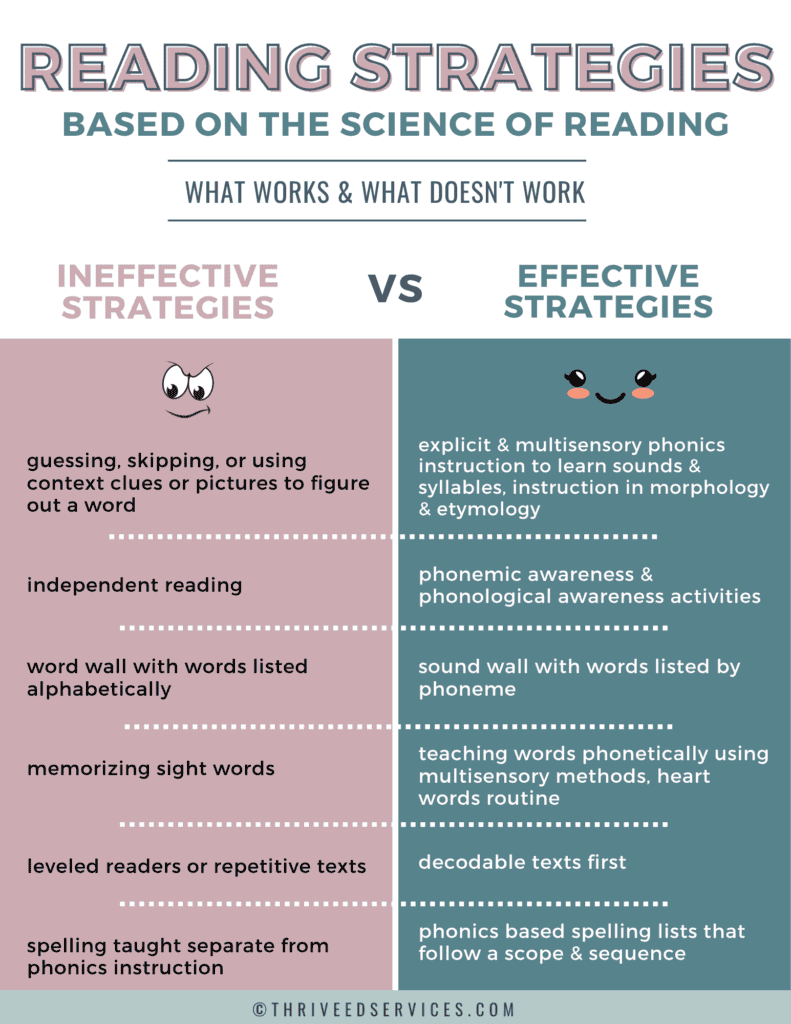
When I see a product labeled “Science of Reading aligned,” my alarm bells go off.
I know that sounds strong. But after looking into countless programs, activity sets, phonics tools, and readers that carry that label, I’ve learned it doesn’t always mean what you think it means.
It’s trending, and everybody is slapping that label on their products right now. A lot of the time, they are not Science of Reading aligned. Just saying it doesn’t make it true.
That’s a big red flag – but it’s not the only one.
If you’ve ever bought a resource that looked great on the cover and fell flat in the classroom, this post is for you. Here’s exactly what to look for before you spend your money or your time.
Red Flag #1: Letter Shape Boxes (Word Coffins)
This one is easy to miss because it looks structured on the surface.
Letter shape boxes – sometimes called word coffins – are outlines that show the shape of a word, with taller boxes for tall letters, smaller boxes for short letters, and descending boxes for letters that drop below the line. Students fill in the word to match the shape.
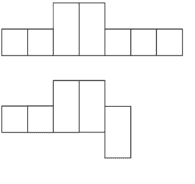
The problem is that this trains students to look at the overall silhouette of a word rather than decoding the individual letters and sounds. That is the opposite of what Science of Reading instruction builds.
Skilled readers do not recognize words by their shape. They recognize them because the brain has mapped the sounds to the letters and stored that connection. Letter shape boxes bypass that process entirely – and worse, they encourage guessing. Many words share the same shape. “Dog” and “boy” look nearly identical in a shape box.
If you see word coffins in a product, that is a red flag.
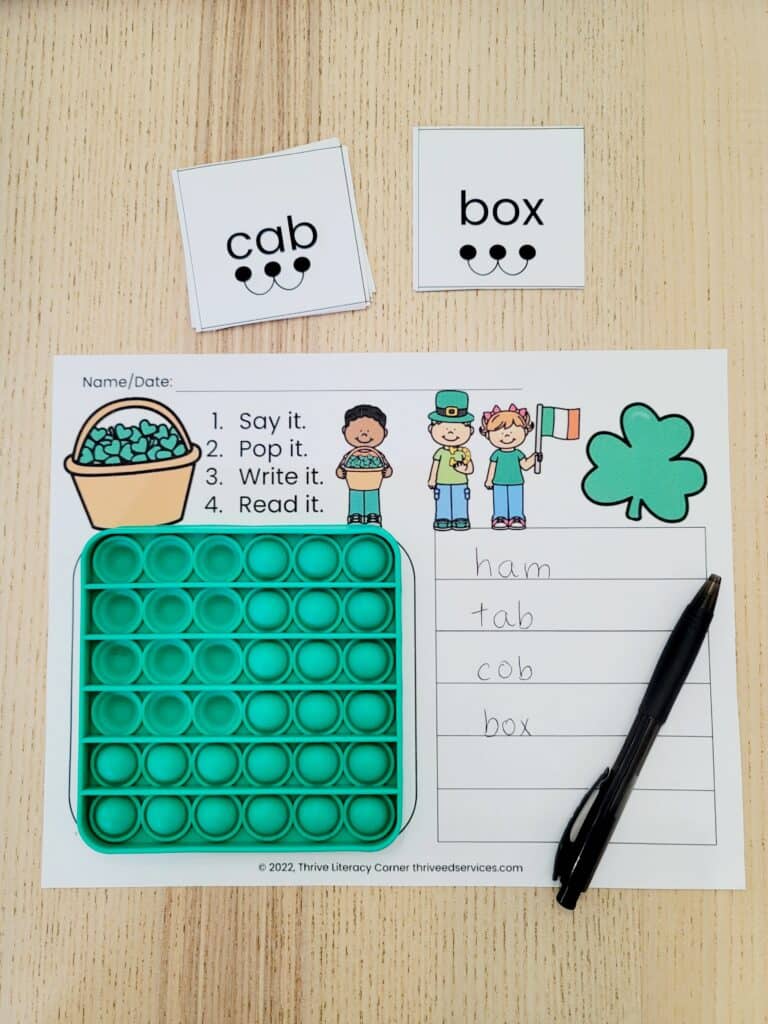
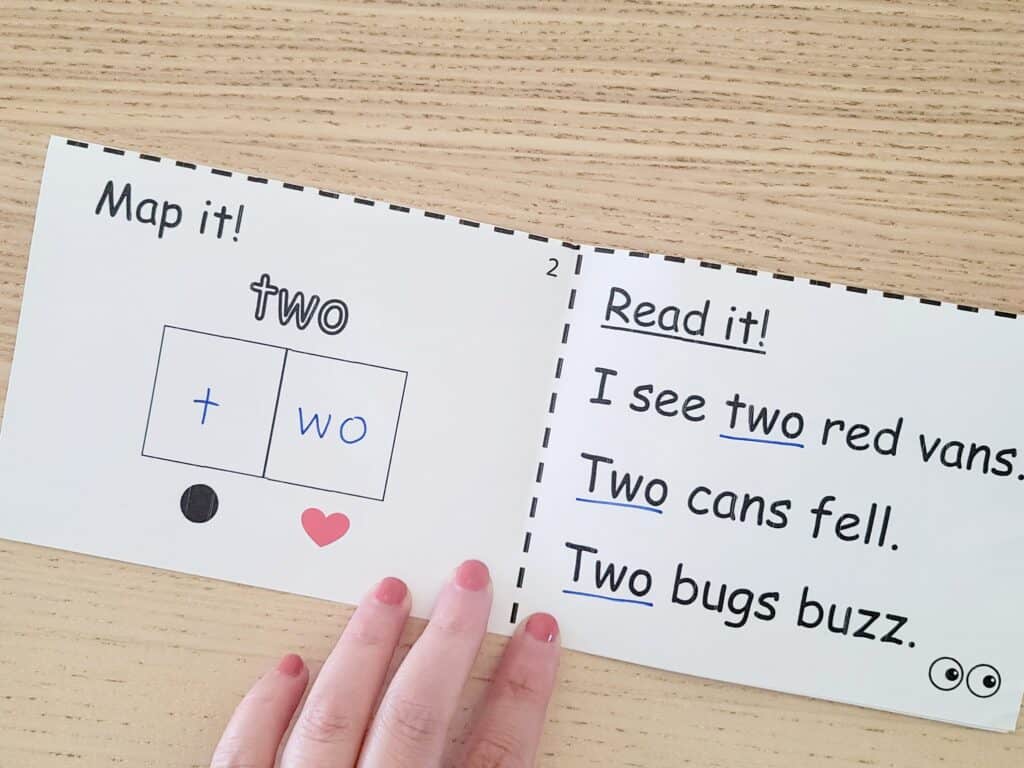
What to look for instead: Elkonin boxes (sound boxes). One box per phoneme, not per letter shape. Students segment the word by sound first, then map the graphemes into the boxes. That’s how orthographic mapping actually works.

Red Flag #2: Inaccurate or Inconsistent Keyword Sounds
Every letter or phonogram in an aligned program should have one clear, accurate keyword – a word that reliably represents the sound that letter makes.
This matters more than it sounds.
If the keyword uses the wrong sound, students practice and internalize the wrong association. That error gets reinforced every time they use it.
Here are two examples I run into often.
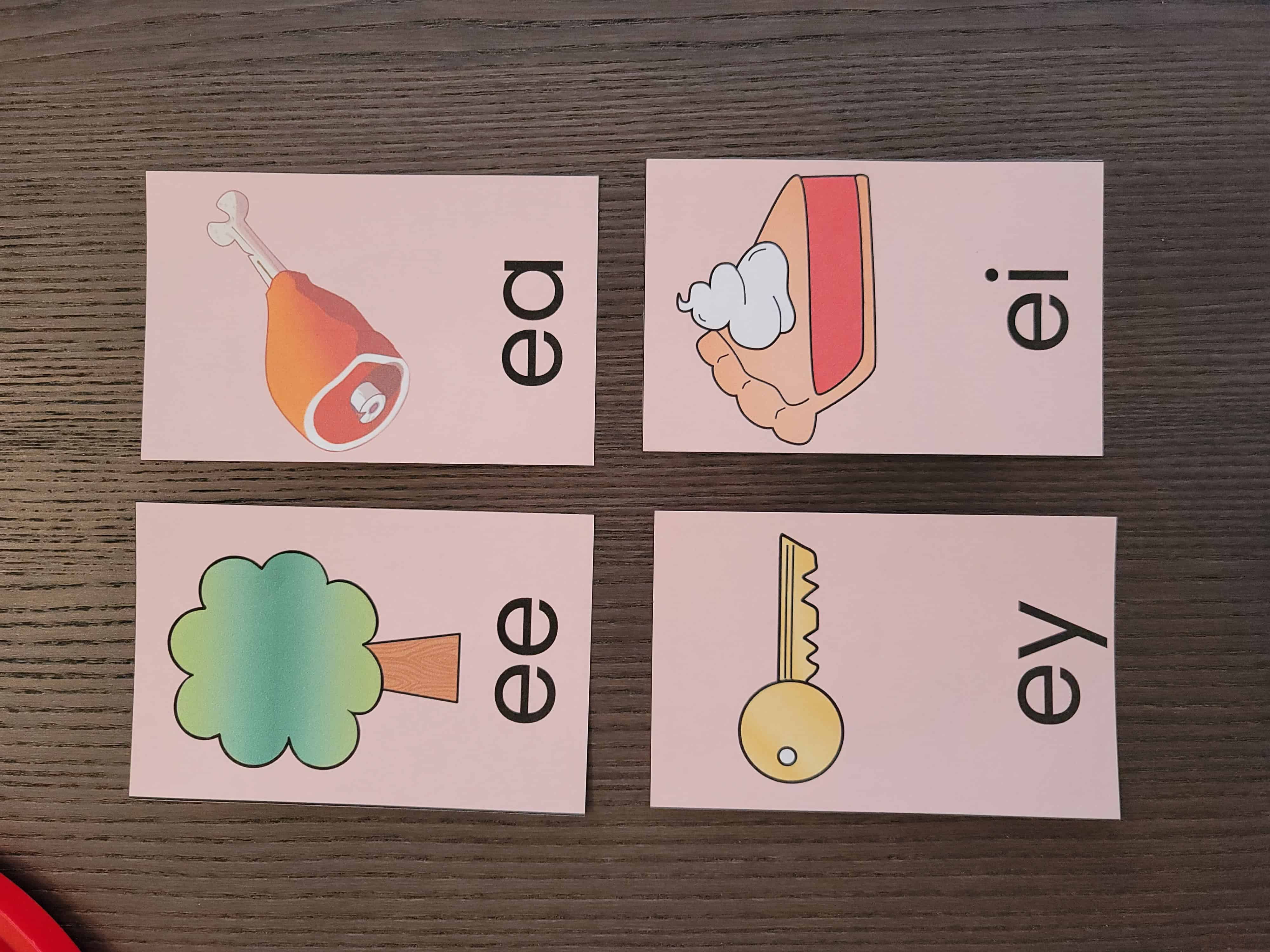
“Egg” for short e. Depending on regional pronunciation, the e in “egg” can sound like a long a. That makes it a risky keyword. A better choice is “edge” or “bed” – words where the short e sound is clear and consistent regardless of accent.
“Xylophone” for the letter x. Xylophone starts with the /z/ sound, not the sound x typically represents. A far better option is “fox” or “box.” The keyword doesn’t have to start with the sound – it just has to contain it clearly and accurately.
When you’re vetting a product, say the keywords out loud. Does the word actually produce the sound that letter makes? Could the pronunciation vary depending on where someone grew up? Is the same keyword used consistently throughout the program?
Vague or regionally inconsistent keywords are easy to overlook, but they create real confusion for students, especially those who are already struggling.

Red Flag #3: “Decodable” Readers That Aren’t Actually Controlled
This one frustrates me because the label is so easy to slap on.
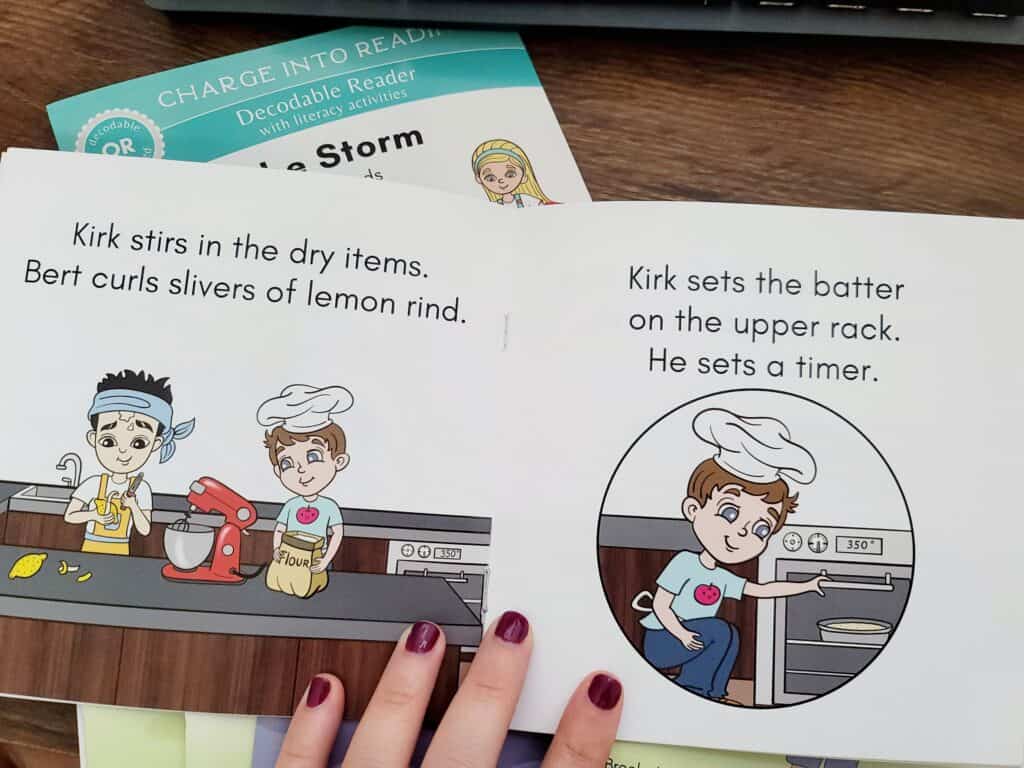
A truly decodable reader uses only the phonics patterns that have already been taught. Every word in the text – or very close to it – should be readable using the skills the student has practiced so far, plus any previously introduced high frequency words.
If you open a “decodable” reader and the text doesn’t make sense, or you’re seeing patterns that haven’t been introduced yet, it is not a decodable reader. It’s a reader with a label.
Look at the actual words on the page. That tells you everything.
Red Flag #4: Spelling Lists That Are Disconnected From Phonics Instruction
This one is so common it almost feels normal – but it’s a real problem.
Spelling lists that mix a bunch of unrelated patterns together are not aligned. A list that has “ship, night, coat, jump, blend” all in the same week is not teaching a phonics concept. It’s just a list of words.
Spelling instruction should be directly connected to the phonics pattern currently being taught. If students are learning the /sh/ consonant digraph, their spelling practice should reflect that. The spelling list and the phonics instruction should be one and the same – not two separate activities happening in the same classroom.
When they’re disconnected, students memorize words for Friday’s test and forget them by Monday. That’s not how spelling knowledge sticks.

Red Flag #5: No Explicit Instruction or Modeling
This is the heart of it.
Science of Reading aligned instruction means the teacher directly teaches the skill. Not through discovery. Not through a cute activity that exposes students to the pattern. Directly, explicitly, with clear modeling.
Look at the teacher-facing materials in any product you’re evaluating. Is there a clear script or instructional sequence? Is the teacher shown modeling the skill before students practice it? Or does the product jump straight to activities and assume the teaching happened somewhere else?
If the instruction isn’t built in, it’s not an aligned product. It’s a practice activity that may or may not follow aligned instruction depending entirely on what the teacher does before handing it out.
Red Flag #6: Practice Activities That Don’t Actually Build the Skill
Writing a word five times does not build letter-sound connections.
Rainbow writing, reading predictable texts, word searches – these are traditional activities that have been around forever. They feel productive. Students are busy and engaged. But they are not building the phoneme-grapheme connections that actually lead to reading and spelling growth.
Effective practice means students are actively connecting sounds to letters. They’re segmenting the word, mapping it, encoding it from memory, reading it in connected text. The practice should require them to think about the sounds – not just copy letters.
When you look at a product’s practice activities, ask yourself: is a student actively thinking about the sounds in this word, or are they just moving a pencil?
Red Flag #7: A Scope and Sequence That Doesn’t Build or Spiral
A well-designed phonics scope and sequence moves from simple to complex – but it also revisits and spirals previously taught skills.
Red flags here include:
- Skills introduced in isolation with no review built in afterward
- Patterns taught in a random or arbitrary order with no clear logic
- No cumulative review – students only practice the new skill, never the old ones alongside it
- Jumping to complex patterns before simpler ones are solid
A strong scope and sequence builds on what came before. Students should be practicing previously learned patterns while adding new ones. If a program moves forward and never looks back, gaps will form.
So What Does Aligned Actually Look Like?
When you’re evaluating a product, here’s a quick checklist:
- Does it teach the skill explicitly, with clear modeling?
- Is the scope and sequence logical, building from simple to complex?
- Does it spiral previously taught skills into ongoing practice?
- Are spelling and phonics connected – not separate lists?
- Is the practice activity requiring students to think about sounds, not just copy words?
- If it includes decodable text, is the text actually controlled to match the patterns taught?
- Are the letter keywords accurate and consistent?
If a product checks all of those boxes, you’re in good shape. If it misses several of them and still has “Science of Reading aligned” on the cover – now you know what that label is really worth.
If You Want Resources You Can Trust
If you’re tired of vetting every product from scratch and wondering if it’s actually going to work, you can browse my shop for structured phonics resources built around explicit, systematic instruction.
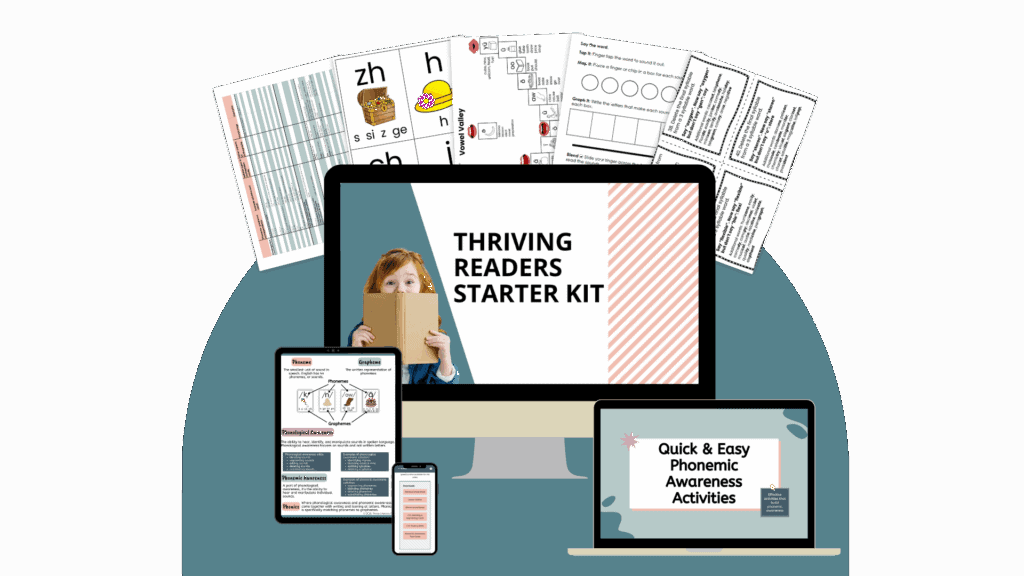
And if you want a complete system – not just individual resources but a daily routine, training videos, and a custom GPT that builds routines based on your specific students – the Thriving Readers Starter Kit has everything in one place.
No more hunting. No more hoping it’s aligned.
Learn more about the Thriving Readers Starter Kit
One More Thing
If you want ongoing support, new resources monthly, and a community of teachers doing this work alongside you, I’d love to have you inside Literacy Launchpad.
You don’t have to figure out what’s worth using and what isn’t on your own.