How to Teach Grade-Level Phonics When Half Your Class Is Below It

This post may contain affiliate links, and I will earn a commission if you purchase through these links. Please read the disclosure policy for more details.

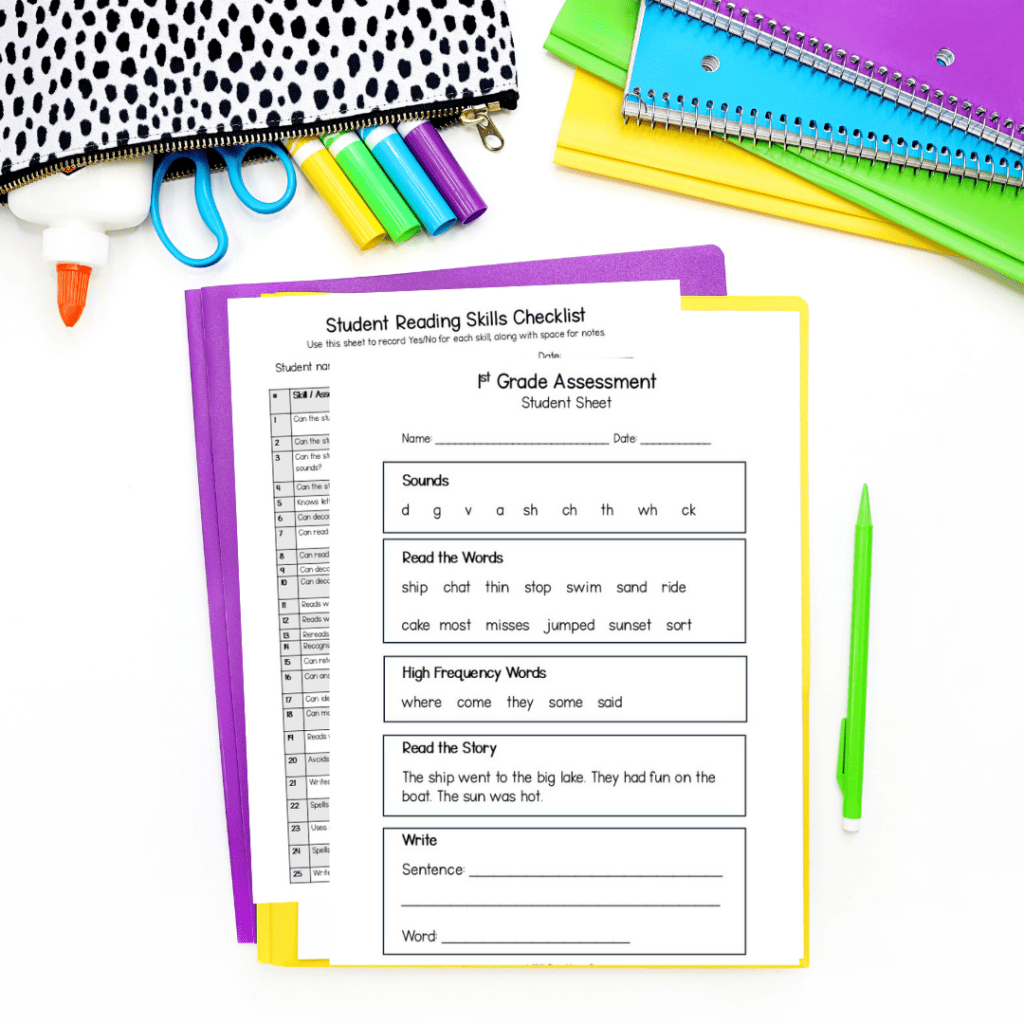
It’s the second week of school. You gave the assessment, or you just watched your class try Lesson 1. Two students are already reading. Four don’t have all their letter sounds. Everyone else is somewhere in the middle, and your scope and sequence assumes none of that.
So what do you do with Lesson 2?
There are two instincts here and both of them cost you something. The first is to slow the whole class down and stay put until everybody has it. The second is to split the class by level and run two different phonics curricula side by side.
Slowing down costs weeks for the students who were ready to move. Running two curricula is not sustainable past September.
There is a third option, and it fits inside the schedule you already have.
A mixed-readiness class is the normal starting condition
Kindergarten and first grade always start spread out. Students arrive with very different amounts of exposure to letters, sounds, and books before they ever walk into your room. Some have been read to every night since birth. Some are seeing a letter card for the first time in September.
The job in front of you is to teach grade level content and fill in what’s missing at the same time, not to level the class first.

Start with the data you already have
If you ran a screener in the first weeks of school, the answer is probably already in the report. It just isn’t in the composite score.
The composite tells you who’s at risk. The subtests tell you why.
Pull the subtest scores for the students you’re worried about and look for three patterns.
Phoneme-level skill. Check phoneme segmentation. A low score there means the student can’t hear or separate the individual sounds in a spoken word. Ask them to tap the sounds in sit and they give you two, or they give you syllables, or they hand the whole word back.
Letter-sound knowledge. Check letter sound fluency, or correct letter sounds on nonsense word fluency. A low score means the student can’t retrieve the sound when they see the letter, or the retrieval is slow enough that the word is gone by the time they reach the end of it.
Blending. This one is a split, not a single number. Look for a solid correct letter sounds score next to almost nothing in the whole word column, which is words recoded correctly on DIBELS 8 and whole words read on Acadience. That student knows every sound and produces every sound and still can’t merge them into a word.
That third pattern gets past people in data meetings, because the correct letter sounds score looks fine and the student gets sorted as low risk on the alphabetic principle.
If you’ve read my posts on small group planning, this is the step that comes before finding the lowest skill not yet mastered. Two of these three patterns sit upstream of your phonics scope and sequence. A student who can’t segment a spoken word or can’t blend three sounds doesn’t have a place on that sequence yet, so locating them on it won’t tell you what to teach. Rule out the prerequisites first. Then find the lowest skill not yet mastered and group by that.
When the screener doesn’t answer it
Screener data runs out fast. Kindergarten scores in September sit near floor for a good chunk of the class because almost nothing has been taught yet. Students transfer in after the window closes, and benchmark windows are three months apart, so between them there’s no new data unless you make some.
Plenty of teachers, tutors, and homeschoolers have no screener at all.
This check takes about two minutes per student and gives you the same three answers.
Task 1: Oral segmenting, no letters in front of them.
Say: “The word is sit. Tap the sounds.”
They should tap three times and produce /s/ /i/ /t/. Do three words, all three sounds.
Task 2: Letter-sound retrieval.
Show five to eight letters you’ve already taught. Point to each one and ask for the sound only, not the name, not a word. You’re watching accuracy and speed.
Task 3: Oral blending, no print.
Say the sounds and ask for the word: “/s/ /i/ /t/. What word?”
Do three words. No letters anywhere.
Now read the results.
- Misses Task 1 and Task 3, fine on Task 2: the problem is at the phoneme level.
- Misses Task 2 only: it’s letter-sound knowledge. The fastest of the three to fix.
- Passes Tasks 1 and 2, misses Task 3: it’s blending.
One note on why all three tasks are oral. You’re isolating the skill so you can see which piece is missing, and letters would let a student compensate their way through it. That’s an assessment decision, not an instructional one.
When you go teach the skill, the letters go back in. The National Reading Panel’s meta-analysis found that teaching students to manipulate phonemes with letters produced effects on reading almost twice as large as teaching the same skills with speech alone (d = 0.67 versus 0.38). If your students already know their letters, keeping the practice oral is throwing away half the benefit.
When blending is the answer, the instinct is to reteach letter sounds, because that’s the visible skill. But the letter sounds are fine. The student is producing three separate sounds and never merging them, and more letter sound drill won’t touch that.
Grouping by which pattern you found is far more useful than grouping by reading level. I wrote more about that in my post on skill-based reading groups.
Why restarting everyone at Lesson 1 is the wrong instinct
When a class looks this uneven, the pull is to go back to the beginning and rebuild. That costs you twice.
The students who were ready lose four to six weeks of instruction they didn’t need. In kindergarten that’s a meaningful chunk of the year.
The students who weren’t ready don’t need the whole sequence again. They need two or three specific things, and reteaching thirty lessons to fix three of them is a slow way to get there.
There’s a structural problem too. Going back to Lesson 1 means re-covering letter sound introductions. If a student’s issue is blending or segmenting, meeting m again for the fourth time doesn’t teach it. They need practice pulling sounds apart and pushing them together, using the letters they already know.
Ehri’s phases are useful here. Students move through predictable stages as they learn to read words, and a student sitting in the partial alphabetic phase, using the first letter and guessing the rest, won’t be moved by more exposure to letter sounds. They need the full connection between every sound and every letter in the word. That’s a different task, not a repeated one.
The two-track model
The model has two parts.
Holding the grade level sequence doesn’t mean running it on rails. You can spend three days on a sound instead of two. You can shorten the word list, add mirrors for the vowel contrast, reteach Day 1 before you move to Day 2, or scaffold the Elkonin boxes for the students who need it. The sequence stays. The pace and the support flex.
What makes pacing blind isn’t the sequence. It’s moving through it without checking whether anyone came with you. If you’re adjusting based on what you’re seeing, you’re responding to data, which is the R in READS. If you’re on Lesson 14 because the calendar says Lesson 14, that’s the version worth avoiding.
Small group fills the one specific thing the check identified, and that’s where you start at the lowest skill not yet mastered. Whole group holds grade level. The two tracks answer different questions, which is why running both works better than choosing one.
Two reasons this works better than it sounds like it should:
The format holds up under research. Ehri and colleagues’ meta-analysis for the National Reading Panel found that delivering systematic phonics to small groups and whole classes was not less effective than one-on-one tutoring. You don’t need individual time with each student to move them.
The bigger reason is cumulative review. A well built whole group lesson already carries forward every sound taught so far, not just this week’s. The visual drill and the auditory drill run the full stack daily.
So the student who is still struggling with short /a/ practices short /a/ every day inside the new lesson. They aren’t waiting for their fifteen minutes of intervention to see it again.
What that looks like for one student in one week:
In whole group, they’re in the short /i/ lesson with everyone else. They do the visual drill on all previously taught letters. They do the auditory drill, writing each letter as they say the sound. They read the word list with the group.
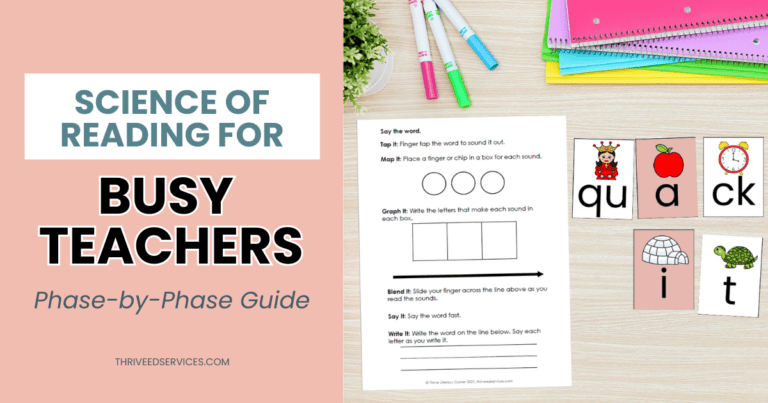
They do the Elkonin boxes with support, and if they write a in the middle box instead of i, the correction is built into the lesson. Say the middle sound, name the letter, write it.
In small group that same week, more time if allocated to practicing to blending. Say the sounds first so they hear the target, then put the letters in front of them. Build sit with tiles. Touch each letter, say each sound, sweep and blend. Change the s to a t and blend again.
If blending after touching is still hard, add the arm blend. Shoulder for the first sound, elbow for the middle, wrist for the last, then sweep down the arm.
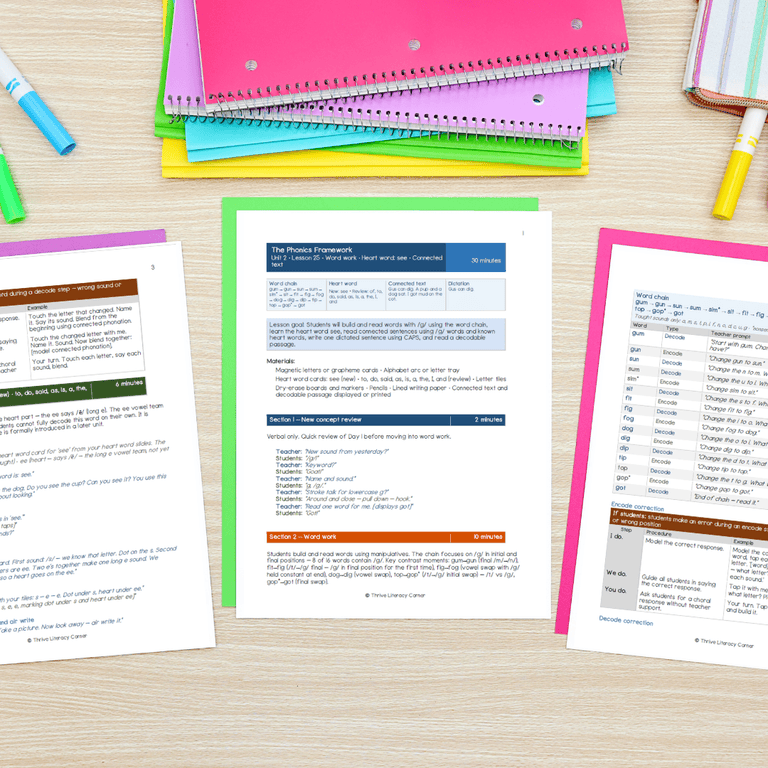
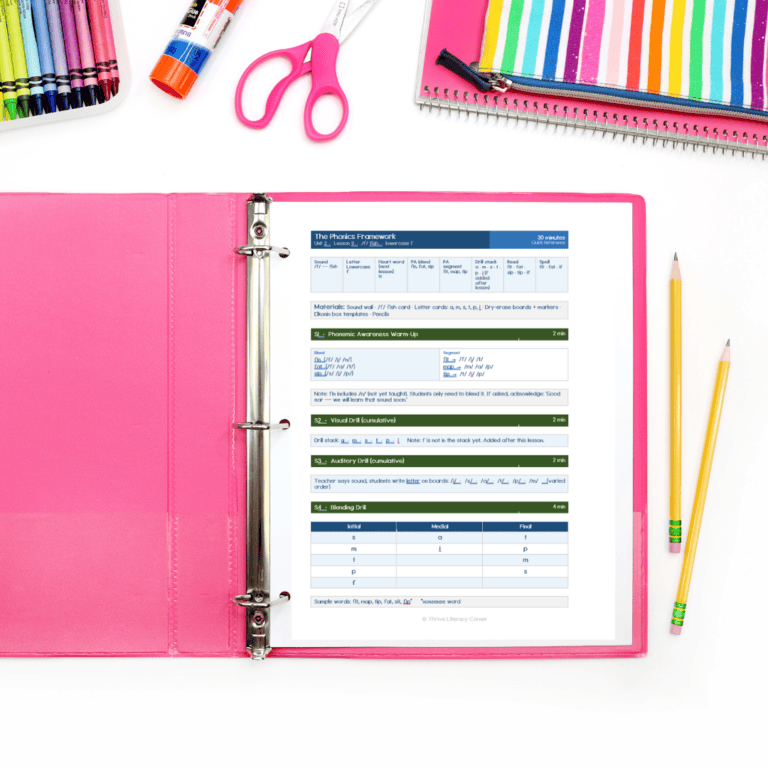
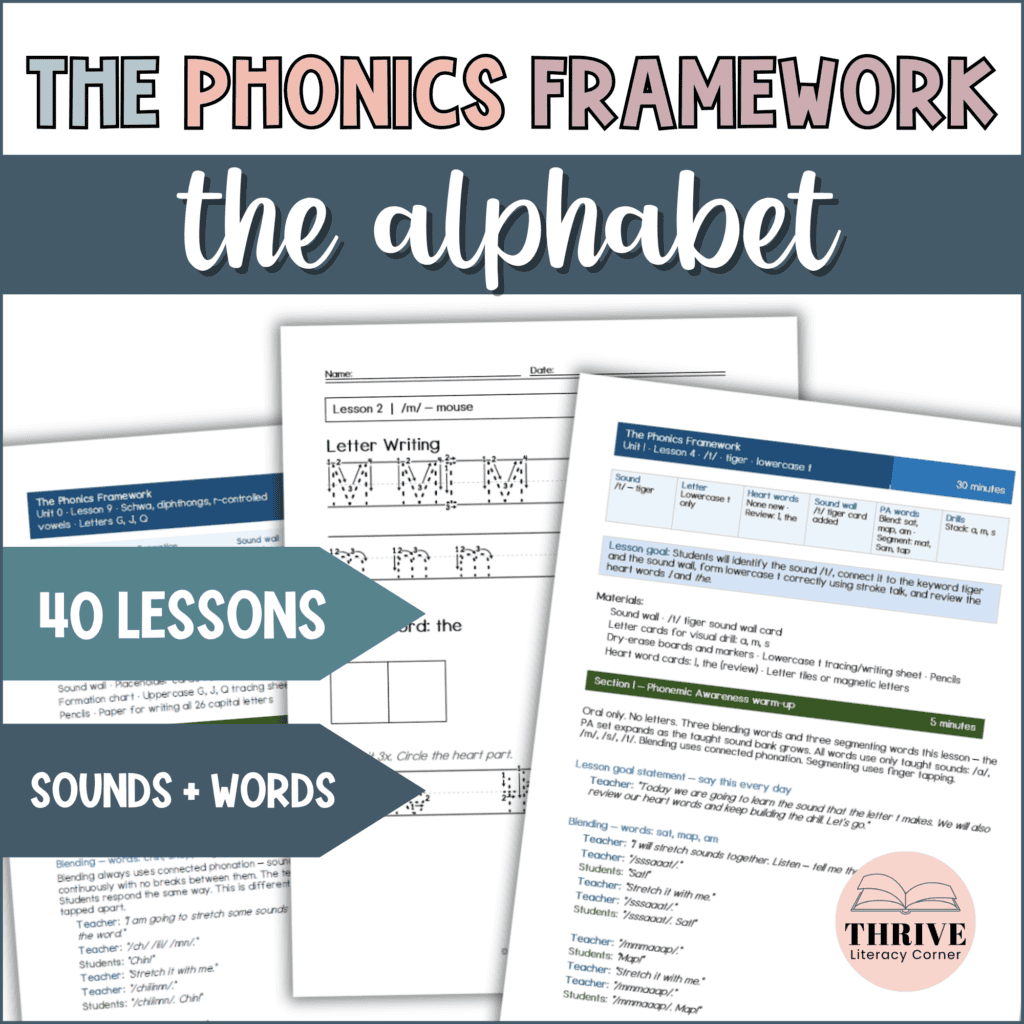
This is why I build every lesson in The Phonics Framework with the corrections written in. Every section has an “if students” block with the exact I do, we do, you do wording, and every lesson ends with small group and intervention scaffolds for students who need a different entry point into the same content.
How much small group time is realistic
You should aim for around fifteen minutes, three to four days a week. That’s what fits in a real schedule. If you’re planning five groups every day, you’re planning for something this is not possible.
Be honest about what that takes. A standard literacy block gives you 1-2 small group slots a day. Seeing two or three groups that often means finding minutes somewhere else in the day, and that’s the whole reason the next part matters.
To make room, something has to go. Look at these first:
- Worksheet practice or activities that include any new content you have not already covered. All independent practice should be review and repetition of previously taught skills, even if it is rereading the same decodable story.
- Independent reading time for students who can’t yet read independently. They’re holding a book. That’s not the same as reading.
- Sorting and cutting activities that take twelve minutes and produce four minutes of instruction.
I go deeper into structuring the whole block in this post on literacy block scheduling.
There’s a third track that costs you no classroom minutes. Send the practice home. Ten minutes of the same skill with a parent or a tutor, using the same wording you use, is worth more than another rotation you don’t have room for.
When a student drops the second track
Small groups should move. Set the exit criteria before you start so you’re not guessing in November.
- Blending: reads 8 of 10 unfamiliar CVC words made from taught sounds, without prompting.
- Letter-sound knowledge: accurate and fast on the full taught stack, two sessions in a row.
- Phoneme level: segments three sound words accurately with no manipulatives.
Check every 2-3 weeks. Daily checks tell you nothing, and quarterly checks come too late to act on. If a student hits the criteria, they come out of the second track and you watch them in whole group. If they slide, they come back.
If small group is running and the student still isn’t progressing, this post on what to adjust first covers the usual causes.
What to do this week
Run the three task check with the four to six students you’re most worried about. Ten minutes total for all of them.
Keep whole group where it is. Don’t move it back.
Pick one skill for small group based on the results from your check.
If you’re building your phonics block from scratch this year, start with what a complete phonics lesson includes, then come back to this one. And if you want it planned for you, The Phonics Framework has the lessons, the corrections, and the small group scaffolds already written.