What You Need Before You Teach Your First UFLI Lesson

This post may contain affiliate links, and I will earn a commission if you purchase through these links. Please read the disclosure policy for more details.
Your UFLI manual is sitting on the counter. Maybe it came in a district box in June, maybe you ordered it yourself in July, and either way the plan is to open it properly on September 3.
I want to talk you out of that plan.
UFLI Foundations is a strong program. It is also not plug and play, and the teachers who open it cold in September tend to hit the same wall around week two. Lessons run long. Kids do not know what to do with their whiteboards. Half the class already knows the first ten letter sounds and the other half does not know any. It starts to feel like the program is the problem.
It usually is not. It is almost always the setup. Here is what to do in August so your first lesson goes the way it is designed to.
What UFLI gives you, and what it does not
UFLI Foundations is an explicit, systematic phonics program for kindergarten through second grade, also used for intervention with older students who are still working on decoding. It gives you a scope and sequence, detailed lesson plans, slide decks for every lesson, and a pile of free printable materials.
What it does not give you is a classroom that is ready to run it.
It will not place your students. It will not tell you what to hang on your walls. It will not teach your class what to do during a blending drill. Those pieces are yours, and they are the ones that decide whether September feels smooth or chaotic.
1. Figure out where to start, because Lesson 1 usually is not it
This is the single biggest thing teachers get wrong, and it costs weeks.
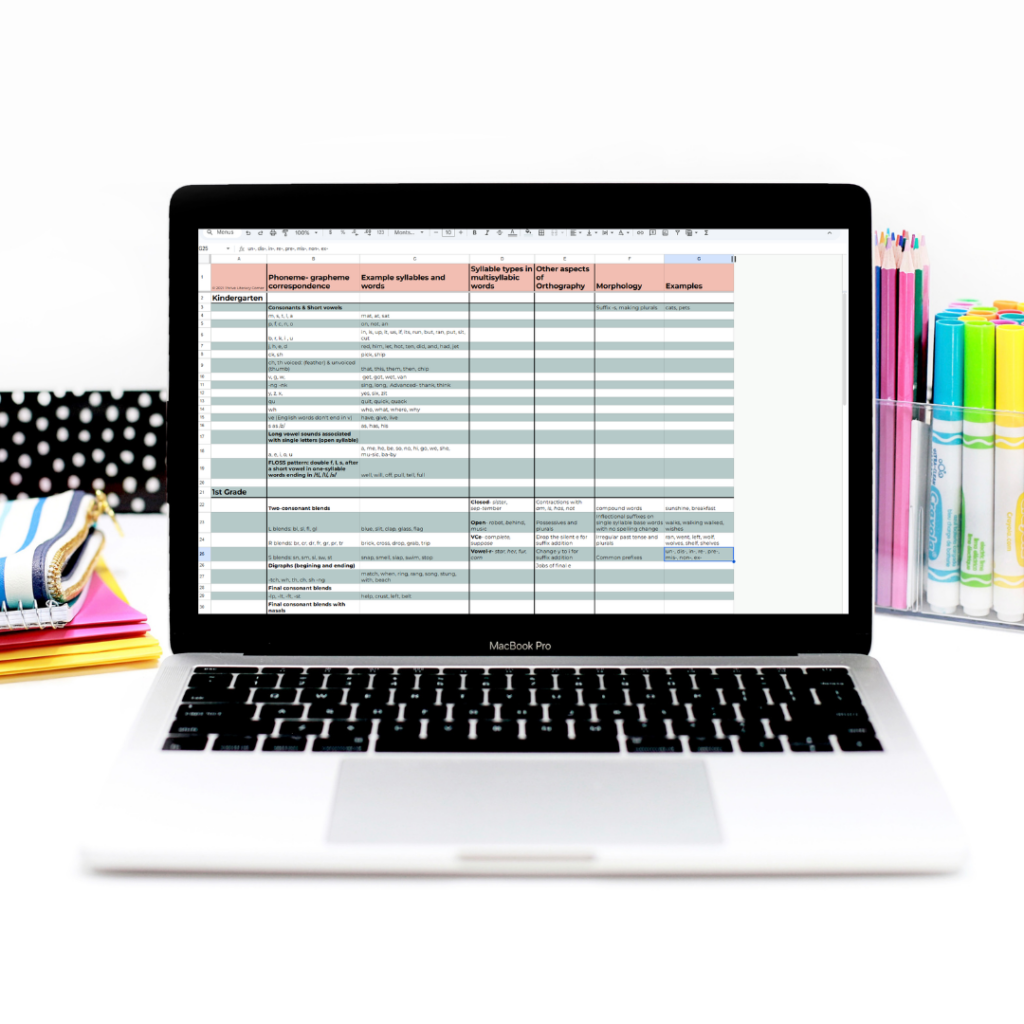
Each grade level has its own entry point in the UFLI sequence:
- Kindergarten runs Lessons 1 through 68.
- First grade starts at Lesson 35 and runs through Lesson 110.
- Second grade starts at Lesson 38, moves through a set of review lessons, then picks up at Lesson 63 and continues through the rest of the sequence.
A few lessons are skipped within each grade’s sequence. Your manual has the grade level chart with the exact list, and that chart is the authority. Check it before you plan anything.
One detail that gets missed constantly: every grade does the Getting Ready lessons first. Second grade teachers in particular see “start at Lesson 38” and go straight there. Do the Getting Ready lessons regardless of what grade you teach. They set up the routines the rest of the sequence assumes your students already know.
Placing your actual class
Knowing your grade’s entry point is not the same as knowing where your students are. Here is what to do in the first two weeks.
Pull whatever you already have. End of year data from last year’s teacher, kindergarten screening results, a running record, anything. It will not be perfect and it does not need to be. You are looking for a rough picture of who knows their letter sounds and who does not.
Put screening on the calendar now. Not “sometime in the first month.” Pick the days. If it is not on the calendar in August it will not happen until October.
Know what UFLI’s placement test is actually for. UFLI publishes a free Intervention Placement Test, and it is genuinely useful, but they are explicit that it is designed for students already identified as needing intervention. They specifically say not to administer it to your whole class. It will not tell you where to start your core instruction.
So for whole class placement, work from the grade level entry point and adjust. Start where your grade’s sequence says to start, teach the first several lessons, and watch what happens. Students who already have those skills will move fast and you can pick up the pace. Students who do not will show you exactly which sounds are missing, and that becomes your small group list.
You do not need a perfect diagnosis in August. You need a starting point and a plan for watching.
2. Understand what a UFLI lesson is doing
You do not need to memorize the lesson structure before September. You do need to understand what each part is for, because that is what stops you from cutting the parts that feel slow.
UFLI lessons follow an eight step routine spread across two days. The first five steps are Day 1. The rest land on Day 2. Every lesson follows the same shape, which is the point. Once your students know the routine, you are not spending instructional time on directions.
A few of the steps and what they are actually doing:
- Visual Drill builds automatic letter to sound retrieval. It looks like flashcards. It is not. The goal is speed, because slow letter sound recall is what makes decoding fall apart later.
- Blending Drill is where students practice pulling sounds together into words. This is the step that gets rushed when you are behind, and it is the one most directly tied to whether kids can actually read the words.
- Word Work is encoding. Students spell the words, not just read them. Reading and spelling pull on the same knowledge, and students who spell a pattern hold onto it better than students who only read it.
- Irregular Words introduces the irregular high-frequency words (heart words) using the heart word approach, where students map the parts that behave and mark the part they have to know by heart.
The step that gets cut most often is the connected text at the end, because that is where you are when the clock runs out. It is also the only place students apply the skill in real reading. If something has to go on a hard day, do not let it be that one.
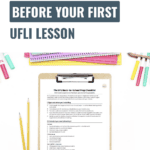
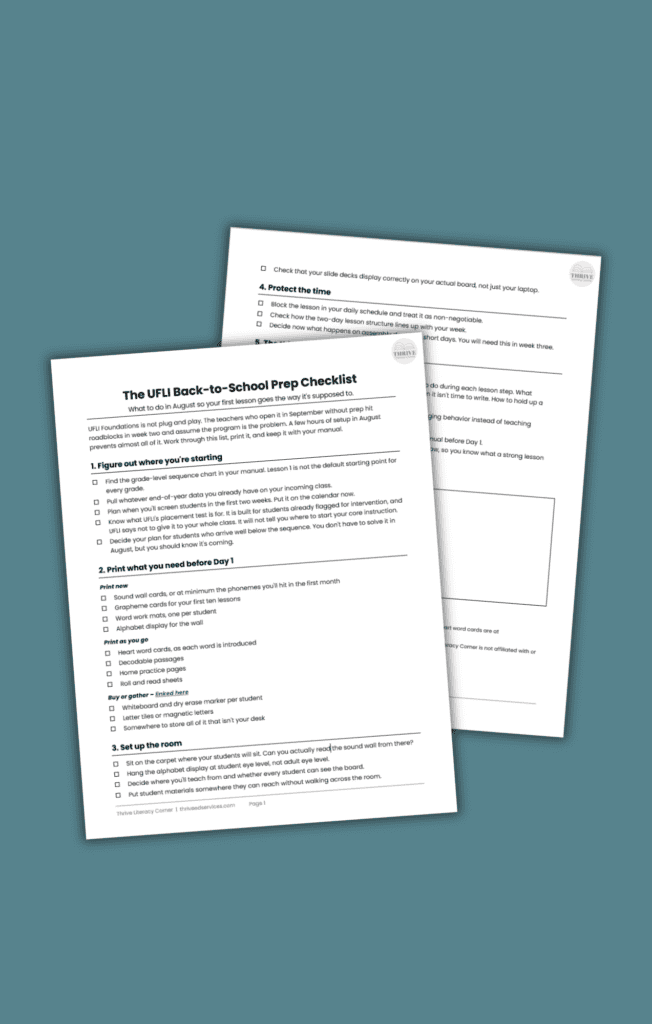
Grab the free checklist. I put everything in this post into a two page printable you can work through and keep with your manual. Download the UFLI Back to School Prep Checklist below.
Grab the FREE UFLI Back to School Prep Checklist by subscribing to my list!
*Most school spam filters block my emails, so please use a personal email.
3. What to print and buy, sorted by when you need it
The materials list looks enormous until you sort it by urgency. Most of it can wait.
Print before Day 1:
- Sound wall cards, or at minimum the phonemes you will hit in the first month
- Grapheme cards for your first ten lessons
- Word work mats, one per student
- An alphabet display for the wall
Print as you go:
- Heart word cards, as each word comes up
- Decodable passages
- Home practice pages
- Roll and read sheets
Buy or gather:
- A whiteboard and dry erase marker for every student
- Letter tiles or magnetic letters
- Somewhere to store all of it that is not your desk
UFLI gives a lot of this away. Their printable resources page has sound wall materials, grapheme cards in four sizes, word work mats, heart word cards, and compiled decodables by grade. They also added a Vocabulary Resource in early 2026 that a lot of teachers who set up last year have never seen. Download those before you buy anything.
I also have a few things in my shop that are built to match the sequence:
- UFLI aligned alphabet posters and chart for your wall display
- Decodable passages with comprehension questions for K through 2, aligned to the UFLI scope and sequence
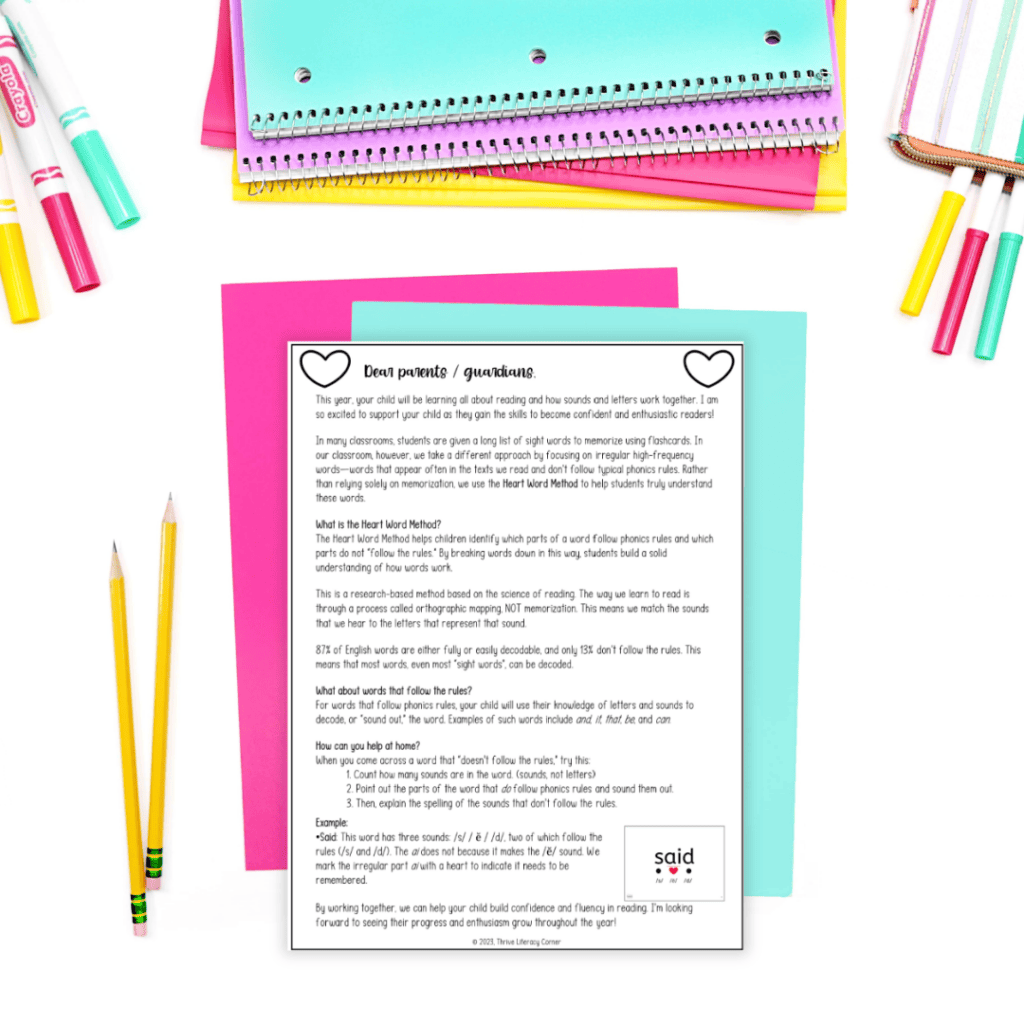
- Heart words parent letter and homework guide if you want home practice handled without building it yourself
4. Set up the room so the lesson can run
Classroom setup is not decor when you are teaching UFLI. Your walls are part of the lesson.
Sit on the carpet where your students will sit. Then look at your sound wall. Can you read it from there? Adults hang things at adult eye level and then wonder why nobody uses them.
Hang the alphabet display where students can actually see it during the lesson, not above the door or behind where you stand. UFLI references letter and keyword connections constantly. If students have to hunt for the chart, they stop using it.
Decide where you teach from. Every student needs to see the board and see your mouth. Articulation matters in this program and they cannot see your mouth if you are reading from the manual behind a table.
Put student materials within reach. Whiteboards, markers, and word work mats should be grabbable without six kids walking across the room. That walk is where you lose three minutes a day.
Test your slide decks on your actual board. Not your laptop. Fonts render differently, and finding out on day one that your projector cuts off the right edge of every slide is a bad way to start.
5. Teach the routine before you teach the content
Skipping this step means the routine falls apart in week two.
Your first week with UFLI should be spent teaching students what to do, not teaching phonics. What “blending drill” means. What to do with a whiteboard when it is not time to write. How to hold up a card. Where to look when you are at the board. How to pass materials without a discussion.
Teach it the way you teach any routine. Model it, practice it, praise the students doing it right, practice again. It feels like a waste of instructional time in week one. It buys back far more than it costs.
Teachers who skip this step spend weeks two through six managing behavior instead of teaching reading, and it genuinely feels like the program is too hard for their class. The program is fine. The routine was never taught.
Two more things worth doing before day one: read the Implementation Guidance section of your manual, and download UFLI’s free Implementation Fidelity Checklist. Read it once now, while the stakes are zero, so you know what a strong lesson looks like before you are standing in front of twenty five kids.

6. What if your class is all over the place?
It will be. That is normal and it is not a sign you placed them wrong.
The short version: keep whole group instruction on your grade level sequence and use small group time to fill in what individual students are missing. Do not restart the entire class at Lesson 1 because a handful of students are not ready. That holds back everyone and it still does not give the struggling students the targeted practice they actually need.
There is a lot more to say about how to run that second track well, and I am writing a full post on it later this month. For now, if you want a starting structure, my post on small group reading instruction walks through what that time can look like.
Start with one thing
If you only do one thing this week, find the grade level chart in your manual and figure out your actual starting lesson. Everything else builds from that.
Download the free UFLI Back to School Prep Checklist below and work through it between now and your first day.
Grab the FREE UFLI Back to School Prep Checklist by subscribing to my list!
*Most school spam filters block my emails, so please use a personal email.