The Order to Teach Letters (and Why It Isn’t Alphabetical)

This post may contain affiliate links, and I will earn a commission if you purchase through these links. Please read the disclosure policy for more details.
A kindergartener who knows the sounds for a and m can read a word. Put the two letters side by side, have them say /aaa/ and slide straight into /mmm/, and they’ve read “am.”
That’s the goal of a letter order. Get students reading words as early as possible, then keep adding letters that let them read more.
One quick note first – A lot of the letter order advice online is about handwriting: capitals before lowercase, straight lines before curves and diagonals. That’s a fair question for letter formation. This post is about the order that gets kids reading.
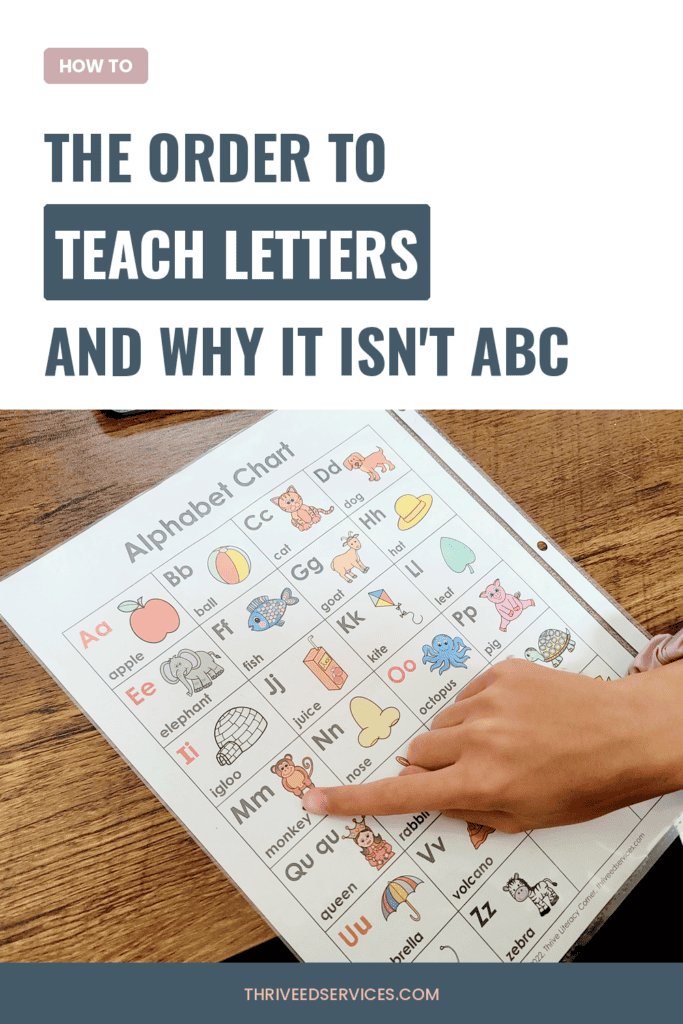
Why alphabetical order works against beginning readers
Say you teach a, b, c, and d first. With those four letters, students can read bad, cab, and dab. Every one of those words starts with a stop sound, the kind you can’t stretch out, which makes them some of the hardest words for a beginner to blend.
Those first four letters also put b and d next to each other on the calendar. That’s the most confused pair in kindergarten, and teaching them back to back hands students two lookalike letters before they know either one well.
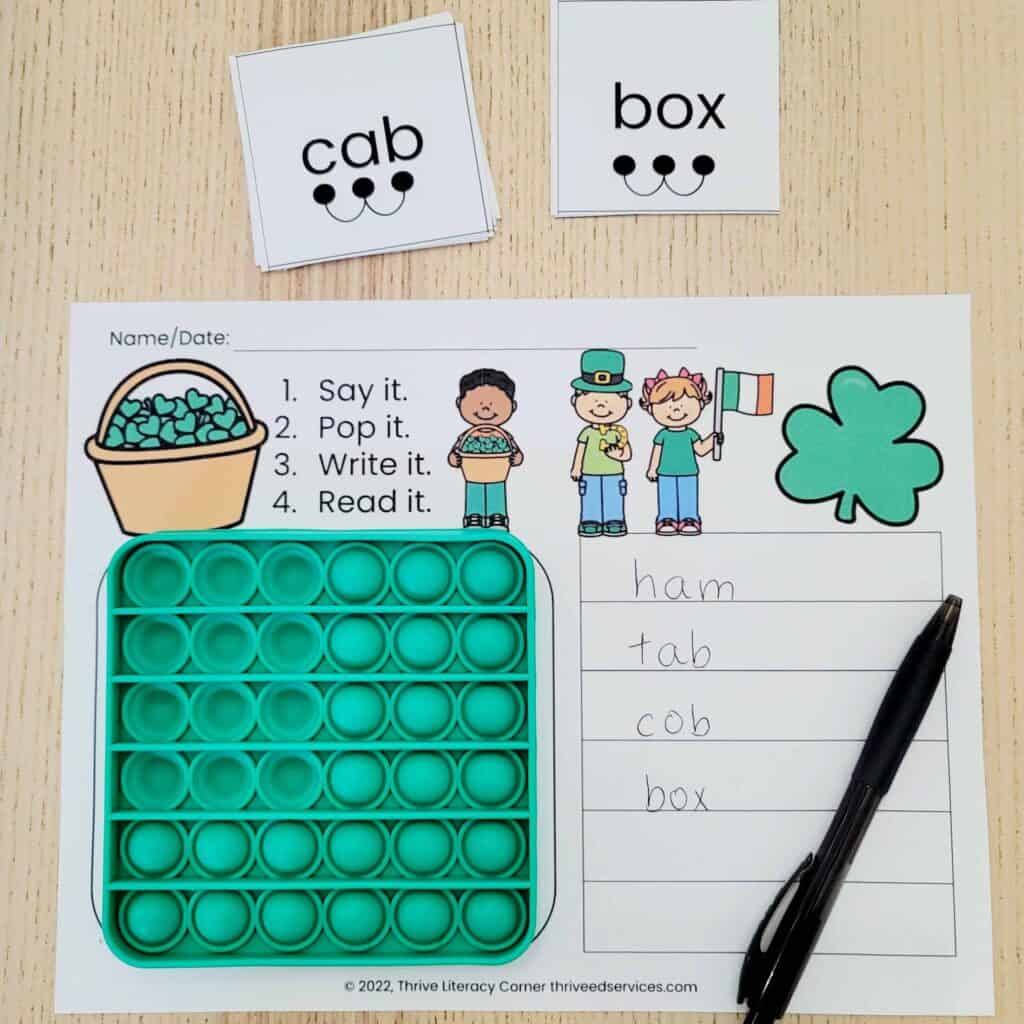
Kids can start reading after just a few letters
In Linnea Ehri’s phases of word reading, children move into what she calls the full alphabetic phase when they know the major letter sounds and can sound out letters and blend them into words. Ehri also points out that phonics instruction shortens the time kids spend in the partial alphabetic phase, where they know some letter sounds but can’t decode yet.
Students don’t need the alphabet for that. They need a vowel and a few consonants that combine into words.
Watch what happens as you add letters:
- a + m: am
- add s: Sam
- add t: at, sat, mat
- add p: map, tap, pat, sap
This is why so many sequences, including UFLI Foundations, open with a, m, s, and t.
In The Phonics Framework, students learn a, m, s, t, and p in the first five lessons. Lesson 6 is a word chain: am → Sam → sat → mat → map → tap → pat. Five letters in, and they’re working through seven words by changing one sound at a time.
Start blending as soon as they have two sounds
Students can start reading as soon as they learn a couple of letter sounds, so teach them to blend sounds into words as soon as possible. You don’t have to wait until all 26 letters are taught. If students know two sounds that make a word, they’re ready.
Continuous blending is the easiest way in. You say each sound and hold it into the next one without stopping, so the word comes out as one stretched sound.
Write a and m on the board. Then:
Teacher: Touch under the a. /aaa/. Keep your voice going and slide to the m. /aaammm/. Now say it fast.
Students: Am!
Add s and do the same thing: “/sssaaammm/. Say it fast.” Students read Sam.
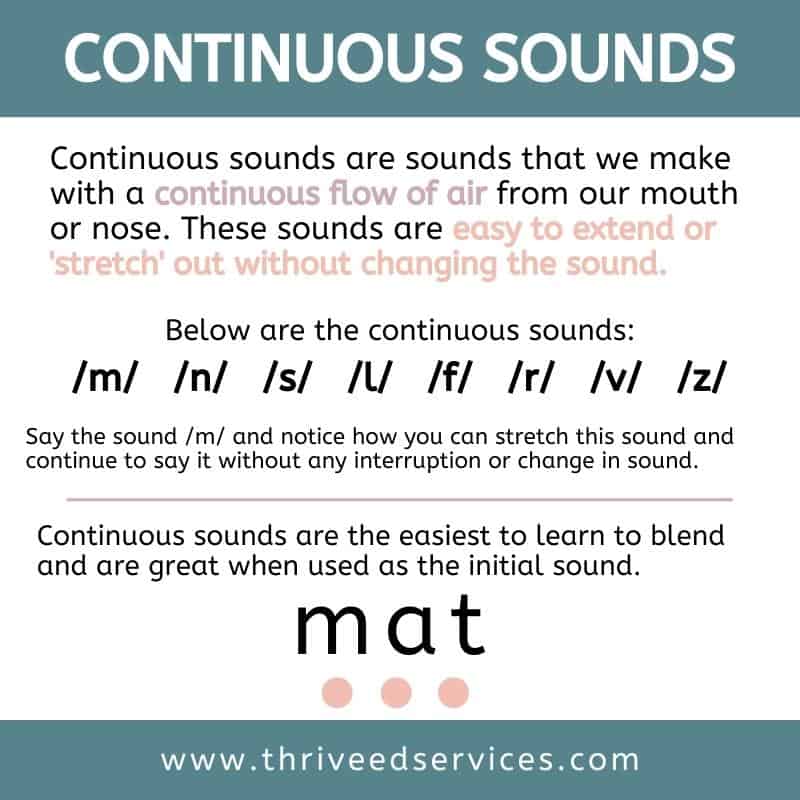
Why /m/ blends easier than /b/
You can hold /m/ for as long as you have breath. /s/, /f/, /n/, and every short vowel work the same way. These are continuous sounds.
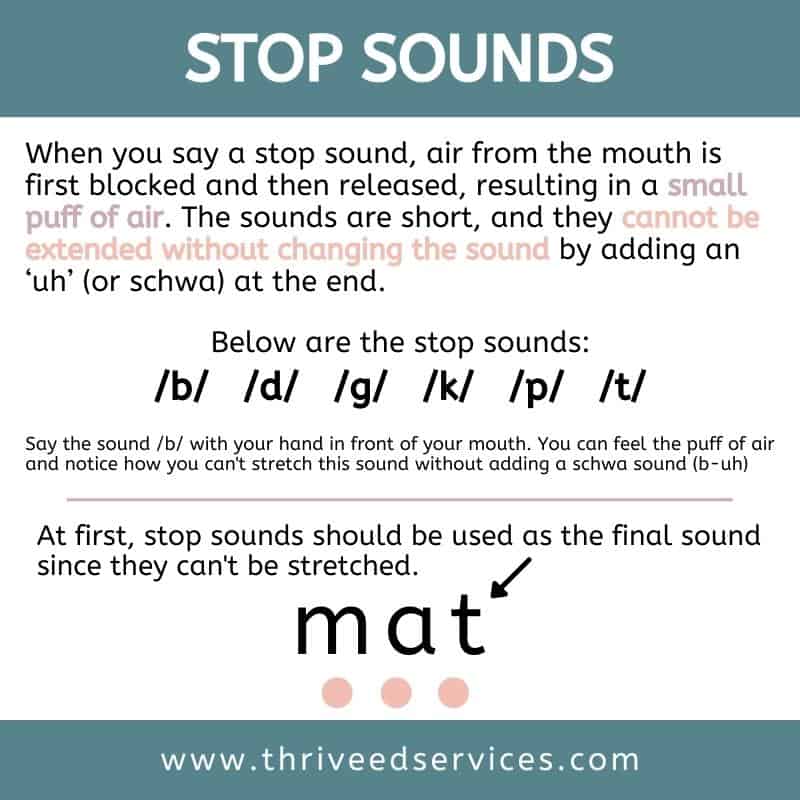
/b/, /t/, /p/, and /d/ are stop sounds. You can’t hold them, so kids add a vowel to get them out and say “buh.” And “buh-a-t” doesn’t sound like bat.
Stop sounds still come early. In the list above, t and p are in the first five letters. At the end of a word they’re easy (sat, map). At the beginning, teach students to clip the stop sound and slide right into the vowel. For tap, say /t/ quickly and go straight to /aaa/, then finish with /p/. No stretching the /t/ and no “tuh.”
Keep the letters in front of them
Blend with the letters on the board, on cards, or on a mat. The National Reading Panel found that phonemic awareness instruction helped reading more when it was taught with letters. Oral blending without letters is a good quick check. The daily practice should have letters.
What a good early sequence does
These principles show up across well-built sequences, and they’re laid out in Direct Instruction Reading by Carnine, Silbert, Kame’enui, and Tarver.
- A short vowel comes in right away. Without one, students can’t read words.
- The first consonants show up in lots of simple words. m, s, t, p, n, and f make far more short words than q, x, or z.
- Continuous sounds come before stop sounds. Students learn to blend on the easier sounds, then stop sounds join once blending is working.
- Letters that look or sound alike are spaced apart. In my Framework curriculum, t is Lesson 4 and d is Lesson 18. p is Lesson 5 and b is Lesson 26. Short /i/ comes in Lesson 7 and short /e/ waits until Lesson 28, because those two vowels are hard to hear apart.
How to check the sequence you already have
If your scope and sequence came with your curriculum or your school, you can still check it in a few minutes.
- Write down your first five letters and list every word they make. If the list is short, students will spend weeks learning sounds without reading anything.
- Find your first short vowel. If it isn’t in the first two or three letters, words have to wait.
- Find where b and d land. If they’re in the same week or back to back, plan for extra practice telling them apart.
- Find the lesson where blending starts. If it’s after all 26 letters, move it up. Students can blend with the letters they have right now.
Once students are blending, the next decision is when to add the next letter. I wrote about how I decide that in When to Move On to the Next Phonics Skill (And When to Stay Put).
If you want the sequence already built
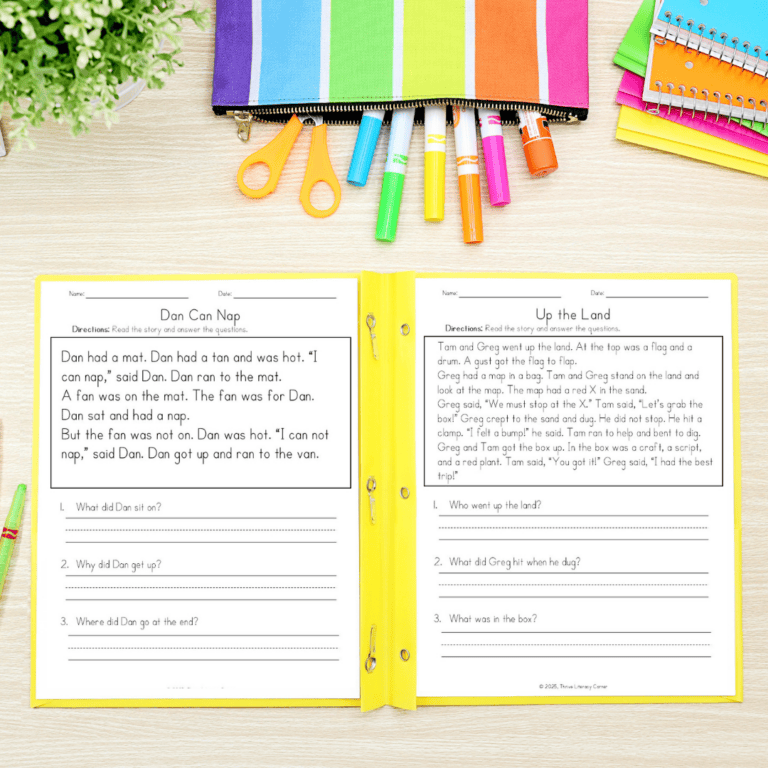
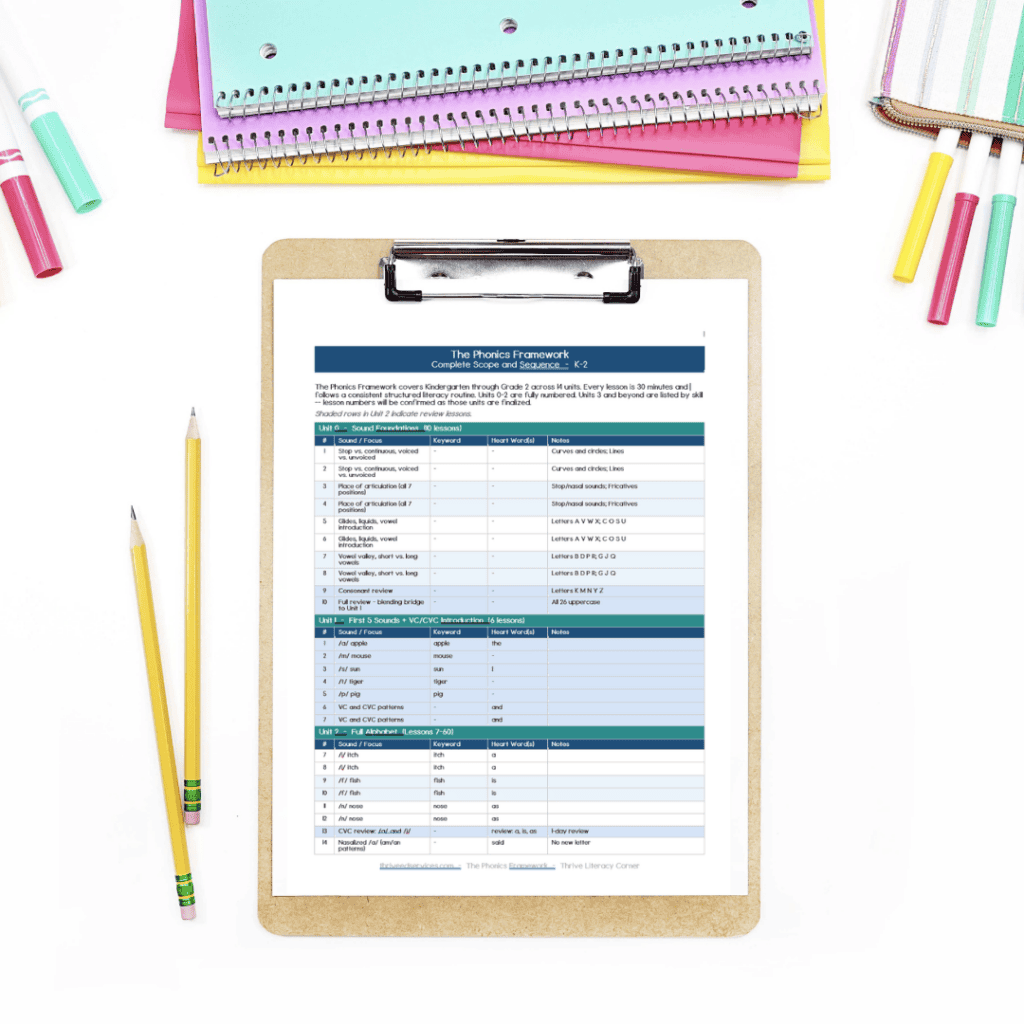
The Phonics Framework follows this order all the way through Z, with scripted lessons and a decodable passage for every sound.
Start with two sounds
Students don’t need all 26 letters to start reading. Give them a vowel and a couple of consonants that combine, and start blending the day they can make a word.
If you want a sequence to compare yours against, grab the free kindergarten through second grade scope and sequence from my Freebies Library (sign up below).
Join my list and get access to my vault of freebies, plus weekly emails with tips, new posts, and promotions!
*Most school spam filters block my emails, so please use a personal email.

Sources
- Ehri, L. (2023). Phases of Development in Learning to Read and Spell Words. American Educator, Fall 2023. https://www.aft.org/ae/fall2023/ehri
- National Reading Panel (2000). Teaching Children to Read. NICHD. https://www.nichd.nih.gov/sites/default/files/publications/pubs/nrp/Documents/report.pdf (phonemic awareness taught with letters; see also Ehri et al., 2001, Reading Research Quarterly 36(3))
- Carnine, D., Silbert, J., Kame’enui, E., & Tarver, S. Direct Instruction Reading. (Letter sequencing principles)