When to Move On to the Next Phonics Skill (And When to Stay Put)

This post may contain affiliate links, and I will earn a commission if you purchase through these links. Please read the disclosure policy for more details.
It’s Thursday afternoon. You taught the letter Z this week, which means you have finished the alphabet and digraphs start Monday.
Four students have Z cold and several more are close. Three of them are still hunting for the sound when you point at the card.
Your plan says digraphs Monday, so what do you do?
Many of us answer that question by looking at the calendar, which is a scheduling answer to an instruction question. Then we feel bad about the answer either way.
It gets easier once you separate two questions that usually get treated as one.
Move on or hold: what each one looks like
You can move on regardless, and the three students who don’t have Z carry that into every word from here. Digraphs sit on top of an alphabet that isn’t solid, and what they miss stacks up.
Or you can hold the whole class until everyone has it, and spend next week reteaching Z to twenty students who learned it Tuesday.
Both of those happen by default when there’s no criterion to decide with.
Mastery and pacing are separate decisions
Teachers ask “have they mastered it” and “should I move on” as if those are the same question. They take different evidence and they get different answers.
The first question is about one student and one skill. Does this child have Z, checked on its own, separately from every other letter you taught this year?
The second question is about your class and your pacing. Does the group start digraphs on Monday?
You can answer yes to the second while three students are still a no on the first. A well built sequence is designed to handle exactly that, for reasons I’ll get to below.
What mastery actually means in K-2 phonics
Mastery is accuracy plus automaticity, which just means the student gets there fast and without visible effort.
A student who reads “zip” correctly after eight seconds of working has not mastered short /i/ and the letter Z. They worked through it, and that is a stage students pass through on the way, but it isn’t where you want them to stay.
The threshold I use is 90% accuracy across three separate checks. One strong Friday tells you a student can do it under the right conditions, so I look for the same result three times before I count it.
The goal of phonics instruction is for decoding to become effortless, because a student who is still working that hard to read the word has no attention left for what the sentence means (Moats, Teaching Reading Is Rocket Science).
Assess every skill on its own, even when the pacing doesn’t stop
Every sound and every spelling gets checked individually, so Z is checked on its own and the “ai” spelling is checked separately from the “ay” spelling.
Never average five sounds together and call it digraph mastery. A student sitting at 90% overall can be missing one sound entirely and the group number will hide it.
That individual data is what tells you where a skill belongs. If four students are missing Z, Z goes in small group. If fourteen are missing it, Z goes back into whole group instruction.
Your pacing can keep moving without anything going unassessed, because those are two different decisions.

The gate for Monday is about 80% of the class
For the whole group pacing decision, I look for 80% of the class at or near mastery. If most of them are there, the sequence continues and the rest get handled in small group.
If you taught the letter Z and half the class is still confused, don’t move on. I’ll come back to that at the end.
But 80% only works under one condition.
It depends on what your materials do next
Ask yourself what happens to Z after this week.
If your program brings skills back on purpose, through cumulative review and interleaved practice, then Z shows up again next week inside digraph work, again the week after in word chains, and again in the decodable text. UFLI Foundations is built this way, and a strong curriculum will be. The students who aren’t there yet keep getting shots at Z inside regular instruction, alongside the small group support you’re giving them, so moving on at 80% works because the sequence hands the skill back to them.
If your materials teach a sound once and never systematically return to it, this week was the only shot they get. Moving on at 80% would mean the 20% never see Z taught again, so hold until you have mastery.
Distributed practice, meaning practice spread out over time instead of packed into one week, is one of the most reliable findings in instructional research (Archer and Hughes, Explicit Instruction, 2011).
How to tell which curriculum you have
Open next week’s lessons and look at the practice words. Does last week’s skill appear in them on purpose, or is every word built only from the new sound?
Then look four weeks out and do the same thing. If skills from a month ago are still turning up in the word lists, the review is systematic, and that tells you more about your 80% question than any rule I can give you.
A three minute check for the class question
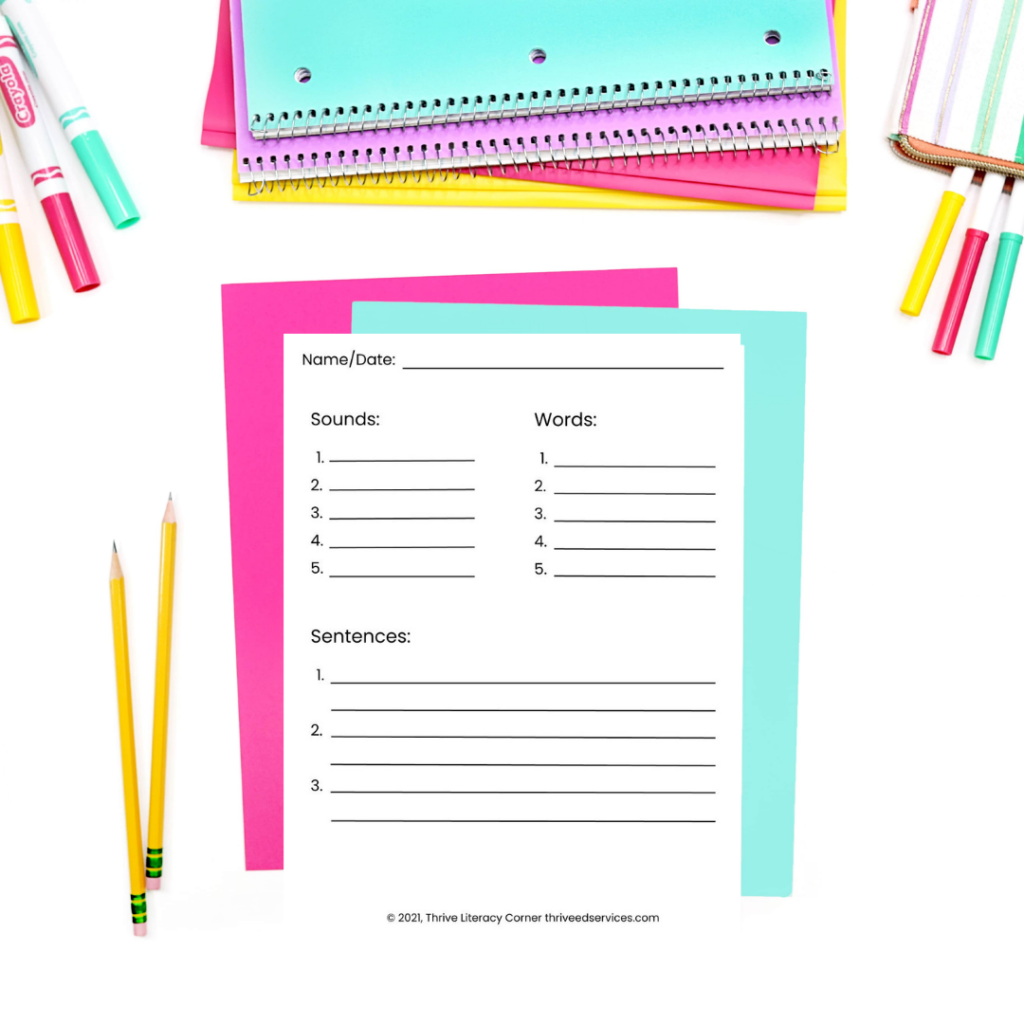
Dictation is the only version of this that works on 22 students at once. Say a word, students write it, repeat five times.
Use five words that all contain the skill you’re checking, and pull at least two of them from words you never practiced this week. A student who drilled the same list for five days can produce the letter sequence from memory without connecting it to the sounds, and unfamiliar words keep that from showing up as mastery.
For the letter Z at the end of the alphabet: zip, zap, zig, cup, bed. Collect the papers and count how many students got at least four of five. That number is your 80% answer for Monday.
Spelling works as a screen because a student who can spell a word can almost always read it. Both tasks pull from the same knowledge of which letters go with which sounds, and spelling is the harder of the two because the student has to produce every letter from memory rather than recognize what’s already on the page. Ehri’s research describes reading and spelling as two sides of the same skill for this reason.
That logic runs one direction only. Spelling the word correctly is good evidence the student can read it. Missing it is not proof they can’t, and the next section is where you find out which one you have.
A two minute check for the student question
For the students who missed on the dictation, sit down and run a word chain, which means changing one sound at a time and having the student read each new word.
Write “zip” and have the student read it, then change one letter and have them read the new word.
zip → zap → tap → top → mop → mob
Five or six words is enough. Watch for three things:
- Do they read every letter, or say the old word again? A student who says “zip” when you have written “zap” is holding the word in memory and coasting on the pattern instead of reading it.
- How long does each word take? Under about three seconds with no visible sounding out is mastery. Correct but slow is not there yet.
- Does a change in the middle trip them up? Vowel changes expose the most.

This is also the check that shows you speed, which dictation cannot. A student can know exactly which letters spell “zip” and still need six seconds to read it in a book, and that student is not done with Z.
Run the chain three times across three weeks and you have your 90% answer for that student.
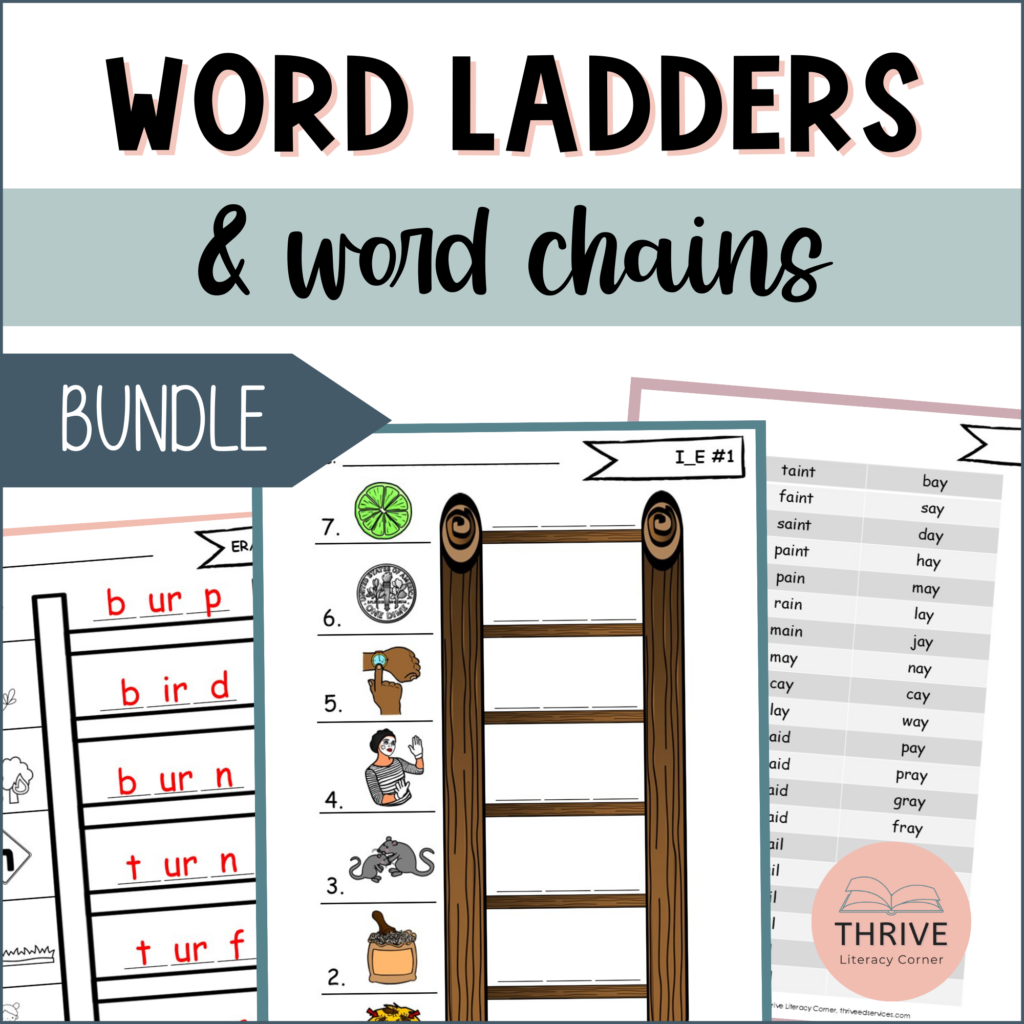
Word chains are the fastest check I know because they’re also a teaching activity, so the two minutes are never wasted. If you want them already built and sequenced, my Word Chains and Word Ladders sets cover CVC through vowel teams.
Reading it and spelling it are two different thresholds
A student will read “chip” before they can spell “chip,” and that’s the normal order.
So when a student misses on the dictation but reads the word chain cleanly, you are looking at a spelling lag and not a decoding problem. Keep them in the whole group sequence and give the encoding work its own timeline.
Say out loud which threshold you are checking before you decide anything based on it.
Check it again three weeks later
Weekly checks tell you about this week’s lessons. The periodic check tells you whether anything stuck.
Three weeks after you finish digraphs, pull a check on digraphs again. Students who were at 90% might come back at 70%, and Friday assessments might not show you that. This is how you find out whether the cumulative review actually carried the students you moved on without.
If a handful of students dropped, that’s small group work, and you start at the lowest skill not yet mastered rather than at the skill they dropped on. If the majority dropped, reteach it to the whole class, because that result is telling you something about how the skill was taught or how much practice followed it.
This is R in the READS framework, Respond to Data, running on a longer clock than one week. Your whole group holds the sequence and keeps moving while your small groups start wherever each student actually is. I walked through that structure in my post on teaching phonics when half your class is below grade level, so I won’t rebuild it here.
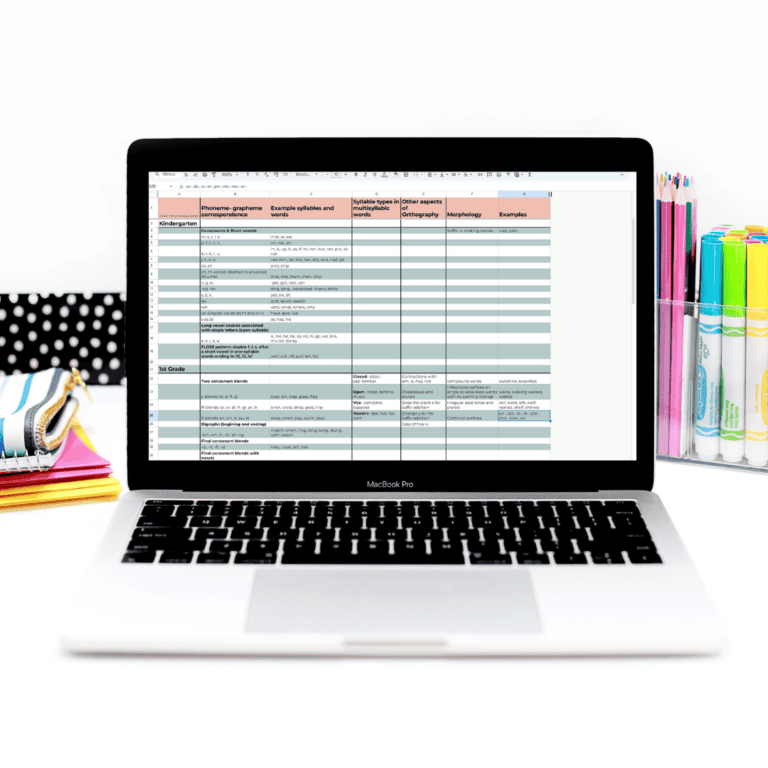
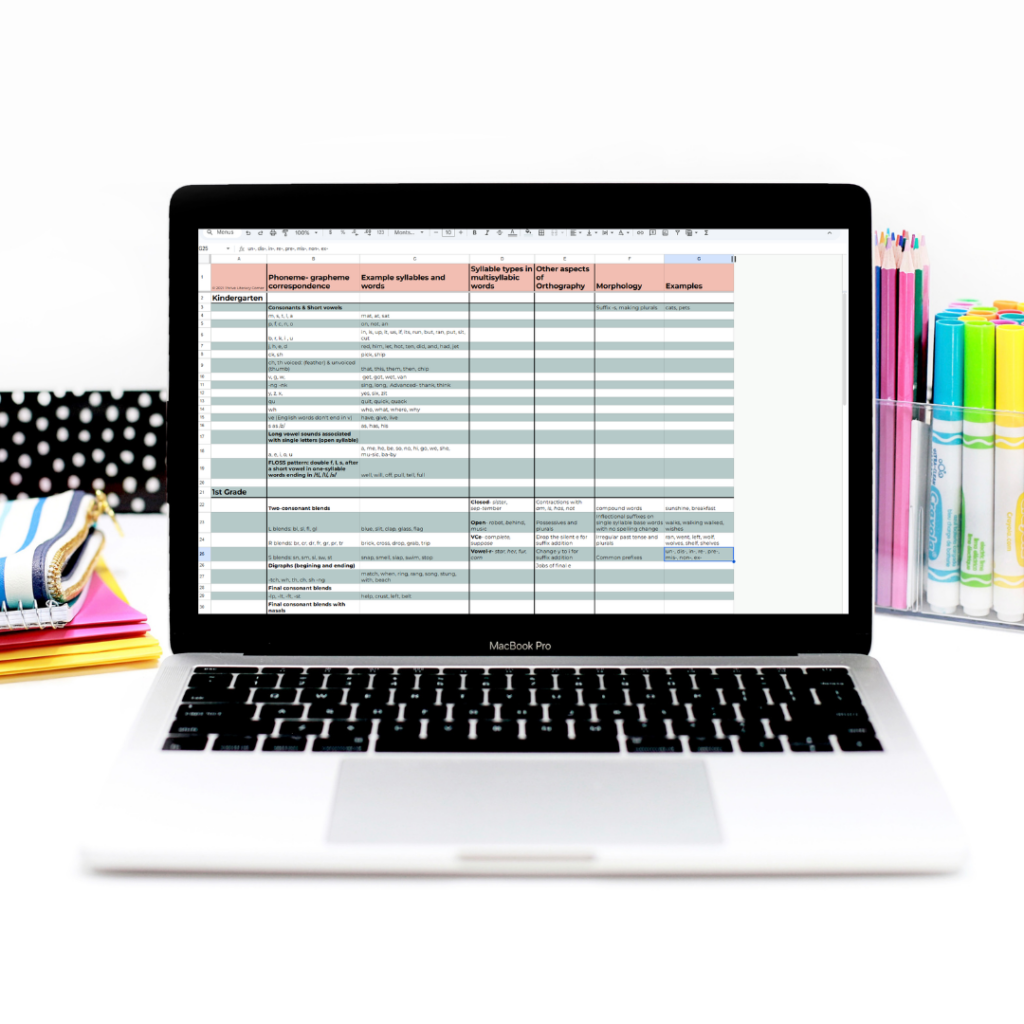
Free download: you can’t answer any of this without knowing what comes next. My K-2 scope and sequence is in the free Thrive Freebies Library, along with everything else I’ve built for planning. Grab it here.
Join my list and get access to my vault of freebies, plus weekly emails with tips, new posts, and promotions!
*Most school spam filters block my emails, so please use a personal email.

When the answer really is “don’t move on”
If more than half your class is not close, stop.
That result is usually telling you something about the instruction rather than the students. The pace may be faster than the practice time you actually have. It may also be that students moved to independent work before they had enough guided practice with you, or that a skill underneath this one was never solid. In kindergarten, that’s usually blending.
Reteaching to the whole class is the right call there, and it takes less time than teaching digraphs to a class that isn’t ready for them.
Before Thursday comes around again
Run these checks so that Thursday’s question already has an answer waiting for you.
Pick one skill your class finished three weeks ago, then run a two minute word chain with a group of students on Monday and see what’s still there.