What to Do When Reading Intervention Isn’t Working

This post may contain affiliate links, and I will earn a commission if you purchase through these links. Please read the disclosure policy for more details.
I had a fifth grader who wasn’t progressing in reading.
She was brilliant. On the autism spectrum. Highly capable in so many ways. But no matter what I tried in her leveled reading group, nothing moved the needle.
I kept thinking she needed more practice and more time with text. I adjusted the books. I changed the grouping and added more support.
But years later, I realized the truth. She didn’t need more reading group time. She needed phonics instruction, and I was working hard on the wrong problem.
The hardest part was that didn’t figure it out until it was too late to help her.
When “Trying Everything” Still Doesn’t Work
There’s a specific kind of frustration that comes with having one student who just isn’t responding.
You’ve adjusted your small groups and tried different materials. You’ve probably also given them extra time and attention. And still, the data stays flat. They’re trying… and so are you.
But somewhere between what you’re teaching and what they actually need, there’s a gap you haven’t found yet. And until you find it, nothing you do will significantly change things.

The Difference Between Slow Progress and No Progress
In case you didn’t know, slow progress is still progress.
If a student is moving, even incrementally, you’re on the right track. They might just need more time and repetition.
But if you’re seeing no movement for 4-6 weeks, that’s different. That’s not a “wait and see” situation. That’s a signal that something fundamental is missing.
Here’s what true stalling looks like:
- They can complete tasks with heavy support, but nothing transfers to independent work
- The same exact errors show up week after week
- They seem engaged during the lesson but can’t retain anything by the next day
- You keep simplifying the task, but even the simpler version doesn’t help
If that’s what you’re seeing, you’re not looking at a “more practice” problem. You’re looking at a mismatch between the instruction and the actual skill breakdown.
How to Conduct a Mini Skill Audit (Without Adding Another Assessment)
You don’t need another screener. And you don’t need to pull them for a full evaluation. What you need to do is look more closely at what they’re already showing you.
Here’s how to do a quick diagnostic check using the work you’re already doing together:
Step 1: Name the task they’re struggling with.
Be specific. Not “reading.” Not “decoding.”
Write down the exact thing they can’t do yet.
Examples:
- “Can’t blend CVC words“
- “Skips over word endings”
- “Reads the same high-frequency words wrong every time”
Step 2: Break that task into smaller pieces.
What does that task actually require?
For example, if they can’t blend CVC words, they need:
- Phonemic awareness (can they orally blend sounds?)
- Letter-sound knowledge (do they know the sounds?)
- Blending skill (can they string sounds together smoothly?)
Step 3: Test each piece in isolation.
This is where you find the actual gap.
Cover the text. Ask them to blend sounds orally with no letters.
Can they do it? Yes or no.
If yes, show them letters and ask them to say the sounds.
Can they do it? Yes or no.
If yes, ask them to blend those same letters into a word.
Can they do it? Yes or no.
Wherever they break down, that’s your starting point.
This works for one student. If half your class came back below benchmark on your screener, you don’t want to do this twenty times. My Reading Skills Assessment and Grouping Tool takes the data you already have and places each student at their lowest unmastered skill, so you can see your groups instead of building them. There are versions for the CORE Phonics Survey, the Quick Phonics Screener, and DIBELS, plus a Thrive assessment if you don’t use any of those.

What Their Errors Are Actually Telling You
Reading errors are data.
And if you look closely at how a student is getting something wrong, you’ll see exactly what’s missing.
Here’s what to watch for:
If they guess based on the first letter or the picture:
They’re not looking at the whole word. The breakdown is attention to print or phonemic awareness. They need practice isolating sounds and tracking through words left to right.
If they skip endings or read “jump” as “jumping”:
They’re not attending to every grapheme. The breakdown is visual tracking or orthographic mapping. They need work with word structure and morphology.
If they read the word correctly in isolation but wrong in a sentence:
The breakdown is fluency or cognitive load. They can decode, but they can’t decode and hold meaning at the same time. Slow down. Use fewer words. Reread more.
If they read nonsense words fine but freeze on real words:
This one’s tricky. It usually means they’re over-relying on decoding and don’t trust themselves to recognize words automatically yet. They need more repeated exposure to the same words in different contexts.
If they can’t retain anything day to day:
The breakdown is either working memory, lack of repetition, or the skill is still too hard. Go slower and practice fewer things for longer.
Your student is showing you what they need. The trick is knowing what to look for.
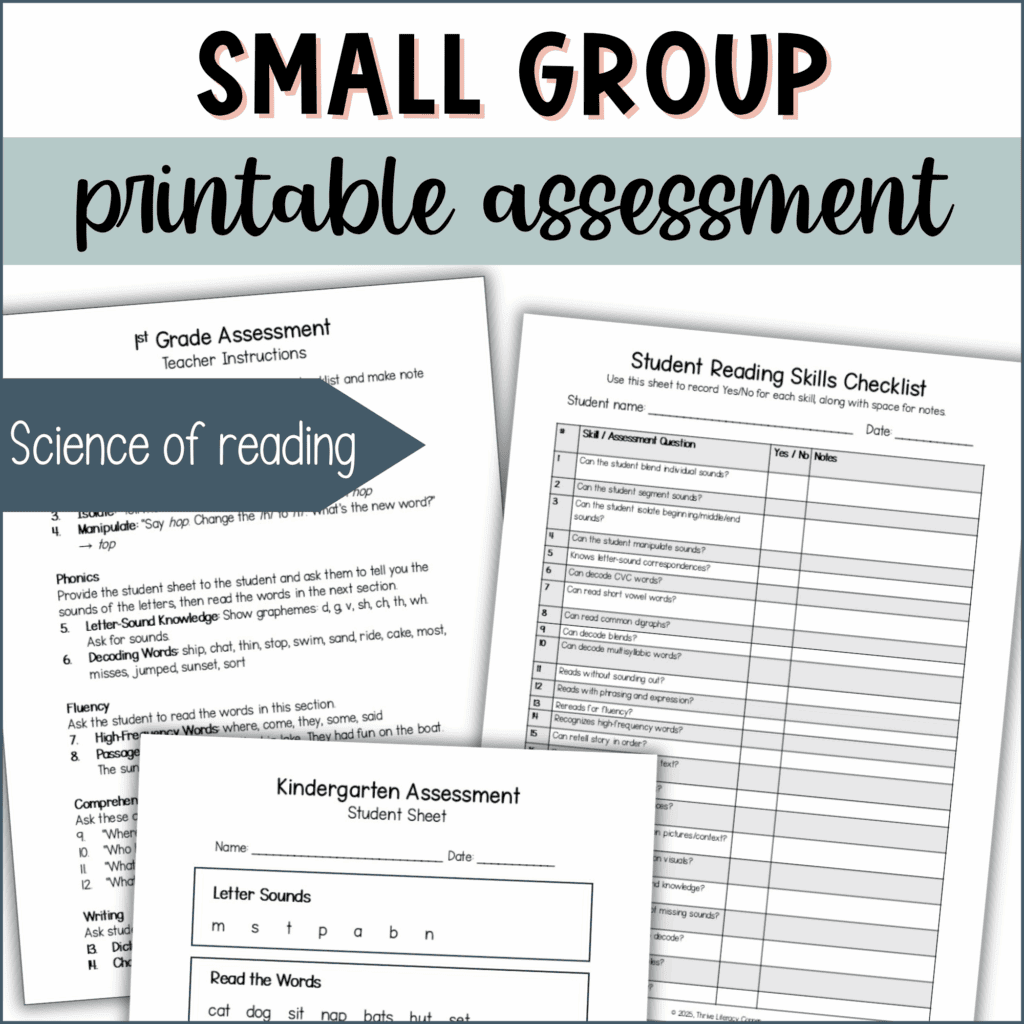
Need a structure to keep your small groups targeted and intentional? Grab the Small Group Lesson Plan Templates to take the guesswork out of planning.
How to Decide What to Adjust Next
Once you’ve identified the actual breakdown, you have to decide: what’s the one thing I’m going to change?
One thing, not five. Because if you change too much at once, you won’t know what actually helped.
Here’s a simple decision tree:
If the breakdown is phonemic awareness:
Work on blending and segmenting sounds, but keep the letters in front of them. Say the sounds, then map them to the graphemes. Oral-only practice is useful for a quick check, not as the intervention.
If the breakdown is letter-sound knowledge:
Drill sounds in isolation until they’re automatic. Use multisensory practice. Don’t move to blending until sounds are solid.
If the breakdown is blending:
Slow way down. Use continuous sounds. Arm tap or use sound boxes. Model blending multiple times before asking them to try.
If the breakdown is fluency or word recognition:
Reduce the number of words. Reread the same text multiple times. Build automaticity before adding new content.
If the breakdown is working memory or retention:
Shrink the scope. Teach one pattern for several days straight. Keep the routine predictable. Add more repetition, not more variety.
Choose one. Try it for two weeks. Track what changes.

One Thing You Can Try This Week
Pick the student you’re most worried about. Not the one who’s a little behind, the one who isn’t moving at all. Not the one who’s a little behind. The one who feels truly frozen.
Ask yourself: What is the exact task they can’t do yet?
Then break it down into the smallest possible pieces and test each one. You’re looking for the moment they go from “yes, I can do that” to “no, I can’t.”
That’s the gap, and that’s where you start
And once you know what’s actually missing, you’ll stop spinning your wheels trying strategies that don’t match the need.
You Don’t Have to Have All the Answers Right Now
I didn’t figure out what my fifth grader needed in time to help her.
But that experience taught me something I carry into every tough case now:
When a student isn’t responding, it’s not because they can’t learn. It’s because I haven’t found the right starting point yet.
You already have what you need to find it. Slow down and trust what the student is showing you.
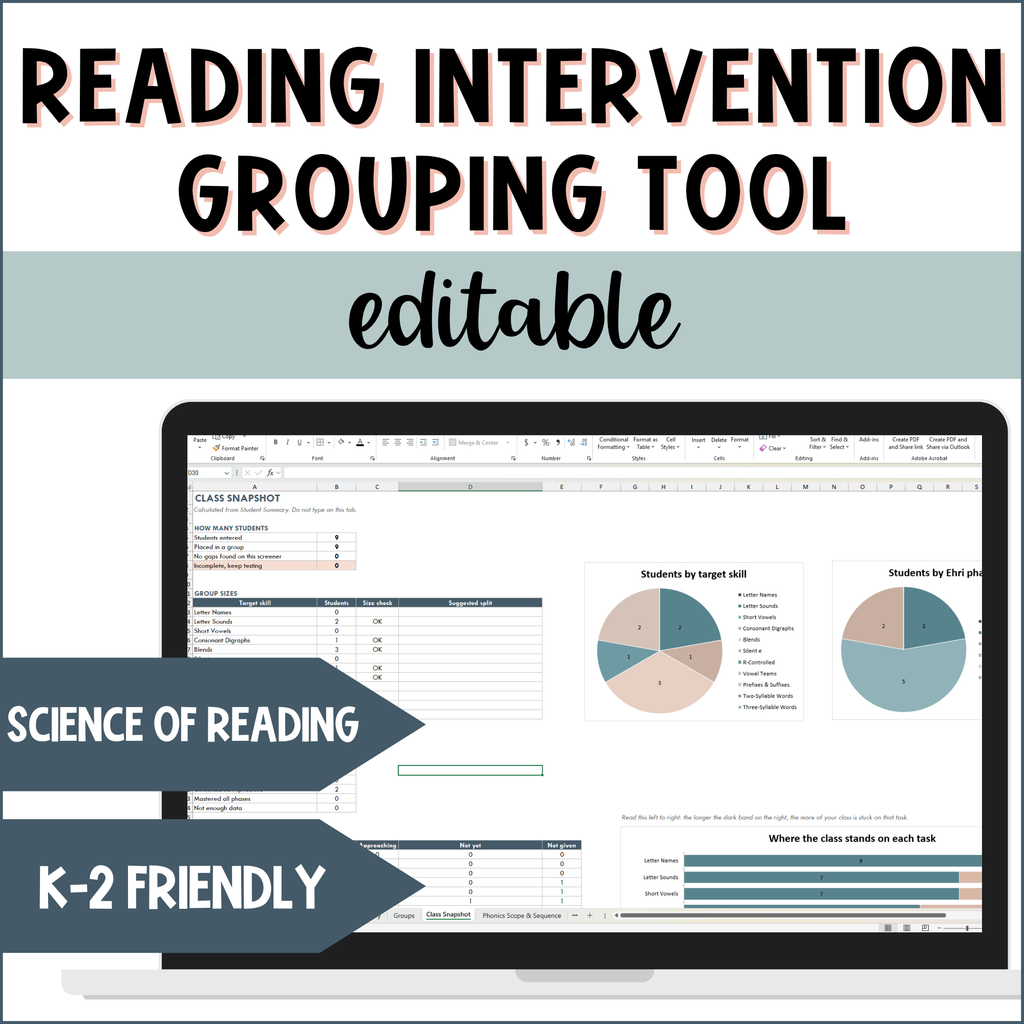
The Reading Skills Assessment and Grouping Tool tells you where each student starts. The Small Group Lesson Plan Templates give you the structure to teach it. Together they take you from data to Monday’s lesson.