How to Use Data to Keep Your Reading Groups on Target

This post may contain affiliate links, and I will earn a commission if you purchase through these links. Please read the disclosure policy for more details.
You’ve assessed your students. You’ve created your small groups. But a few weeks in, things start to shift.
Some kids are breezing through the lessons. Others are still struggling. And your carefully grouped students? Not so aligned anymore.
This is where many reading group plans stop working, because they weren’t built to change.
In this post on grouping by skill, we talked about why grouping by skill instead of level leads to better results. Today, let’s take it a step further, how to keep those groups working all year with a simple data-to-action cycle.
SCIENCE OF READING QUICK START GUIDE
Grab your FREE guide with the 5 tools you need to get started with SOR!
*Most school spam filters block my emails, so please use a personal email.

The Problem: Static Groups Don’t Work for Growing Readers
We’ve all done it: created groups at the beginning of the year and kept them mostly the same for weeks, maybe months. It’s what we were taught to do.
But young readers grow fast, and not always on the same timeline. Some soar with decoding but need support in comprehension. Others still struggle with phonics patterns while everything else clicks.
Small group time starts to feel frustrating. Lessons don’t quite match the group anymore. Planning gets harder. And students don’t move forward like they should.
The Science Behind Flexible, Skill-Based Grouping
The Science of Reading tells us that learning to read is not a single skill, it’s a combination of many components that develop together over time. Scarborough’s Reading Rope illustrates this well: foundational skills like phonemic awareness and decoding work alongside language comprehension, background knowledge, and vocabulary.

When we group students by overall reading level, we miss the opportunity to target the exact subskills that need strengthening. A student who reads on level might still struggle with decoding vowel teams, while another who decodes well may need comprehension support. Flexible, skill-based grouping allows us to respond to these needs in real time.
Structured literacy approaches are explicit, systematic, and diagnostic. That means we teach one clear skill at a time, and we make grouping decisions based on current student data, not a static score. This cycle puts that research into practice.
The Solution: A Cycle of Flexible, Skill-Based Planning
Instead of static groups, use a simple 6-step cycle that helps you teach the right skills at the right time.
Step 1: Assess
Start by pinpointing what each student needs right now. You can use standard assessments like DIBELS, Acadience, or the Quick Phonics Screener. You can also use quick skill checks:
- Phonics: Decoding lists with CVC words, digraphs, vowel teams
- Phonemic awareness: Deletion or substitution tasks
- Fluency: One-minute reads with decodable text
- Comprehension: Literal and inferential questions on short passages
Example: You ask your group to read 10 short vowel CVC words. Two students miss almost every word. You jot down: “Still needs CVC decoding work, especially short e and short u.”
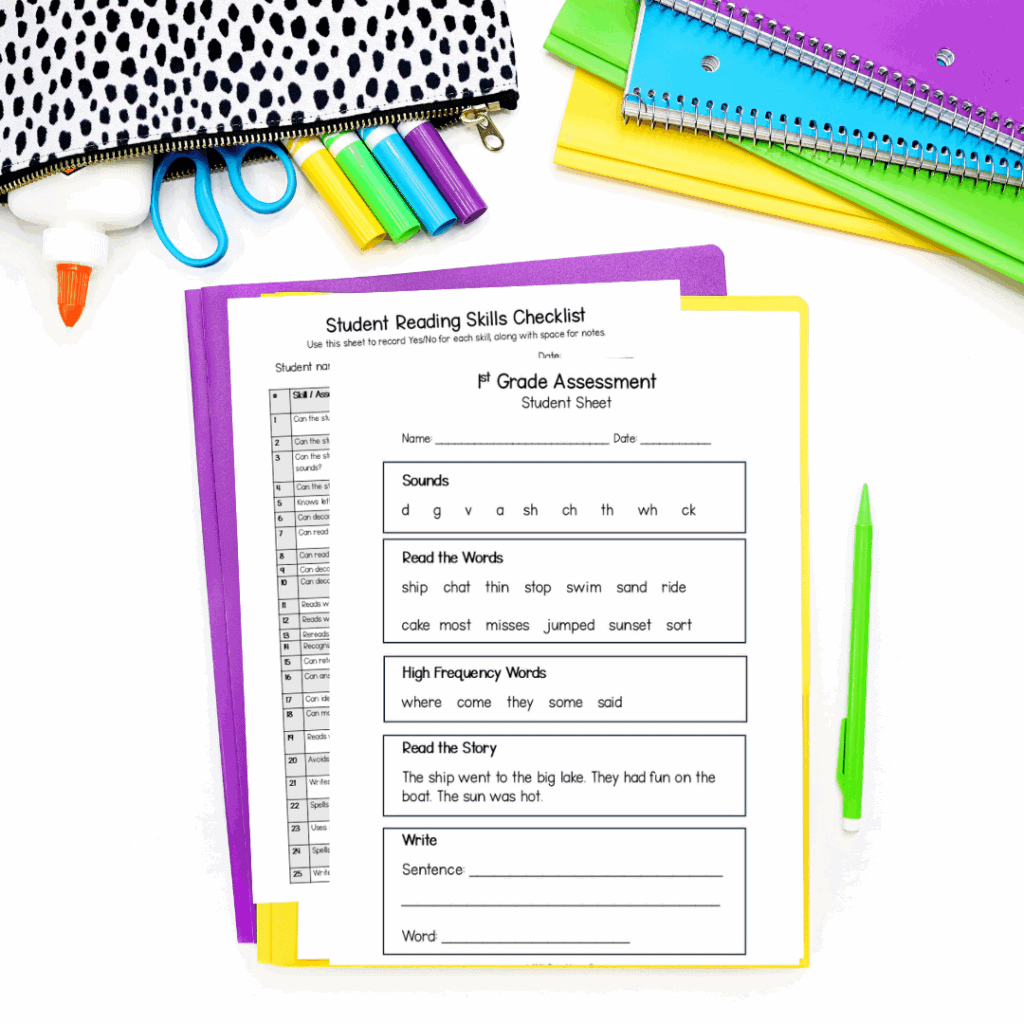
You can use this quick small group assessment if you don’t have an assessment you can use to group your students.
Step 2: Analyze
Sort your notes or assessment data by skill, not by reading level.
Example: You notice that:
- 3 students are still struggling with short vowel decoding
- 5 have mastered short vowels but struggle with digraphs
- 3 need fluency support (reads accurately, but slowly)
Now you’ve got the basis for three different skill-based groups.

This reading grouping tool spreadsheet will automatically sort your students into groups based on their skills.
Step 3: Group
Form small, flexible groups based on one primary skill. These may include students at different reading levels. If you’re not sure which skill a student is ready for next, Ehri’s phases of word reading development show you the order.
Example:
- Short Vowel group: Segment and blend CVC words using Elkonin boxes
- Digraph group: Map and build words like “ship,” “chat,” and “thick”
- Fluency group: Reread decodable passages using partner reading and phrase scooping

Step 4: Teach
Skill-based groups make instruction more targeted and manageable.
Example: For your short vowel group:
- Start with 3 Elkonin boxes and tap out “cup”
- Then switch one sound at a time: cup → cut → cat → mat → mad
- Finish with a 2-minute decoding game using word cards
Everything stays focused on the skill they need most.
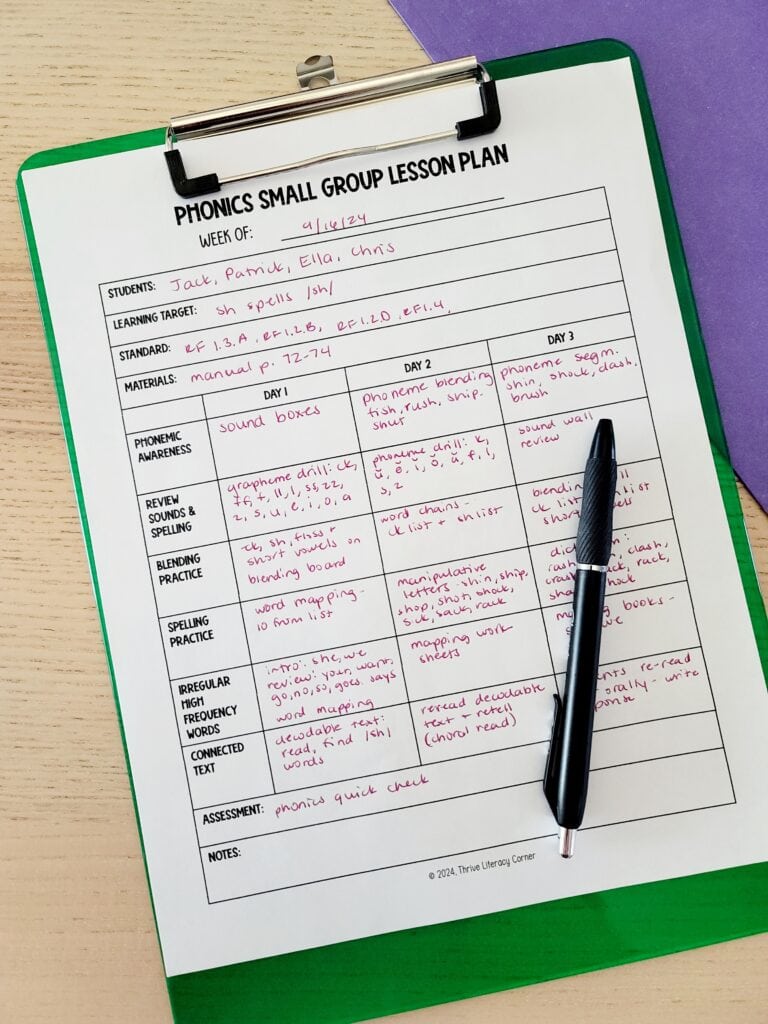
Step 5: Monitor
Use informal checks and notes during group time. No need for formal assessments every session.
Example: During a digraph lesson, one student still says /s/ for “sh.” You mark it in your notes and plan a quick reteach using picture sorts like “sip” vs. “ship.”

Step 6: Adjust
Every few weeks (or sooner), reassess and regroup.
Example: After 3 weeks, two students in your short vowel group are reading CVC words with ease. You reassess, confirm they’re ready for digraphs, and move them up. The other stays and continues with scaffolded support.
Real Classroom Example
In September, you have a group working on CVC words. By October, half are ready for digraphs and the rest still need blending support. You adjust the groups: some move on, others stay, and both get what they need.
This kind of flexibility prevents wasted time and boosts reading progress.
Make It Easier with a Done-for-You Tool
You can manage this process with sticky notes and spreadsheets. But if you want something quicker for the first three steps, my Reading Intervention Data Tracker & Small Group Generator sorts students into skill groups from your screening data..
It works with the CORE Phonics Survey, the Quick Phonics Screener, DIBELS 8, or the Thrive Reading Skills Assessment that comes with it. Use it each time you screen, at the beginning, middle, and end of the year.
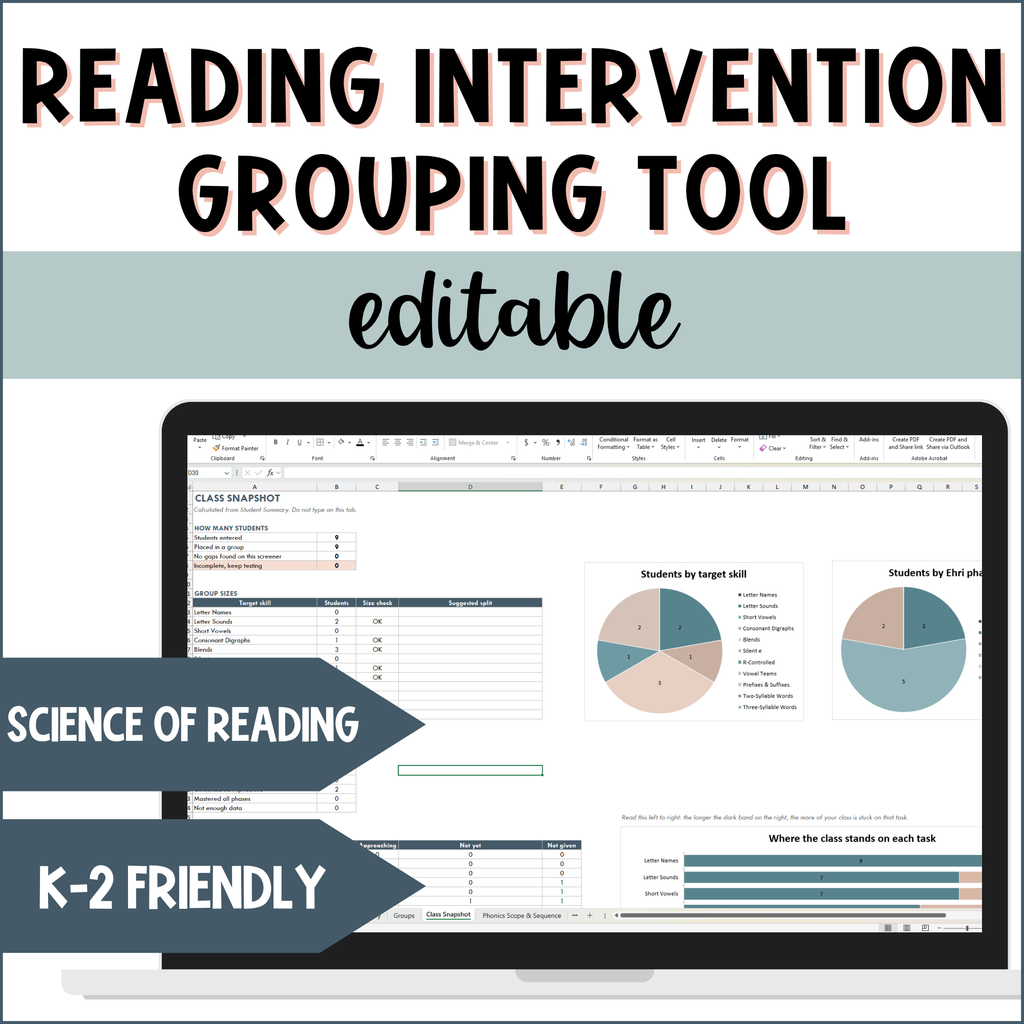
Check it out here: Reading Intervention Grouping Tool and Small Group Planner
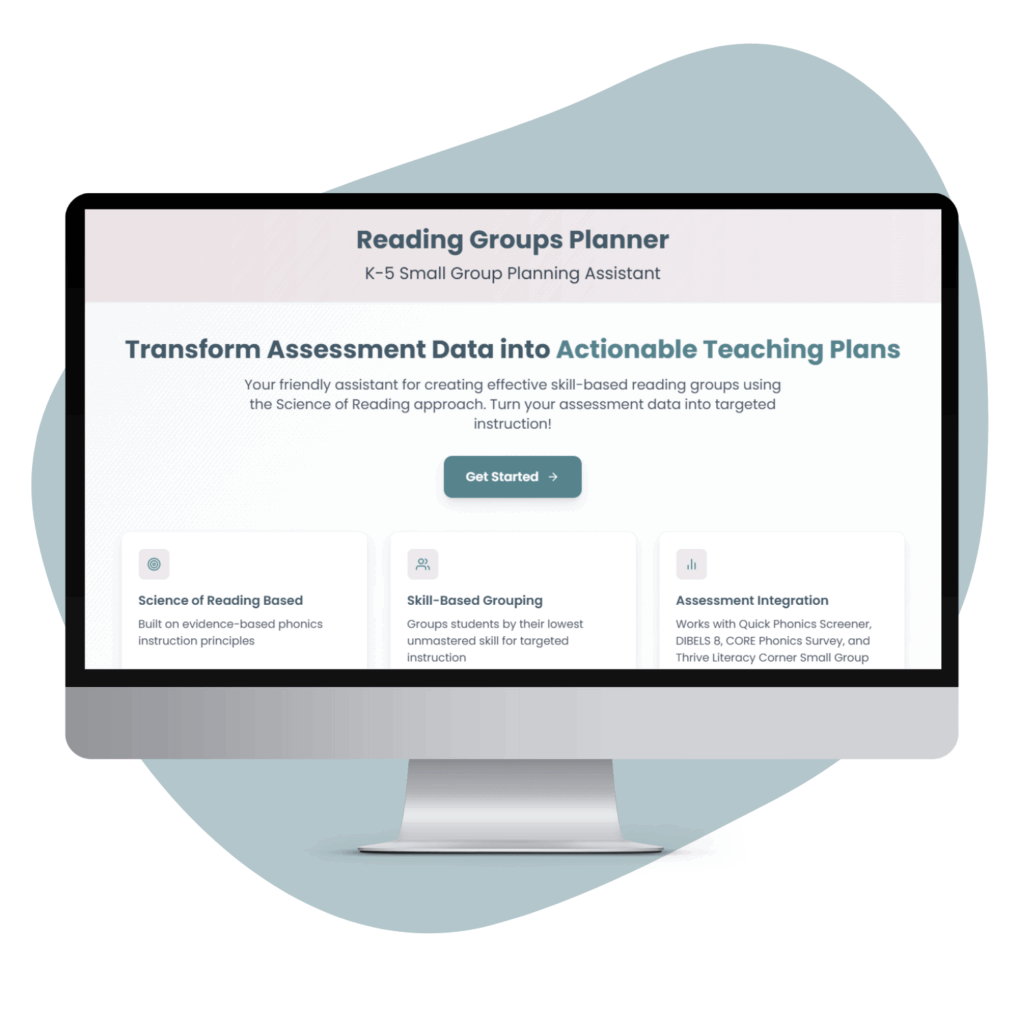
Not ready to invest in a paid tool? Try the free reading groups planner app on my website.
Final Thoughts
Grouping isn’t a one-and-done event. It’s a responsive, ongoing part of effective reading instruction.
When you follow this cycle of assess, analyze, group, teach, monitor, and adjust, your students keep moving forward.
And you make your own planning so much simpler.
SCIENCE OF READING QUICK START GUIDE
Grab your FREE guide with the 5 tools you need to get started with SOR!
*Most school spam filters block my emails, so please use a personal email.