Doing All the SoR Things and Still Not Seeing Results? Here’s Why

This post may contain affiliate links, and I will earn a commission if you purchase through these links. Please read the disclosure policy for more details.
You know the teacher I’m talking about. Maybe you are that teacher.
You’ve done everything. You sat through the PD. You bought the decodable readers and the phoneme mapping sheets. You restructured your reading block, dropped the leveled readers, and stopped asking kids to use picture cues. You followed the curriculum, watched the YouTube videos, joined the Facebook groups.
And some of your students are still not making the progress you expected.
This is one of the most frustrating places to land, because from the outside, it looks like you’re doing everything right. And in a lot of ways, you are. The problem isn’t effort. It’s not even the resources. It’s something that happens underneath all of it, and once you see it, a lot of things start to make more sense.
It’s also not your fault. Here’s why.
Nobody Fully Taught You This to Begin With
Nearly half of teacher preparation programs don’t cover the core components of the science of reading adequately. That’s not a small percentage. It means a huge number of teachers entered their classrooms without ever being properly taught how reading actually develops in the brain, what the research says about decoding and orthographic mapping, or how to build a literacy block that addresses all the right components in the right order.
When the SoR conversation started heating up and teachers rushed to get on board, many were trying to implement something they only partially understood. Not because they weren’t paying attention. Because the foundation was never laid.
That gap matters. Without a full picture of the “why” behind a practice, you can follow all the steps and still miss what’s most important.
Doing the Things vs. Understanding the System
There is a real difference between implementing SoR strategies and actually understanding how reading develops.
When you have a clear mental model of how a child moves from no reading knowledge to fluent reading, you can look at a student who isn’t progressing and actually figure out what’s missing. You can ask: Is this a phonemic awareness issue? Is she not mapping sounds to print yet? Is he stuck at the alphabetic phase and just memorizing words without fully processing them? You can adjust.
Without that foundation, you’re implementing activities without being able to evaluate them. You follow the lesson plan, but you’re not sure what to do when a student doesn’t respond the way you expected. You move on because that’s what the schedule says, even if something feels off.
Going through the motions without being able to stop, check, and adjust is one of the biggest reasons teachers do all the right-sounding things and still don’t see the results they’re expecting.
Common Reasons It’s Not Working (That Have Nothing to Do With How Hard You’re Trying)
Here are the patterns I see most often when a teacher is doing SoR work but not seeing the results she expected:
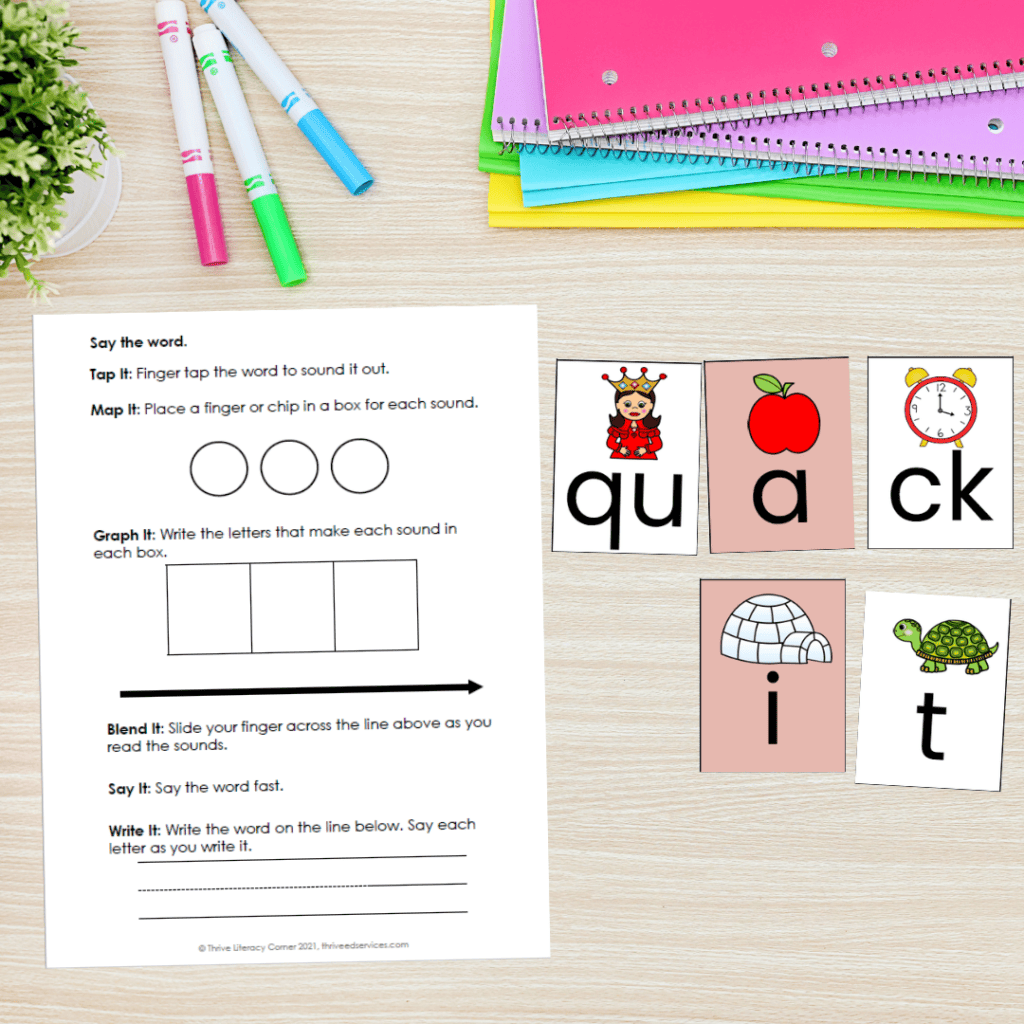
Thinking SoR = phonics only. The science of reading is not just phonics. It includes phonemic awareness, fluency, vocabulary, language comprehension, and background knowledge. When teachers zero in on phonics and neglect the other components, students can decode words in isolation and still struggle with reading connected text. As I always say: “people saying SoR is just phonics… they are so misinformed.”
Trusting the “SoR-aligned” label. This one is everywhere right now. “Everybody’s slapping that label onto their products,” and a lot of the time those products are not actually science of reading aligned. When teachers don’t have a strong enough foundation to evaluate materials themselves, they end up using resources that sound right but don’t deliver. “Just saying that something is science of reading aligned doesn’t mean anything.”
All-or-nothing thinking. If you can’t get the “right” curriculum approved, it can feel like there’s no point trying to implement anything. Or you change everything at once, which creates chaos instead of progress. You don’t need to overhaul everything to move in the right direction.
Not enough repetition and practice. Explicit instruction requires more repetition than most teachers initially expect. Students need multiple exposures to a new phonics pattern across multiple days and in multiple contexts before it sticks. Moving too quickly through the scope and sequence because you’re trying to cover everything is one of the most common gaps.
Instruction that isn’t explicit enough. There’s a big difference between exposing students to a concept and explicitly teaching it. Explicit instruction means you name it, model it, guide practice, give feedback, and check for understanding. A lot of teachers are in the exposure zone without realizing it.
A school sequence that isn’t systematic. Not every school’s phonics scope and sequence is well-built. If the sequence doesn’t move from simple to complex in a logical order, students hit gaps and confusion even when teachers are working hard.
Not enough dedicated time. Quality literacy instruction takes protected, consistent time. When reading instruction gets squeezed or interrupted regularly, students don’t get the volume of practice they need.
Skipping assessment and moving on anyway. Without regularly checking in on what students actually know and can do, it’s easy to keep teaching forward while leaving gaps behind. Assessment doesn’t have to be elaborate. It just has to be consistent enough to tell you whether what you’re doing is working.

What Changes When You Actually Have the Foundation
When you understand the research behind reading development, not just the activities, your teaching changes in a specific way.
You stop collecting strategies and start making decisions. You can look at a student who isn’t making progress and actually figure out why, instead of just trying something else and hoping it works. You can evaluate whether a resource is actually sound before you spend time on it. You can explain your instructional choices to a parent or an administrator without second-guessing yourself.
Teachers who have worked through this describe it as finally feeling organized. One said it “provided an organized framework” that helped everything else make sense. Another said it “given me more confidence” in her daily instruction. Confidence that comes from actually understanding what you’re doing is different from confidence that comes from hoping you’re doing it right.
The students reflect that too. When teachers have this kind of grounded understanding, “students have greatly benefited” and made “strong progress” in ways that were hard to reach before.
You Don’t Need an Overhaul. You Need to Fill the Gaps.
This is usually the part that comes as a relief.
You don’t need to throw out everything you’re doing and start over. You don’t need a new curriculum or more resources. What most teachers need is a clear, organized understanding of how reading works so they can look at what they’re already doing and figure out what’s missing, what needs more depth, and what to stop spending time on.
Stop chasing the next thing. Build the knowledge base that lets you evaluate everything else.
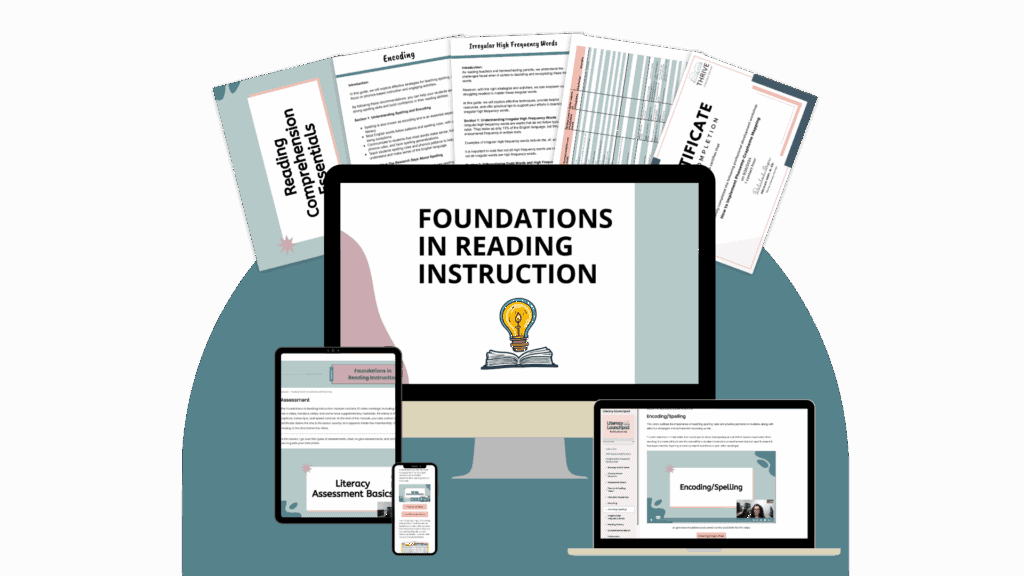
That’s exactly what my course, Foundations in Reading Instruction, is built to do. It’s a self-paced, 10-module course that walks you through the science of reading in plain language, with practical application built in. No fluff, no overwhelm. Just the foundational knowledge you need to teach reading with intention and actually understand what you’re doing and why.
You can learn more here.
The Bottom Line
Doing all the SoR things without the underlying knowledge is like following a recipe without understanding how cooking works. You can get through the steps, but when something goes wrong, you don’t know what to adjust.
The teachers who see the biggest jumps in their students’ reading progress are not the ones with the best materials. They’re the ones who took the time to actually learn what’s happening when a child learns to read, and what to do when it’s not happening the way it should.
That’s the piece that makes everything else work.
⭐ Limited-Time Offer ⭐
Foundations in Reading Instruction is available for $59 (regularly $97) from April 27 through May 1. Self-paced, 10 modules, PD certificate included.
👉 Enroll here
Sources
- National Council on Teacher Quality. (2023). New data finds major gaps in science of reading education for future elementary teachers. https://www.nctq.org/press/new-data-finds-major-gaps-in-science-of-reading-education-for-future-elementary-teachers/
- Lexia Learning. (2024). Science of reading implementation: How to overcome common challenges. https://www.lexialearning.com/blog/science-of-reading-implementation-how-to-overcome-common-challenges
- 95 Percent Group. (2026). A guide to science of reading implementation for school leaders. https://www.95percentgroup.com/insights/a-guide-to-science-of-reading-implementation-for-school-leaders/