The Role of Morphology in Early Reading Instruction

This post may contain affiliate links, and I will earn a commission if you purchase through these links. Please read the disclosure policy for more details.
How Teaching Prefixes, Suffixes, and Root Words Builds Stronger Readers
When we think about teaching early reading skills, phonics and decoding often take center stage. While these are essential, there’s another powerful tool that helps students become stronger readers: morphology.
Morphology is the study of word structure—how words are formed using prefixes, suffixes, and root words. When students understand how words are built, they can decode, spell, and comprehend more efficiently. In this post, we’ll explore why morphology is important and how to introduce it in your classroom.
What Is Morphology?
Morphology focuses on the smallest meaningful units of language, called morphemes. These include:
- Base words – Words that can stand alone (e.g., help in helpful).
- Root words – Words from Greek or Latin, most cannot stand alone (e.g., aud in audible).
- Prefixes – Word parts added to the beginning of a base word to change meaning (e.g., un- in unhappy).
- Suffixes – Word parts added to the end of a base word that can change meaning or grammatical function (e.g., -ed in jumped).
- Inflectional vs. derivational morphemes – Inflectional morphemes change a word’s tense, number, or degree (jump → jumping), while derivational morphemes create new words (happy → happiness).
Teaching students to recognize these word parts can make a big difference in their reading and writing development.
How Morphology Supports Early Reading Skills
1. Boosts Decoding and Spelling
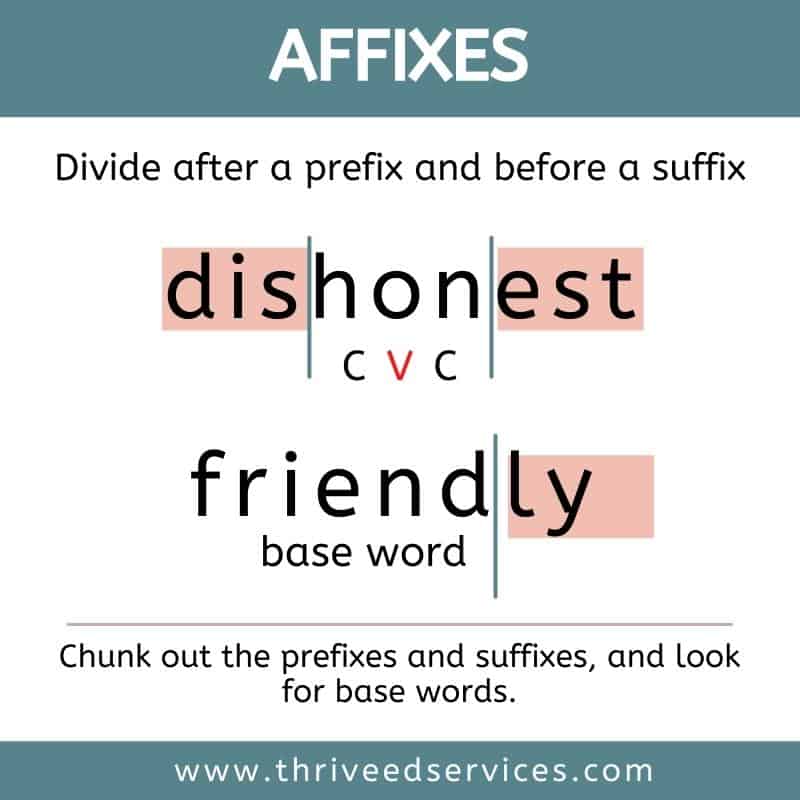
Recognizing prefixes, suffixes, and root words helps students break long words into smaller, manageable parts. Instead of struggling with a big, unfamiliar word, they can tackle it piece by piece.
For example, a student encountering the word “replay” can break it down into “re-“ and “play,” making it easier to read. Similarly, when spelling words, students who understand morphemes are less likely to make common errors (e.g., knowing that jumped has -ed at the end rather than -t).
2. Expands Vocabulary Knowledge
Morphology allows students to unlock the meanings of unfamiliar words without needing to memorize long vocabulary lists.
For example, if a student knows the prefix “bi-“ means two, they can figure out words like bicycle, biped, and bilingual. Similarly, understanding “tele-“ (far, distance) helps them decode words like telephone, telescope, and television.
3. Improves Reading Comprehension
Readers who understand word structure can grasp meanings more quickly and accurately. Instead of relying only on context clues, they can analyze word parts to determine meaning.
For example, when encountering the word “fearless,” a student who knows that “-less” means without can immediately understand that fearless means without fear.
This skill is especially helpful when students read complex academic texts, where unfamiliar words often appear.

4. Supports Writing and Oral Language Development
Students with strong morphological awareness use a wider range of words in both writing and speech. Instead of repeating basic words, they can use more precise vocabulary.
For instance, a student who typically writes, “The boy was very happy,” might instead write, “The boy was joyful.”
By recognizing morphemes, students naturally expand their vocabulary and develop stronger writing skills.
Strategies for Teaching Morphology in K-6
Start with Simple Word Parts
Introduce common prefixes and suffixes early. Some great ones to start with include:
- Prefixes: un-, re-, pre-, mis-, dis-
- Suffixes: -ed, -ing, -er, -est, -ful, -less
Have students explore how adding these to words changes meaning (e.g., happy → unhappy, play → replay).
97% of prefixed words contain just 20 prefixes, and just 10 suffixes account for 85% of suffixed words (White, Sowell, & Yanagihara, 1989). So focusing on the most common ones can make a huge difference!
Use Word Building Activities
Engage students in hands-on activities where they manipulate word parts. Give them base words and have them add prefixes or suffixes to form new words.
For example, with the base word “help”, students can create:
- helpful (adding -ful)
- helpless (adding -less)
- unhelpful (adding un- and -ful)
Research has shown that it is more beneficial to discuss how affixes and base words affect meaning in context, instead of teaching affixes or bound roots in isolation.

Teach Morphology Within Context
Instead of teaching morphemes in isolation, highlight them in decodable books and vocabulary lessons. As students encounter new words, break them down together.
For example, if reading a book with the word “misunderstood,” stop and discuss:
- Mis- (wrongly)
- understood (past tense of understand)
- Meaning: wrongly understood
Incorporate Morphology in Spelling Instruction
Help students recognize patterns in spelling by focusing on morphemes. Teach them that some spelling changes happen with suffixes (e.g., run → running, hope → hoping) while others do not (play → playing).
Make It Hands-On
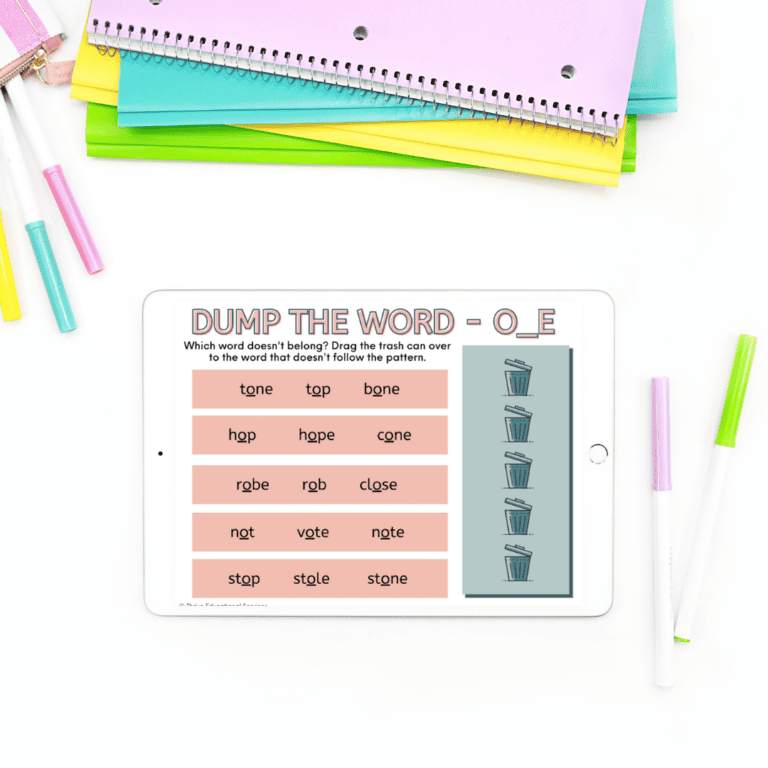
Use manipulatives like word cards, puzzles, or interactive digital tools to keep students engaged. Sorting activities where students group words by prefixes or suffixes can reinforce learning in a fun way.

Conclusion
Morphology is a powerful tool that helps students become stronger, more independent readers and writers. By teaching word parts, you’re giving students a deeper understanding of language that goes beyond phonics and memorization.
The best part? You can start introducing morphology at any grade level—even young students can benefit from learning simple prefixes and suffixes!