Complete Guide to English Phonics Rules (Teacher-Friendly Examples + Word Lists)

This post may contain affiliate links, and I will earn a commission if you purchase through these links. Please read the disclosure policy for more details.
Teaching phonics doesn’t have to feel like memorizing a giant list of exceptions. The rules of English spelling follow clear patterns, and once you know them, you can help students decode and spell with confidence.
This page is designed to be a teacher’s reference hub. You’ll find the rules:
- By teaching sequence – what’s introduced in kindergarten, reinforced in first grade, and expanded in later grades.
- Alphabetically – so you can quickly jump to any rule when you need it.
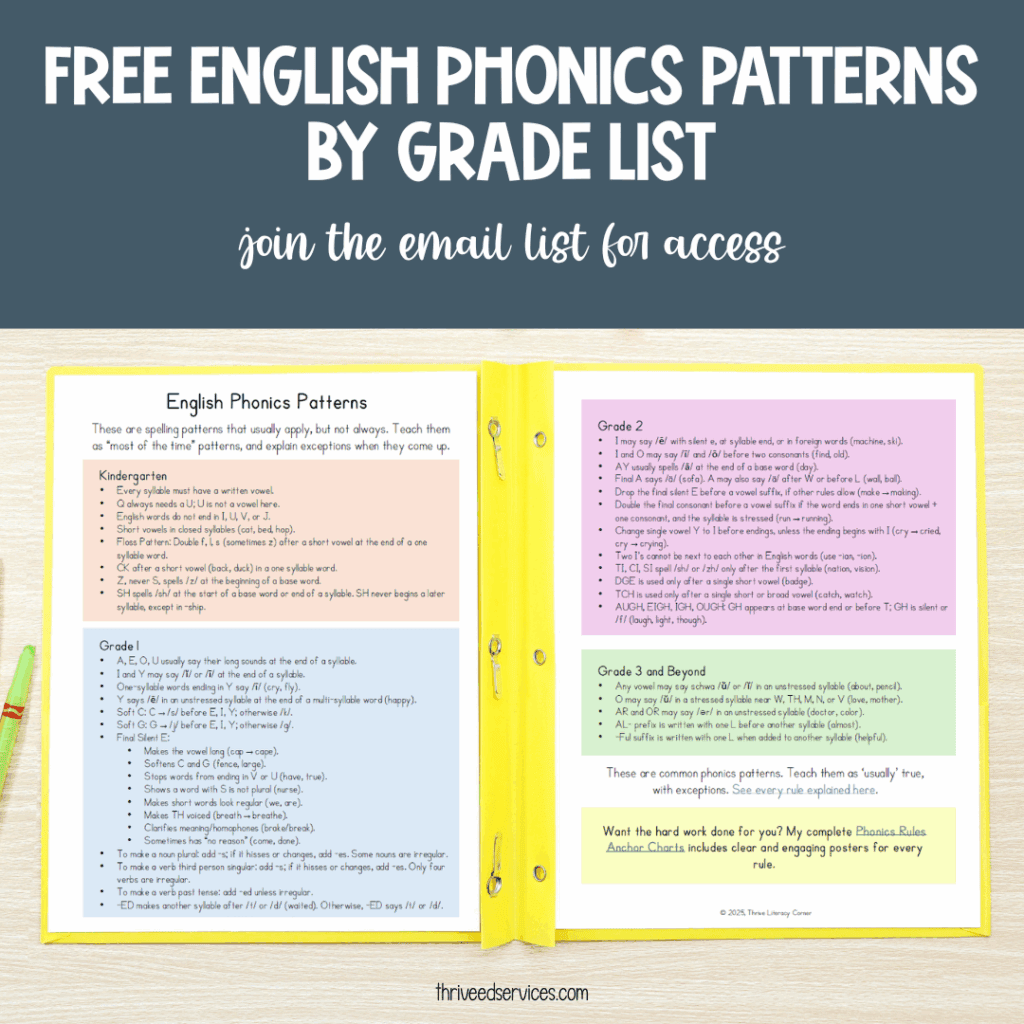
Before you scroll, grab the Free Phonics Rules Chart from the freebies library. It’s a printable two-page reference to keep handy during lessons or send home for families.
A note before we begin: I don’t love the word rule when it comes to phonics, because English always has exceptions. I prefer to call these patterns. When teaching students, I explain that these patterns are what usually happens in English spelling, but not always. There will always be some words that don’t fit, and that’s okay, we learn those as “heart words“.
Phonics Rules by Teaching Sequence
Kindergarten
These are the first rules students encounter as they learn to read and spell simple words.
- Every syllable must have a written vowel.
Every syllable needs at least one vowel letter. (ta-ble, ap-ple, a-bout). - Q always needs a U; therefore, U is not a vowel here.
Q never stands alone. It always pairs with U, as in queen, quick. - English words do not end in I, U, V, or J.
That’s why we write have, blue, true. J will never appear at the end of a base word. - Short vowels in closed syllables.
A consonant after a vowel closes the syllable, making the vowel short (cat, bed, hop). - Floss Rule: We often double F, L, and S after a single, short, or broad vowel at the end of a base word. Occasionally other letters are also doubled.
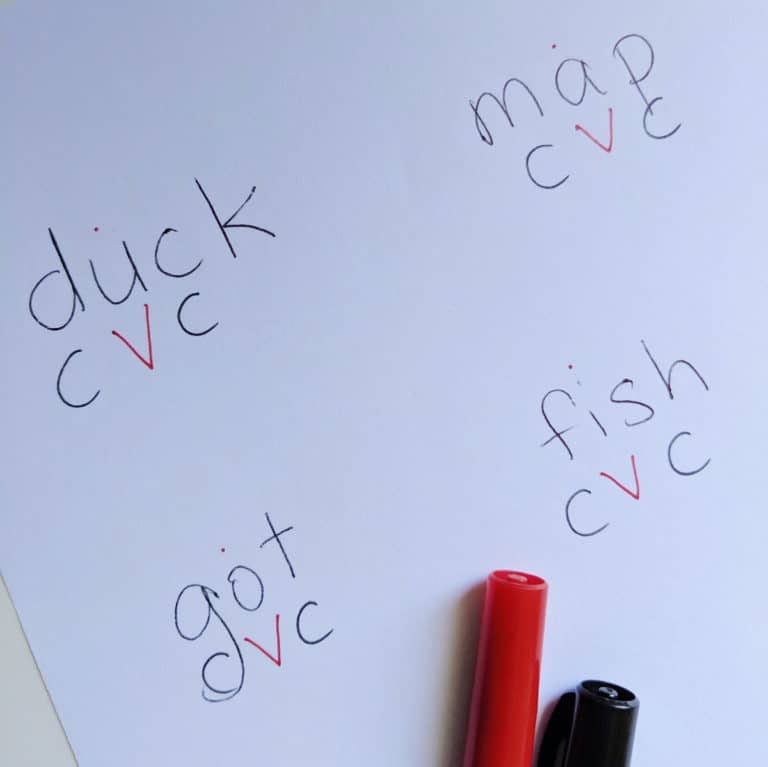
Examples: off, will, miss, buzz. - CK is used only after a single vowel which says its short sound.
Examples: back, sock, duck. - Z, never S, spells /z/ at the beginning of a base word.
Examples: zoo, zest. - SH spells /sh/ at the beginning of a base word and at the end of a syllable. SH never spells /sh/ at the beginning of any syllable after the first one, except for the ending -ship.
Examples: ship, finish, friendship.

Grade 1
Once students are solid with short vowels and basic spelling patterns, they’re ready for these rules.
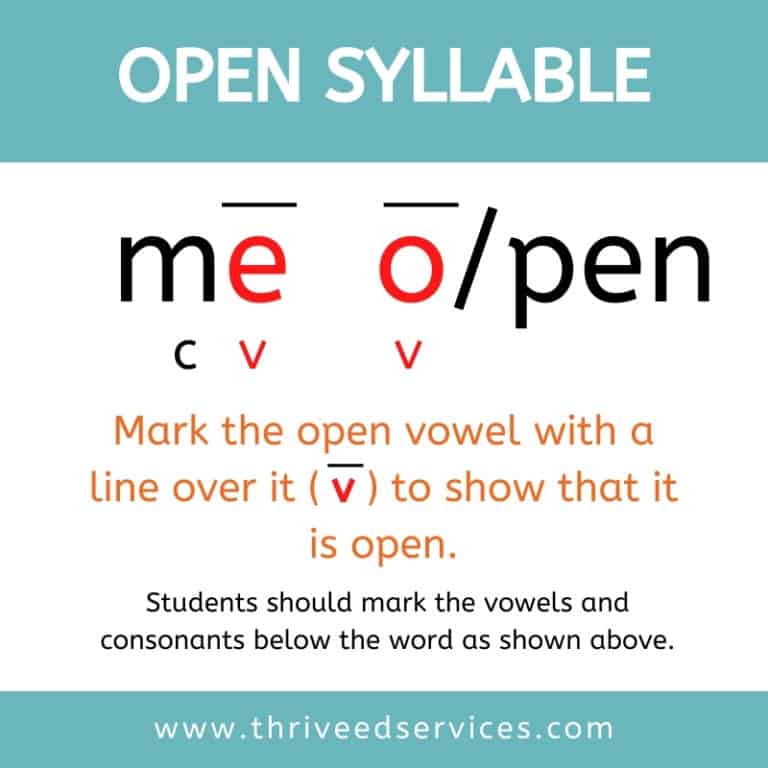
- AEOU usually say their long sounds at the end of a syllable.
Open syllables: ba-by, me, ro-bot, mu-sic. - I and Y may say /ĭ/ or /ī/ at the end of a syllable.
Examples: cli-mate, hy-phen. - When a one-syllable word ends in a single vowel Y, it always says /ī/.
Examples: cry, fly. - Y says /ē/ only in an unstressed syllable at the end of a multi-syllable word.
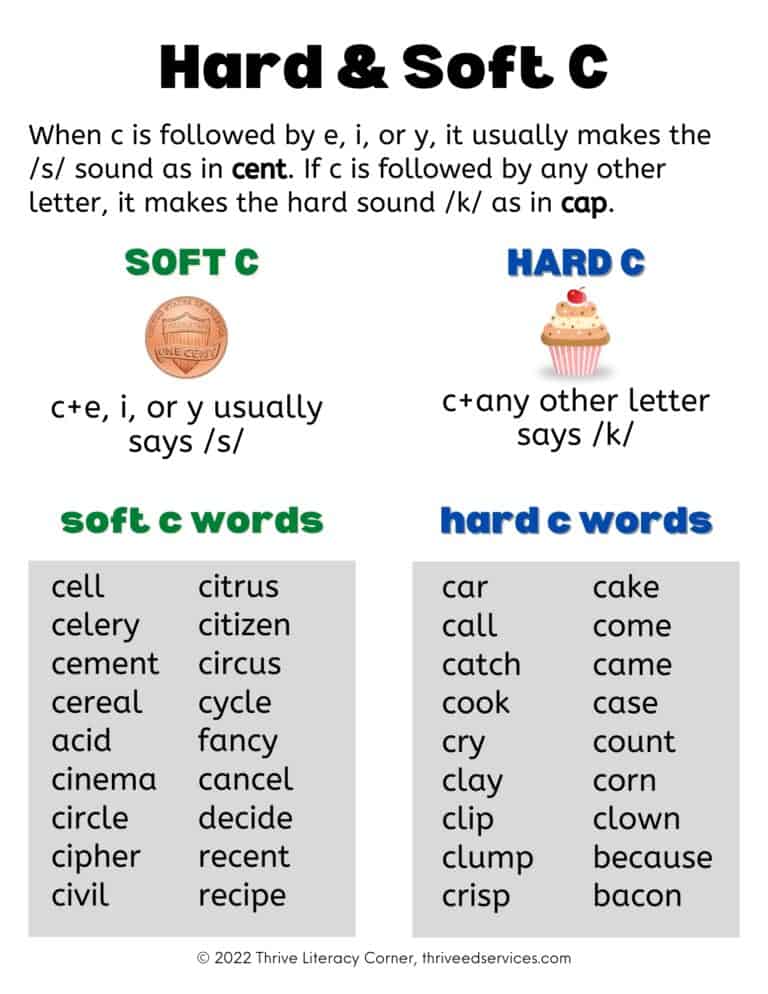
Examples: happy, sunny. - Soft C: C always softens to /s/ when followed by E, I, or Y. Otherwise, C says /k/.
Examples: cell, city vs cat. - Soft G: G may soften to /j/ only when followed by E, I, or Y. Otherwise, G says /g/.
Examples: gem, giant vs gap. - The vowel before a final silent e says its long sound because of the E.
Examples: cap → cape, hop → hope. - English words do not end in V or U. (final silent e).
Examples: have, true, blue. - Every syllable must have a written vowel. (consonant -le syllable / final silent e).
Examples: ta-ble, ap-ple. - The final silent e can show that a word that ends in S is not plural.
Example: nurse vs nurses. - The final silent e makes a 2 or 3 letter word look bigger.
Examples: we, are. - The final silent e makes the TH say its voiced sound /TH/.
Example: breath → breathe. - The final silent e clarifies the meaning of words and distinguishes from homophones.
Example: brake/break. - There may be an unseen reason for a final silent e. (very few words fall in here).
Examples: come, done. - To make a noun plural, add the ending -S, unless the word hisses or changes, then add -ES. Some nouns have no change or an irregular spelling.
Examples: cats, boxes, children. - To make a verb third person singular, add the ending -S, unless the word hisses or changes, then add -ES. Only four verbs are irregular.
Examples: runs, fixes, does. - To make a verb past tense, add the ending -ED unless it is an irregular verb.
Examples: jumped, wanted, ran. - -ED, past tense ending, forms another syllable when the base word ends in /d/ or /t/. Otherwise, -ED says /d/ or /t/.
Examples: waited, ended vs jumped, lived.

Grade 2
At this stage, students expand into more complex vowel patterns, suffix rules, and consonant spellings.
- I may say /ē/ with a silent final E, at the end of a syllable, and at the end of foreign words.
Examples: machine, ski. - I and O may say /ī/ and /ō/ when followed by two consonants (closed syllable exceptions).
Examples: find, old. - AY usually spells the sound /ā/ at the end of a base word.
Examples: play, day. - When a word ends with the grapheme A, it says /ä/. A may also say /ä/ after a W or before an L.
Examples: sofa, wall, ball. - Drop the final silent E when adding a vowel suffix only if it is allowed by other spelling rules.
Example: make → making. - Double the last consonant when adding a vowel suffix to words ending in one vowel followed by one consonant only if the syllable before the suffix is stressed.
Examples: run → running, begin → beginning. - Single vowel Y changes to I when adding any ending, unless the ending begins in I.
Examples: cry → cried, cry → crying. - Two I’s cannot be next to one another in English words.
Students see -ian, -ion endings instead. - TI, CI, and SI are used only at the beginning of any syllable after the first one.
Examples: nation, special, vision. - DGE is used only after a single vowel which says its short sound.
Example: badge. - TCH is used only after a single vowel which says its short or broad sound.
Examples: catch, watch. - AUGH, EIGH, IGH, OUGH. Graphemes ending in GH are used only at the end of a base word or before the letter T. GH is either silent or pronounced /f/.
Examples: laugh, light, eight, though.
Grade 3 and Beyond
By now, students are applying rules to multisyllabic words and learning less frequent patterns.
- Any vowel may say one of the schwa sounds, /ŭ/ or /ĭ/, in an unstressed syllable or unstressed word.
Examples: a-bout, fam-i-ly. - O may say /ŭ/ in a stressed syllable next to W, TH, M, N, or V.
Examples: love, mother, month. - AR and OR may say their schwa sound, /er/ in an unstressed syllable.
Examples: doctor, color. - AL- is a prefix written with one L when preceding another syllable.
Examples: almost, also. - -Ful is a suffix written with one L when added to another syllable.
Examples: helpful, joyful.
Alphabetical Index of Rules
Looking for a specific rule? Here’s a quick-click list (each will eventually link to its own post):
- AEOU usually say their long sounds at the end of a syllable
- AL- is a prefix written with one L
- Any vowel may say schwa in an unstressed syllable
- AR and OR may say schwa in an unstressed syllable
- AY usually spells /ā/ at the end of a base word
- CK is used only after a single short vowel
- DGE is used only after a single short vowel
- Drop the final silent e before a vowel suffix (if allowed)
- English words do not end in I, U, V, or J
- Every syllable must have a written vowel
- Final silent e (all jobs)
- Floss Rule
- I and O may say /ī/ and /ō/ before two consonants
- I may say /ē/ with silent e, syllable end, or foreign words
- O may say /ŭ/ in stressed syllable next to W, TH, M, N, or V
- Plurals (-s, -es)
- Q always needs a U
- SH Rule
- Single vowel Y changes to I
- Soft C Rule
- Soft G Rule
- Suffix -ful spelling
- TCH Rule
- Third person singular verbs
- TI, CI, SI Rule
- To make a verb past tense, add -ED
- Two i’s cannot be next to each other
- Y as /ē/ in unstressed syllables
- Y as /ī/ in one-syllable words
- Z vs S at word beginning
Grab 12 FREE phonics word lists & anchor charts by subscribing to my list!
*Most school spam filters block my emails, so please use a personal email.

Free Printables in the Freebies Library
By joining my email list (use the form above or click here), you’ll get access to many freebies, including:
- Phonics Rules Reference Chart – two-page, printable reference.
- Jobs of Silent Final E Poster – shows every job of the silent e.
- Floss Rule Charts
- Hard and Soft C and G Charts
- many word lists and more!
FAQs
What order should I teach phonics rules?
Start with short vowels, floss, and ck in kindergarten. Move into silent e, soft c/g, and plural endings in first grade. By second grade, introduce suffix rules, tch/dge, and advanced vowel teams. You can grab my K-3 scope and sequence inside my Science of Reading Quick Start Guide in the freebies library.
Do all words follow these rules?
Not always. English borrows from many languages, so some words are “heart words.” Still, these rules cover the majority of what students read and write.
How do I make these rules stick?
Use word sorts, dictation, and real reading practice. Teach the rule explicitly, then give students many chances to apply it.
👉 Bookmark this page and return as you teach new phonics rules. Each link above will take you to a detailed post with examples, word lists, and activities you can use right away.
SCIENCE OF READING QUICK START GUIDE
Grab your FREE guide with the 5 tools you need to get started with SOR!
*Most school spam filters block my emails, so please use a personal email.