Why English Words Do Not End in I, U, V, or J

This post may contain affiliate links, and I will earn a commission if you purchase through these links. Please read the disclosure policy for more details.
What This Pattern Means
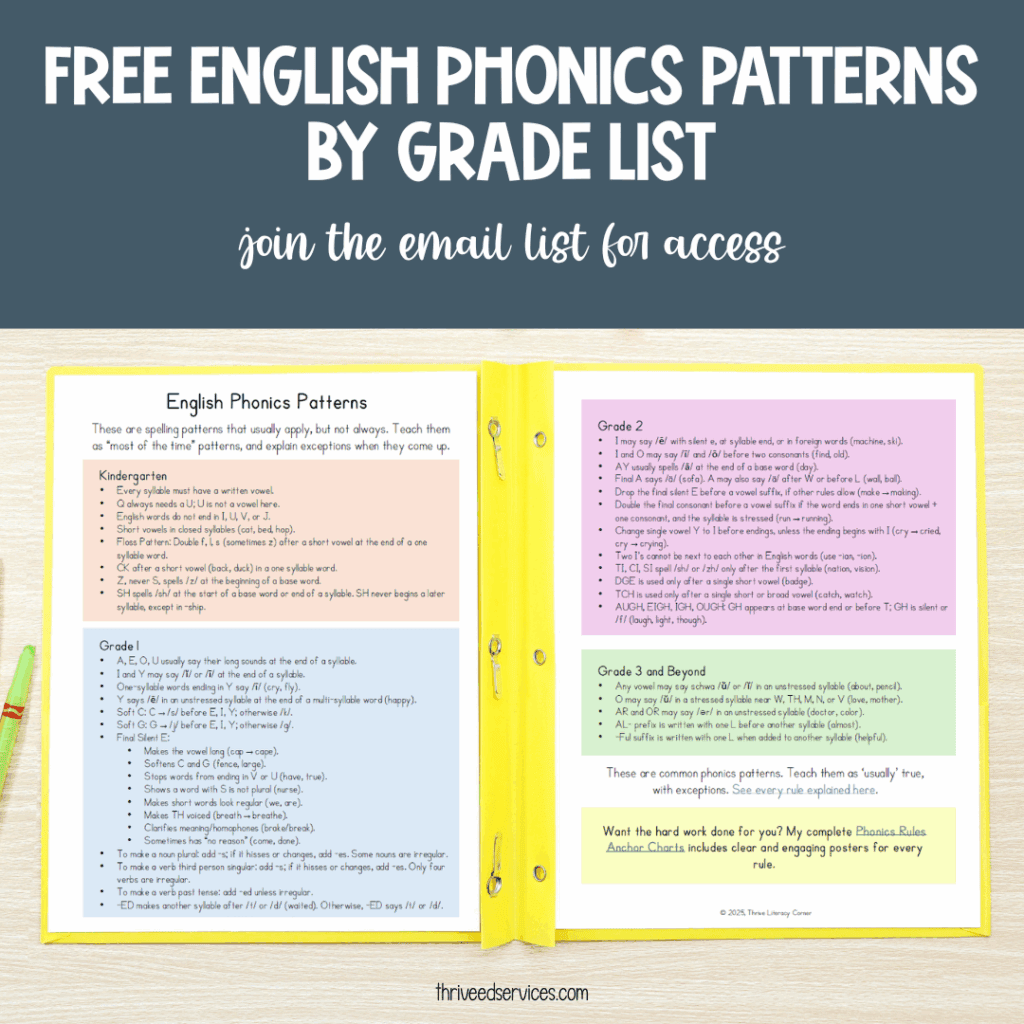
In English, words do not end in the letters I, U, V, or J.
That means:
- You won’t see a base word ending in i.
- You won’t see a base word ending in u.
- You won’t see a base word ending in v.
- You won’t see a base word ending in j.
To make these spellings work, English often adds a silent final e or uses another spelling pattern that fits our writing system.
A quick note: You’ll hear this called a rule, but I like to frame it as a pattern. Most of the time it works this way, but not always. When I introduce it to kids, I tell them: “This is what usually happens in English words, but there are some exceptions we’ll learn together.”
What About the Sounds at the End of Words?
Students often assume this pattern means words can’t sound like they end in /ī/, /ū/, /v/, or /j/.
But that’s not the case.
These sounds do appear at the end of English words. They’re just spelled differently.
Here’s how to explain it to kids in a simple, clear way:
Words that would end in V or U, but don’t
English adds a silent e to follow spelling patterns:
- hav → have
- giv → give
- tru → true
- blu → blue
So the final sound can be /v/ or /ū/, we just never write v or u at the end.
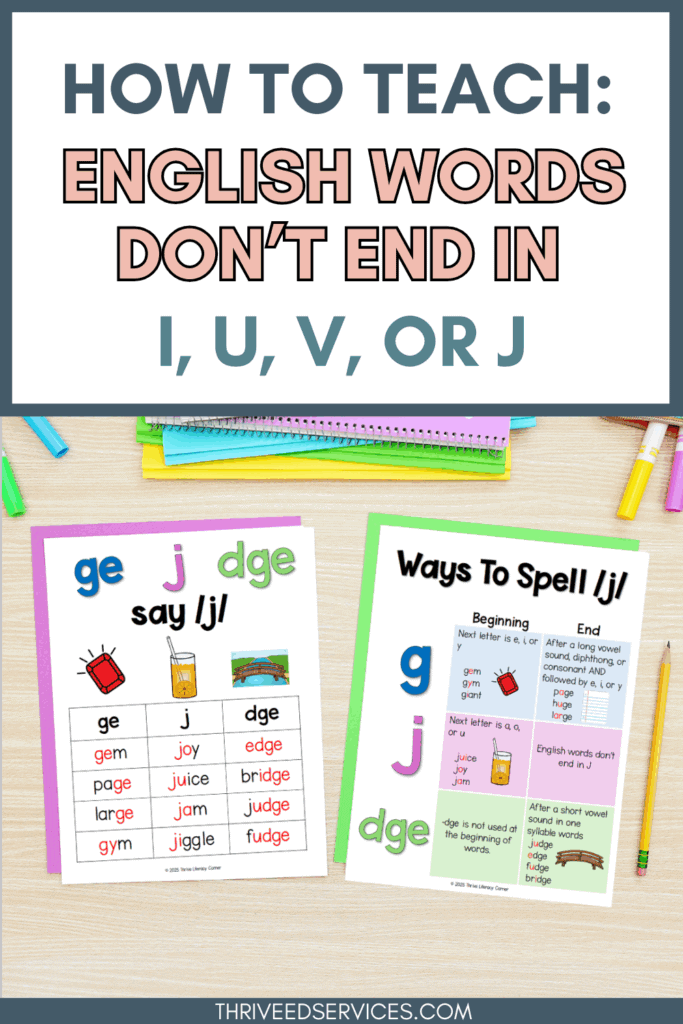
Words that end with the /j/ sound
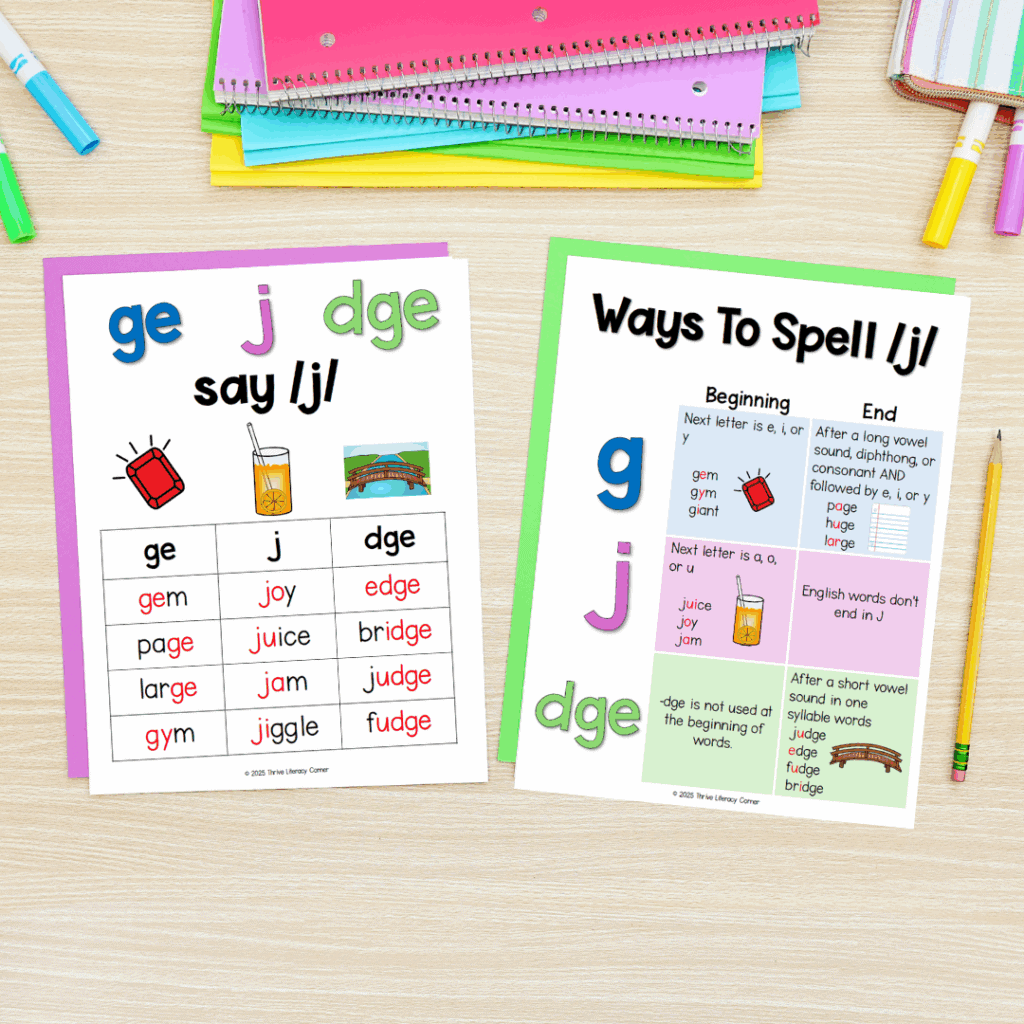
English never puts the letter j at the end of words.
Instead, we use:
- ge (cage, huge)
- dge (badge, bridge)
So /j/ is allowed at the end — but j is not.
Words that look like they end in I
When you see a word ending in i, it’s almost always a loanword spelled the way it came into English:
- spaghetti (Italian)
- sushi (Japanese)
- ravioli (Italian)
English words can end in the /ī/ sound, but they’re spelled:
- y (cry, fly)
- ie (pie, tie)
- igh (light)
So the sound is fine — the letter i just isn’t used at the end of native words.
In student-friendly terms
You can say to your class:
“English words can end with these sounds — /ī/, /ū/, /v/, /j/ — but we spell them a special way. English words don’t end with the letters i, u, v, or j.”
This keeps the teaching focused on phoneme → spelling, not memorizing weird exceptions.
Why This Pattern Exists
This pattern comes from the history of English spelling. Here’s the short teacher-friendly version you can share:
- In older forms of English handwriting, u, v, i, m, and n all looked very similar. Adding a final e helped readers tell letters apart.
- J didn’t exist as a separate letter until much later, so English never developed words ending with j.
- Native English words simply didn’t end with i or u, and that pattern carried forward as the language evolved.
- When English borrows words from other languages, those spellings don’t always follow our usual patterns.
You don’t have to go into all the historical details with kids — just frame it simply as:
“English spelling follows patterns to make words easier to read and write. These letters don’t appear at the end of English words, so we use other spellings instead.”
When to Teach This Pattern
Since this pattern is a mix of different spelling generalizations, when you teach each one will differ. Some you can teach in Kindergarten or early Grade 1, right after students learn short vowels, closed syllables, and basic spelling patterns like Floss and C/CK.
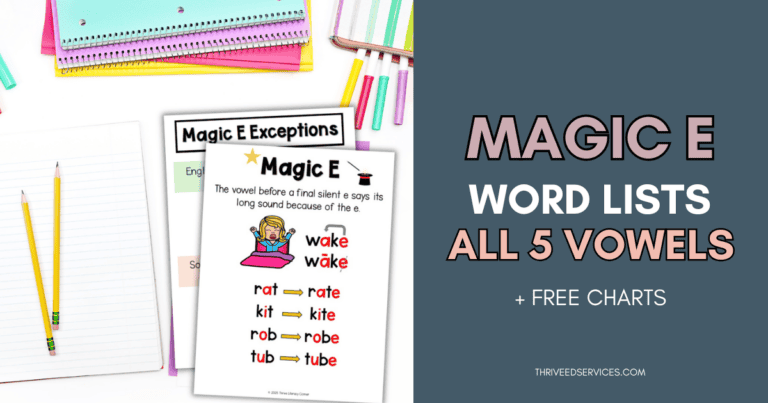
It’s especially helpful once you begin teaching silent final e, because the pattern helps explain why those words need the e at the end.

How to Teach the Pattern
Here’s a simple teaching sequence you can use during whole group or small group time:
1. Start with a Mini-Anchor Chart
Write these words on the board in two columns:
Column 1: The ending sounds
cry
blue
gave
page
Column 2: The spelling patterns
- cry → y
- blue → ue
- gave → ve
- page → ge
Ask:
“What do you notice about how these words END?”
Guide them to see that English uses different spellings for certain final sounds, and that we don’t use the letters i, u, v, or j at the ends of words.
2. Teach the Four “No-Ending Letters” with Examples
Walk through them one by one. Or you can focus on just the one sound you are working on, for example, to explain the sight word “have” and other common related words.
For /ī/:
- cry
- fly
- my
- pie
- tie
Explain:
“The /ī/ sound can go at the end of a word, but we spell it with y or ie, not i.”
For /ū/:
- blue
- clue
- few
- chew
Explain:
“The /ū/ sound can end a word, but we spell it with ue or ew, not u.”
For /v/:
- have
- give
- love
Explain:
“English words don’t end with the letter v, so we use ve.”
For /j/:
- cage
- huge
- bridge
- badge
Explain:
“English words don’t end with j. We spell /j/ at the end with ge or dge.”
This keeps the teaching SOUND-based, not rule-based.
3. Contrast Correct and Incorrect Spellings
Write pairs on the board:
- hi → high
- cri → cry
- blu → blue
- tru → true
- hav → have
- cag → cage
- brij → bridge
Talk through why the first versions don’t look like real English words.
4. Talk About Words That Really Do End in I
Show a few examples like spaghetti and sushi.
Explain:
“These words come from other languages, so they don’t follow our usual spelling patterns.”
Kids love learning this — it makes them feel like word detectives.
5. Word Writing with Sound-to-Spelling Mapping
Say a word aloud:
- fly
- blue
- give
- cage
- few
Have students say each sound, then choose the correct ending spelling.
This builds real phonics knowledge:
hear the sound → choose the correct spelling.
6. Apply It to Reading
Use decodable text, picture cards, or word lists.
Have students:
- underline the ending spelling
- sort words by ending spelling choice
- build words using letter tiles
This is where the pattern becomes more automatic for students.
Join my list and get access to my vault of freebies, plus weekly emails with tips, new posts, and promotions!
*Most school spam filters block my emails, so please use a personal email.

Example Word Lists
Words That Use Silent E to Avoid Ending with V or U
have, give, love, live, move, save, true, blue, clue
Words Ending with GE or DGE
cage, huge, page, stage, bridge, badge, hedge, judge, edge
Loanwords Ending in I
(Teach these as “learning words.”)
spaghetti, sushi, ravioli, salami, origami, wasabi
Activities for Reinforcement
1. Word Sorts (Sound → Spelling Focus)
Give students words that end with the sounds /ī/, /ū/, /v/, and /j/, using the correct spelling patterns.
Example cards:
Final /ī/: fly, cry, pie
Final /ū/: blue, clue, few
Final /v/: have, give, love
Final /j/: cage, huge, bridge
Sort into columns based on the ending spelling:
- y
- ie
- ue
- ew
- ve
- ge
- dge
How to do it:
Students read each word aloud, identify the final sound, and place the card in the correct column.
If you want to simplify: start with just two endings at a time.
Why it works:
It helps students match the sound they hear to the spelling the pattern allows at the end of the word.
2. Build-a-Word (Choose the Correct Ending)
Give students base words missing their ending spelling.
Examples:
- fl_
- cr_
- bl_
- tr_
- hav_
- cag_
- brid_
Ask:
“What sound do you hear at the end?”
“Which spelling can we use at the end of an English word?”
Students write:
- fly
- cry
- blue
- true
- have
- cage
- bridge
Variation:
Provide multiple choice endings:
- y or ie
- ue or ew
- ve
- ge or dge
3. Highlight the Pattern
Use a decodable passage that includes the focus final ending (y, ie, ue, ew, ve, ge, dge). Have students highlight the target final ending.
Then ask:
“What do you notice about how all of these word endings are spelled?”
Why it works:
Students see the full range of spelling choices in connected text.
4. Dictation Sentences
Use short sentences that include the focus type of ending.
Examples:
- “I can fly by my blue house.”
- “She will have pie.”
- “The dog can chew the huge log.”
- “He will give the bridge a look.”
Students write, then underline the ending spelling and name the sound.

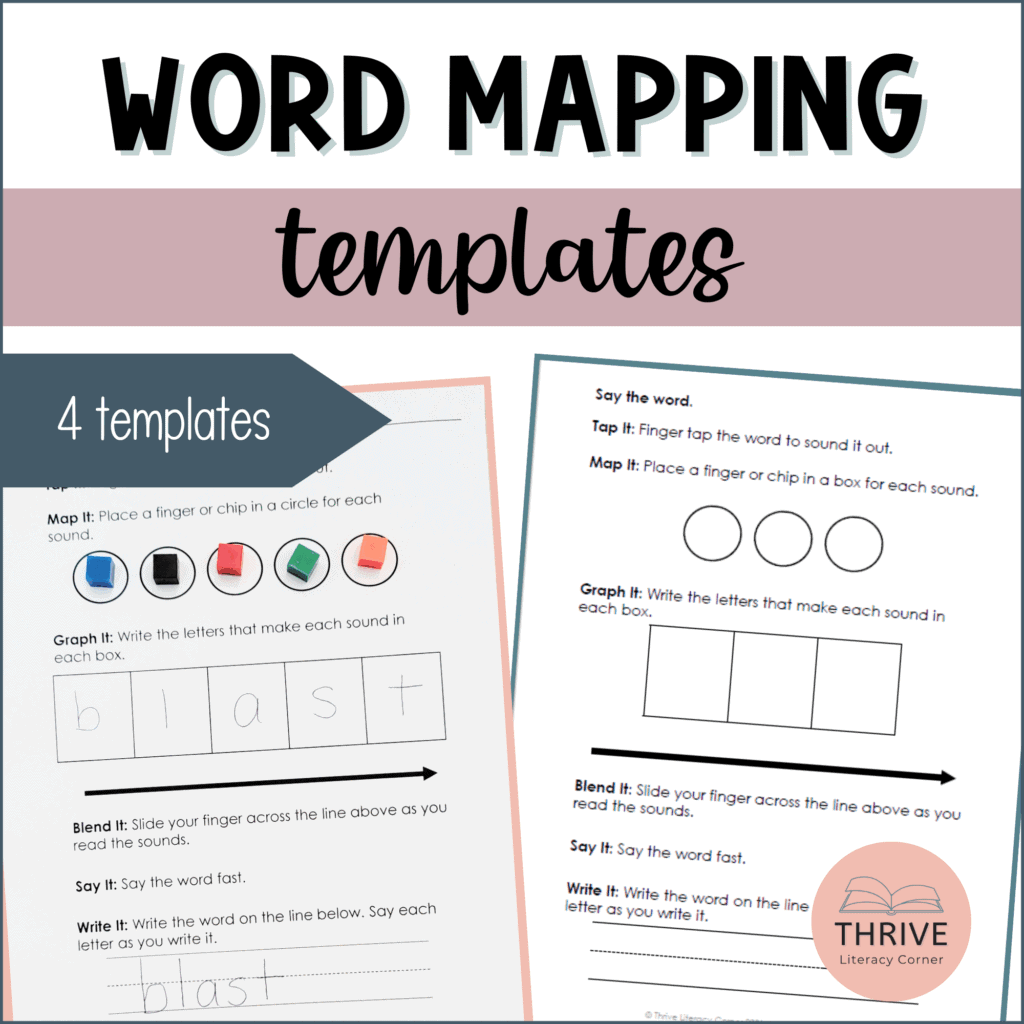
5. Phoneme–Grapheme Mapping
Say a word like bridge.
Students map /b/ /r/ /i/ /j/.
Then they write b – r – i – dge in the boxes.
This helps them understand that dge spells one sound at the end of a word.
6. Real vs. Not Real Words
Give students pairs, and ask which spelling “looks like an English word.”
Examples:
- cri → cry
- pi → pie
- blu → blue
- giv → give
- tru → true
- cag → cage
- brij → bridge
This reinforces the idea that English words can end with those sounds, but not with the letters i, u, v, or j.
7. Picture–Word Match
Use pictures representing words with the target final sound.
Examples:
- pie
- fly
- blue
- clue
- cage
- bridge
- give
Students match the picture to the correctly spelled word and say the final sound aloud.
8. Ending Spelling Hunt
Make a quick classroom scavenger hunt. Ask students to find a certain number of words with the target final ending pattern.
This works great during centers.
Connecting This Pattern to Other Phonics Skills
This pattern sets the stage for:
- Silent Final E (all jobs)
- GE/DGE pattern
- Suffix work (adding endings without breaking the spelling conventions)
- Spelling choices for the /j/ and /v/ sounds
? See the complete guide to English phonics rules here.
Final Thoughts
This pattern is simple but important. Once students know that English words don’t end in i, u, v, or j, they start to understand why we add a final e or use spellings like ge/dge. It removes a lot of guesswork and helps them build confidence in both reading and writing.
Introduce it early, make it visual, and give plenty of practice with real and nonsense words. Students pick up on this quickly because it makes sense once they see it in action.