Where Does SH Spell /sh/? The Positional Rule Teachers Need to Know

This post may contain affiliate links, and I will earn a commission if you purchase through these links. Please read the disclosure policy for more details.
Your students already know that SH spells /sh/.
That part is solid. They read ship and fish without any trouble.
But here’s the question worth asking: do they know where SH spells /sh/? And do they know what spells /sh/ when SH isn’t the spelling?
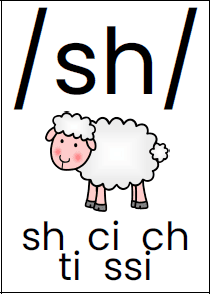
Because /sh/ is one of those sounds that gets spelled differently depending on where it falls in a word. And if students don’t have the full picture, they end up guessing – or misreading – words that should actually be decodable.
The SH Positional Rule
Here’s the rule stated clearly:
SH spells /sh/ at the beginning of a base word and at the end of a syllable.
Two positions. Let’s look at both.
At the beginning of a base word:
This is the most common place students see SH. Words like shop, shell, shine, shark, sheep, shed, share, and shoe all follow this pattern. SH is right at the front, doing exactly what students expect.
At the end of a syllable:
SH also spells /sh/ at the end of a syllable, including at the end of a word. Think fish, wish, dish, rush, push, brush, cash, splash, and flesh. In multisyllabic words, you’ll see SH at the end of the first syllable in words like wishful and worship.
A quick note: You’ll hear this called a rule, but I like to frame it as a pattern. Most of the time it works this way, but not always. When I introduce it to kids, I tell them: “This is what usually happens in English words, but there are some exceptions we’ll learn together.”
The Key Takeaway – What Happens in Syllables After the First
Here’s where it gets really important.
SH usually does not spell /sh/ at the beginning of any syllable after the first one.
So when students see a word like nation or musician, there’s no SH in sight, even though they clearly hear /sh/. That’s because in those later syllables, /sh/ is being spelled a completely different way.
Once students know that SH is a beginning-of-base-word and end-of-syllable spelling, they stop expecting to see it everywhere, and they start recognizing the other spellings of /sh/ instead.

How Else Is /sh/ Spelled? (And Why)
When /sh/ appears at the beginning of a syllable after the first one, it’s almost never spelled SH. Instead, you’ll typically see one of these four spellings.
And here’s the part that makes it click for students: most of these spellings make perfect sense when you look at the base word they came from.
ti
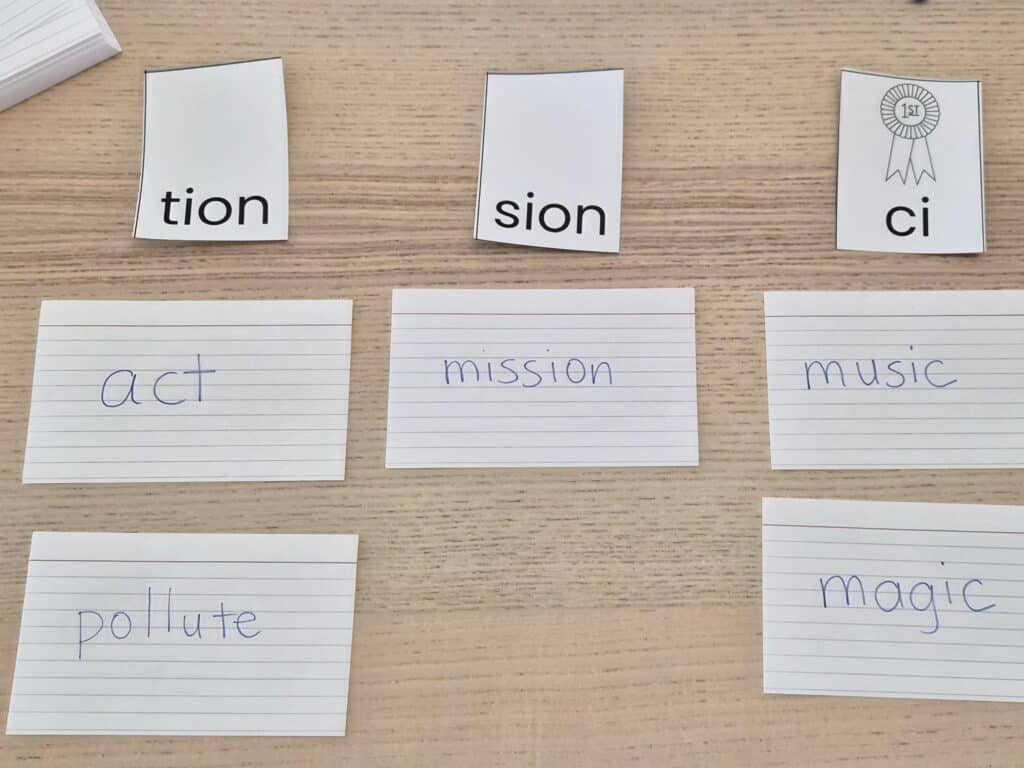
This is the most common spelling of /sh/ in later syllables. You see it in nation, action, station, fraction, and potion. The reason? These words were built from Latin base words. Look at act – add the suffix -ion and you get action. The T is part of the base word act, and the -ion ending follows it. The spelling preserves the base word. Same with collect – collection, direct – direction, and protect – protection.
ci
This spelling shows up in words like musician, magician, special, and official. Again, the base word tells the story. Music becomes musician. Magic becomes magician. The C is part of the base, and the -ian suffix follows. That’s why these words are spelled with CI, not SH.
si
This spelling appears in words like mansion, extension, and pension. Look at the base words: extend – extension, suspend – suspension, ascend – ascension. The S comes from the base (base words that end in -d, -de, or -se use the -sion suffix), and the -ion ending follows. These words weren’t spelled randomly, the spelling follows the structure of the word.
ssi
A fourth group is spelled with SSI, as in mission, passion, and discussion. The base words give it away again: discuss – discussion, express – expression, confess – confession. Two S’s in the base, plus the -ion ending, gives you SSI.
This is what makes these spellings so teachable. They aren’t arbitrary. They’re connected to the morphology of the word – the base word is preserved in the spelling, even when the pronunciation shifts.
Grab a FREE list of phonemes subscribing to my list!
*Most school spam filters block my emails, so please use a personal email.

What About Exceptions?
A few situations are worth teaching explicitly.
The -ship suffix:
The suffix -ship is the one case where SH does spell /sh/ at the beginning of a syllable after the first one. Friendship, hardship, kinship, ownership, and leadership all follow this exception. It’s worth teaching this suffix directly so students recognize it on sight.
Compound words:
Compound words can look like they complicate the rule, but they don’t.
Take sunshine. The S ends the first base word sun, and the H begins the second base word shine. SH is at the beginning of shine – a base word – so it still spells /sh/. The rule holds.
Students just need to understand that compound words are two base words joined together, each following its own spelling patterns.
A few outliers:
There are words that don’t fit the main patterns neatly – fashion, cushion, ocean, conscious. These are worth noting so students aren’t thrown when they encounter them. They’re the exception, not the rule. The main patterns cover the majority of words students will meet.
Why This Matters for Decoding and Spelling
When students have this rule clearly in their heads, their spelling improves.
When a student is trying to spell nation and they know /sh/ in a later syllable is spelled TI – not SH – they write the word correctly instead of guessing. And when they understand that the T comes from the base word act, the spelling makes even more sense.
It’s not enough to say the rule, they need to practice applying it. That’s especially true here. The positional rule for /sh/ is completely learnable. It just needs explicit teaching and repeated practice.
Three Activities to Try
These all work well in small group, intervention, or as a center. Pick one or rotate through all three depending on what your students need.
Word Sorting
Give students a set of words and have them sort by the spelling of /sh/:
SH: ship, fish, shell, wishful, worship
TI: nation, action, station, fraction, potion
CI: musician, special, social, magician
SI: mansion, pension, extension, suspension
SSI: mission, passion, discussion, confession
After sorting, connect each word back to its base where possible. Act – action. Music – musician. Discuss – discussion. That morphology connection is what makes the spelling stick.
Grapheme Drill
Hold up a Phonogram Card. Students tell you three things:
- The grapheme (the letters they see)
- The sound it makes
- The keyword image on the card
So if you hold up the SH card, they say: “SH, /sh/, sheep.” If you flip to the B card, they say: “B, /b/, ball.”
This rapid-fire drill builds automaticity. Students aren’t thinking about the connection, they’re just saying it. That’s when the pattern moves from conscious to automatic.
Blending Drill
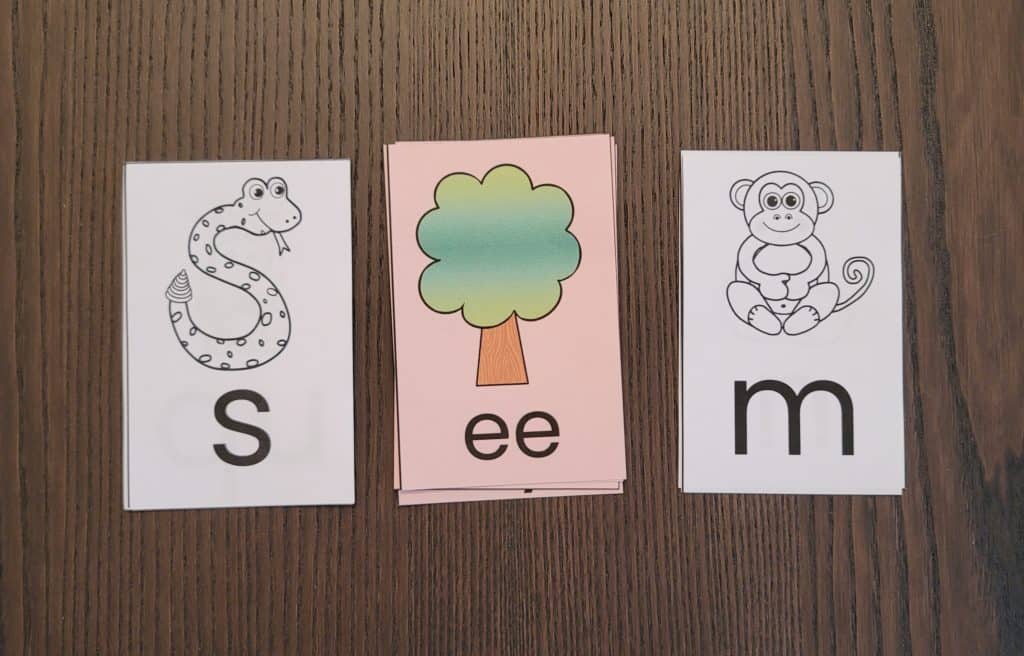
Lay out stacks of cards – start with two stacks (vowels and consonants), then move to three (consonant, vowel, consonant).
Students blend the sounds together as you flip one card at a time.
Start with two cards: for example, the cards i and p. Students blend: “ip.” Flip the p to n. Students blend: “in.” Flip the i to u. Students blend: “un.”
Then move to three-letter blends. Lay out c, a, t. Students blend: “cat.” Flip the initial consonant to b. Students blend: “bat.” Flip the vowel to o. Students blend: “bot.”
This is quick, controlled practice. Students are blending real sounds with real graphemes, not just saying sounds in isolation. And because you’re flipping one card at a time, they’re practicing flexibility and speed.

How Phonogram Cards Support This Practice
Students need more than one exposure to make any spelling pattern automatic.
Phonogram Cards give students a consistent, multisensory reference for each sound-spelling. When students can see the grapheme, say the sound, and connect it to a keyword, they retain it better. The color and keyword cues help make each spelling stick in a way that verbal explanation alone just doesn’t do.
These cards let students connect the sound /sh/ with the letters that spell it. That’s the whole point – building an automatic connection between sound and spelling so students aren’t stopping to think every time they encounter /sh/ in a word.
I use these in small group warmups, intervention, and centers. They’re especially helpful for students who struggle with remembering phonics patterns, because they give a consistent visual reference to come back to. Low-prep and easy to fit into any phonics block.
This week only, Phonogram Cards are on sale. Grab them here before the sale ends Friday 2/27.