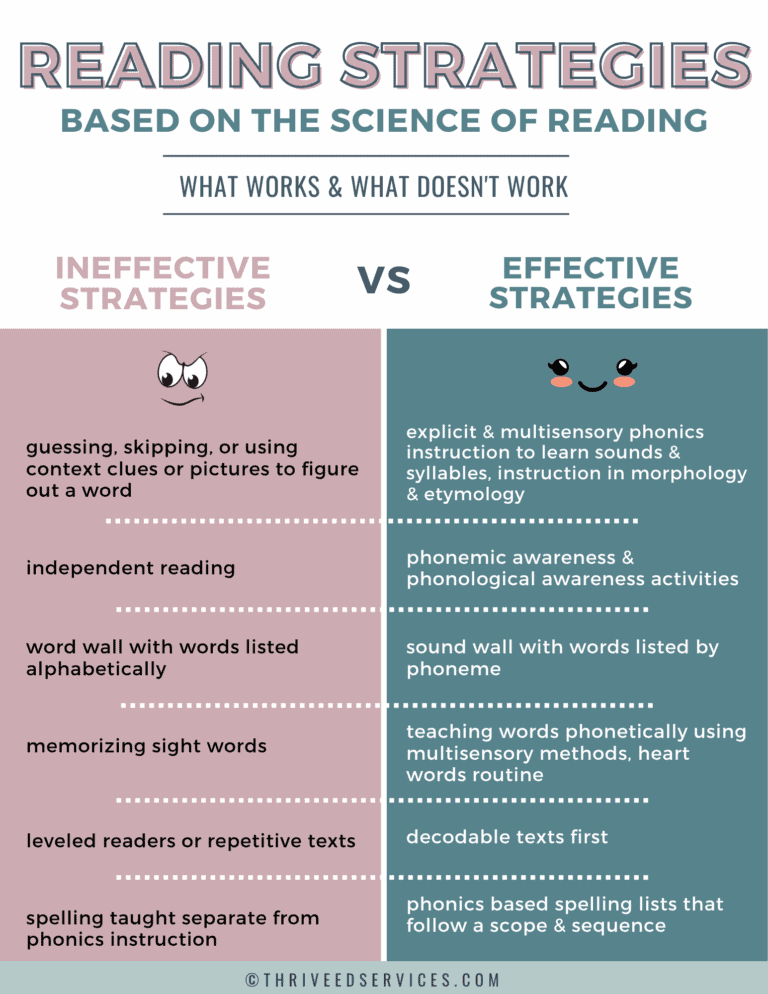
The 7 Parts of a Complete Phonics Lesson (and the 3 Yours May Be Missing)

This post may contain affiliate links, and I will earn a commission if you purchase through these links. Please read the disclosure policy for more details.
Your student reads chip, chat, and chin off the word list on Monday without hesitating. On Thursday you hand them a sentence with chip sitting in the middle of it, and they stop cold.
Nothing went wrong between Monday and Thursday. You taught the sound and they learned it. They have been able to read words with that sound in a word list.
But reading a word in a list and reading that same word inside a sentence are two different tasks, and only one of them got practiced.
This is what happens when a phonics lesson has most of its parts but not all of them. You can follow your program exactly as written, stay on pace, and still end up with students who look solid in isolation and shaky everywhere else.
So let’s talk about what a complete phonics lesson contains, and which parts are worth checking for in yours.
What Makes a Phonics Lesson Complete
A phonics lesson is a sequence, not a topic.
“We taught short a this week” describes what you covered. It doesn’t tell you what students did with it. Did they read words with the sound? Write words with the sound? Use it in a sentence they had to spell themselves? Read it inside real text?
Those are different tasks that build different things. Students can do the first one well and the last one poorly, and if your lesson stops after the first, you won’t find out for months.
Where These 7 Parts Come From
When I did my Top 10 Tools training with 95 Percent Group, they laid out what they call the Six Steps of Effective Phonics Instruction. It’s a lesson format that moves students from hearing a sound through applying it in text, and they’ve written about it publicly on their insights blog.
I count seven parts instead of six because I include the warm-up review at the start. They treat it as the opening rather than a numbered step. Same sequence, I’m just counting the front end.
The research behind why these pieces matter isn’t new. Linnea Ehri’s work on orthographic mapping shows that reading and spelling draw on the same underlying knowledge, which is why writing words belongs inside a reading lesson. Tim Rasinski’s fluency research explains why accurate decoding isn’t the finish line. A student who reads every word correctly at a crawl is spending so much effort on the words that there’s nothing left for meaning.
The 7 Parts of a Complete Phonics Lesson
1. Review
A quick warm-up. Phonemic awareness practice plus a run through previously taught sound-spellings. Flash the cards, students say the sound and keyword. Two or three minutes, not ten. Phonogram card routines work well here, and my phonogram cards are set up for exactly this.
2. Teach the new concept
Explicit introduction of the new sound-spelling. What the sound is, how the mouth makes it, what letter or letters spell it. You’re showing and explaining, not asking students to notice a pattern on their own.
3. Read words
Students identify the new pattern in the word, then decode it. Touch each grapheme, say the sound, sweep and blend. Four or five words is plenty.
4. Write words
Now they spell words containing the pattern, usually through sound-spelling mapping. Say the word, segment the sounds, write a grapheme in each box. This is where the pattern gets locked in.
5. Practice dictation
You say a sentence, students write it. They have to hold the sentence in memory, spell each word, and manage capitals and punctuation at the same time. Harder than it sounds and worth every minute.
6. Practice fluency
Repeated practice with words, then phrases, then sentences. You’re moving students from correct to automatic, and automatic is what frees up attention for comprehension.
7. Transfer to text
Students read the pattern inside a decodable passage. This is the part that tells you what they can really do.
3 Parts That May Be Missing From Your Lesson
Almost every phonics program includes steps one through three. Where things get thin is the back half, usually for the same reason. The lesson ran long.
Writing words. This one goes because it looks like spelling, and spelling feels like a separate subject with its own time slot. It isn’t. Encoding a word requires students to produce the spelling from memory, which is harder and tells you more than recognizing it on a page. A student who reads chop correctly but writes chp has shown you exactly where instruction needs to go.
Fluency practice. This one goes because it looks like extra reps on something already covered. They read the words correctly, so why do it again? Correct and automatic are different states, and only the second leaves room for meaning. When students are still working hard to decode each word, comprehension doesn’t get a turn.
Transfer to text. This one goes because the bell rings. It’s also the part that tells you the most, because word lists give students an advantage they don’t get in real text. In a list, every word contains the same pattern. Students can decode the first one and coast on the rest. In a sentence, that support disappears.
Cumulative Review Is More Than the Warm-Up
Almost everyone does the review at the top. Cards get flashed, sounds get said, and that part of the lesson is done.
Cumulative review isn’t only that opening routine, though. It’s a property of everything else in the lesson.
Look at the actual words you’re using. If you’re teaching ch and every word in the reading list, the spelling list, the dictation sentence, and the decodable passage contains ch and nothing else students have learned, then previously taught skills aren’t getting practiced anywhere. They got their two minutes at the start and then disappeared.
Compare these two dictation sentences for a ch lesson:
The chick can chat.
Chad had to chop the thin log with a chip in it.
The second one still centers ch, but it also pulls in th, short a, short i, short o, and a couple of high-frequency words. Every one of those gets a rep.
This is why a lesson can contain all seven parts and still leave students shaky. The structure is right. The content inside it is too narrow.
How to Audit Your Phonics Block in 10 Minutes
Not what the manual says. What actually happened.
- Pull last week’s lessons.
- For each day, write down what students did, not what the lesson was about. “Read 8 words,” “wrote 5 words in boxes,” “read a passage.”
- Check that list against the seven parts. Circle anything that never appeared all week.
- Now look at the words themselves. Did the reading lists, dictation sentences, and passages include previously taught skills, or only the new one?
- Pick one thing to add. Not five.
Ten minutes, and you’ll know more about your phonics instruction than a year of pacing guides will tell you.
What to Add First
If writing words is the part that’s missing, start there. Five minutes, no new materials.
Here’s the routine:
- Say the word. Students repeat it.
- Students segment the sounds, tapping or using fingers.
- Students write one grapheme per sound in boxes.
- Students read the word back and check it against what they heard.
Three words is enough. Add it to the end of tomorrow’s lesson.
What a Complete Lesson Looks Like in Practice
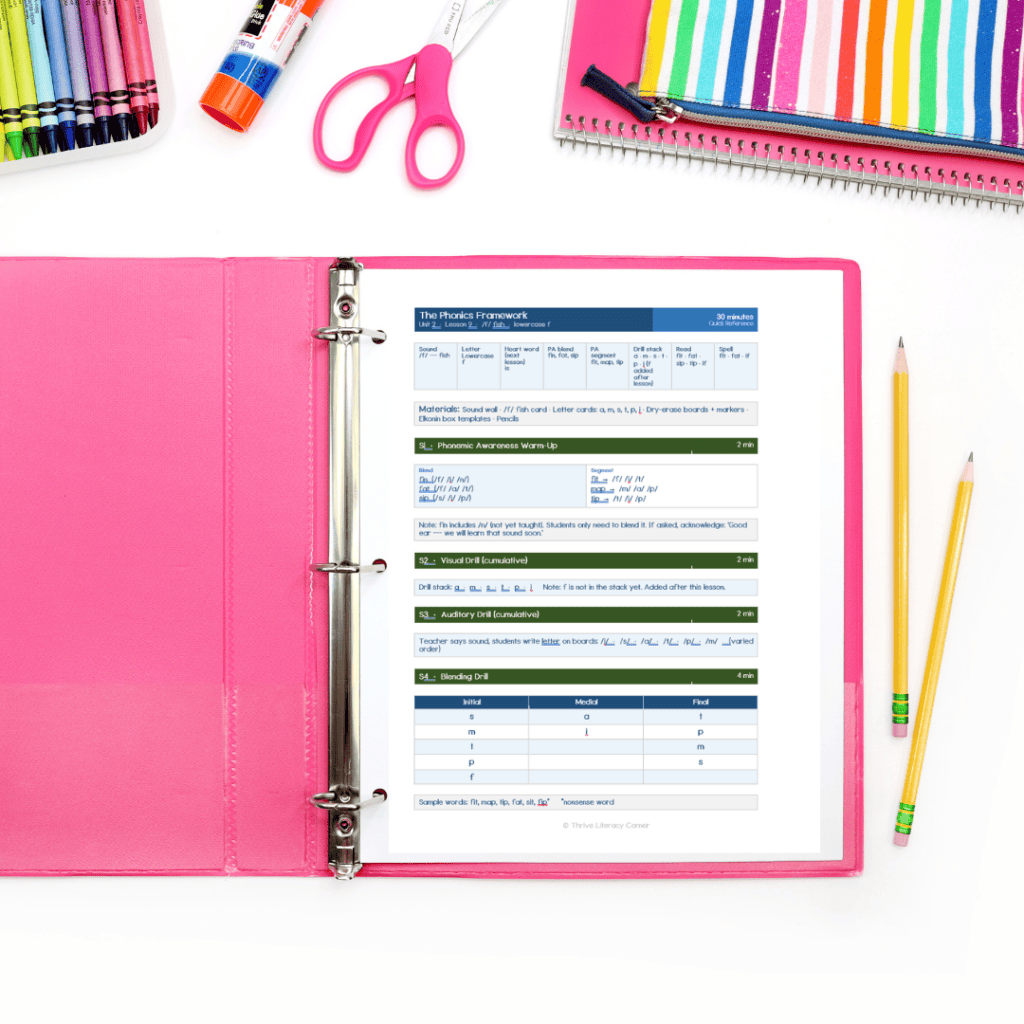
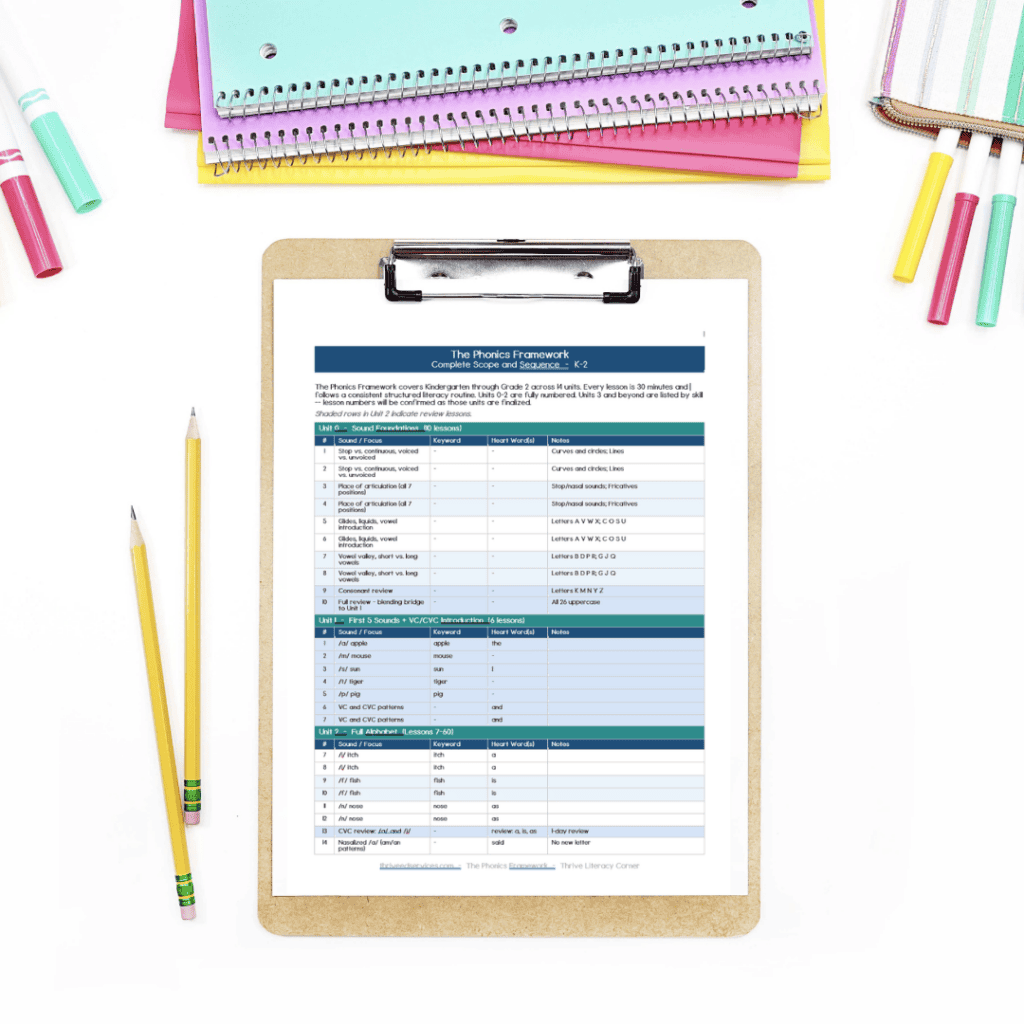
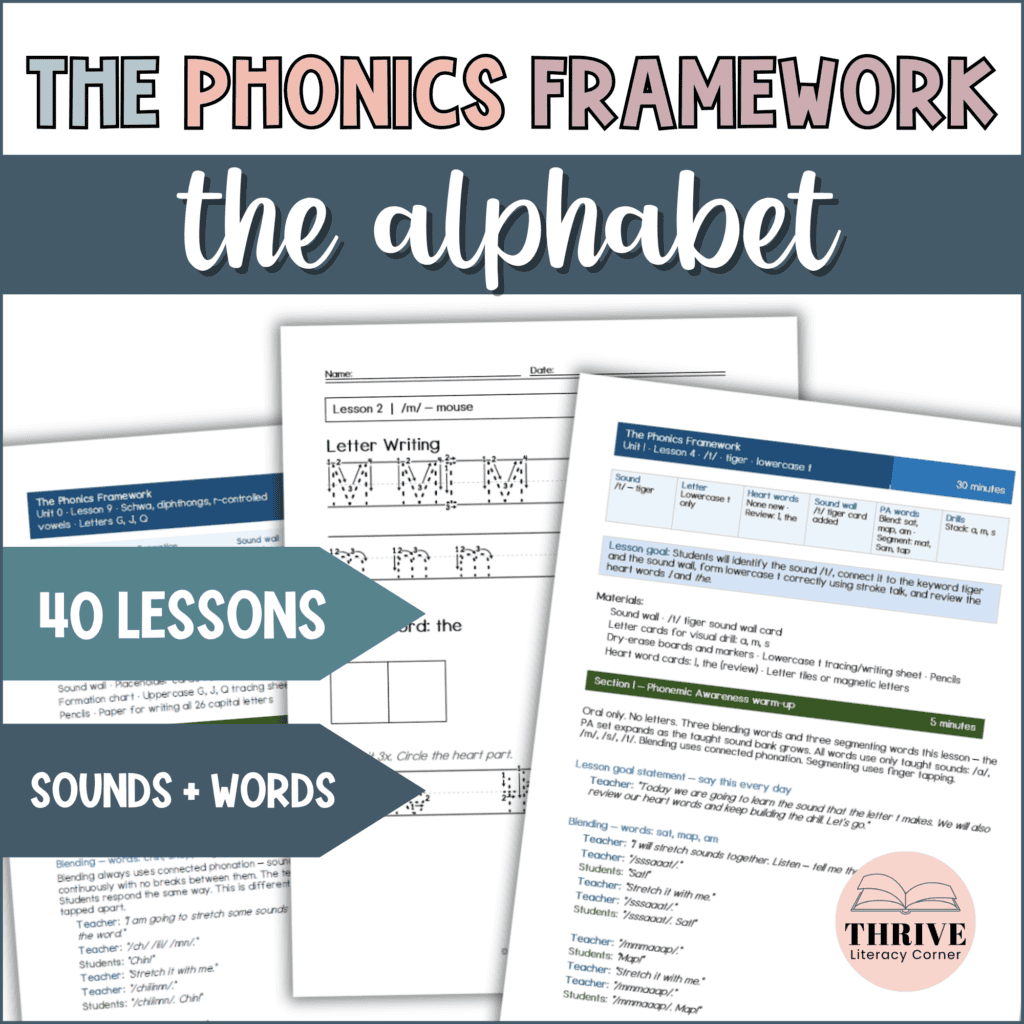
Building all seven parts into a thirty-minute lesson, with word lists that pull forward every previously taught sound, is hard to do on your own every single day. That’s why I built The Phonics Framework the way I did. Each lesson runs the full sequence, and the word control is handled so cumulative review lives in the words themselves instead of being something you have to engineer.
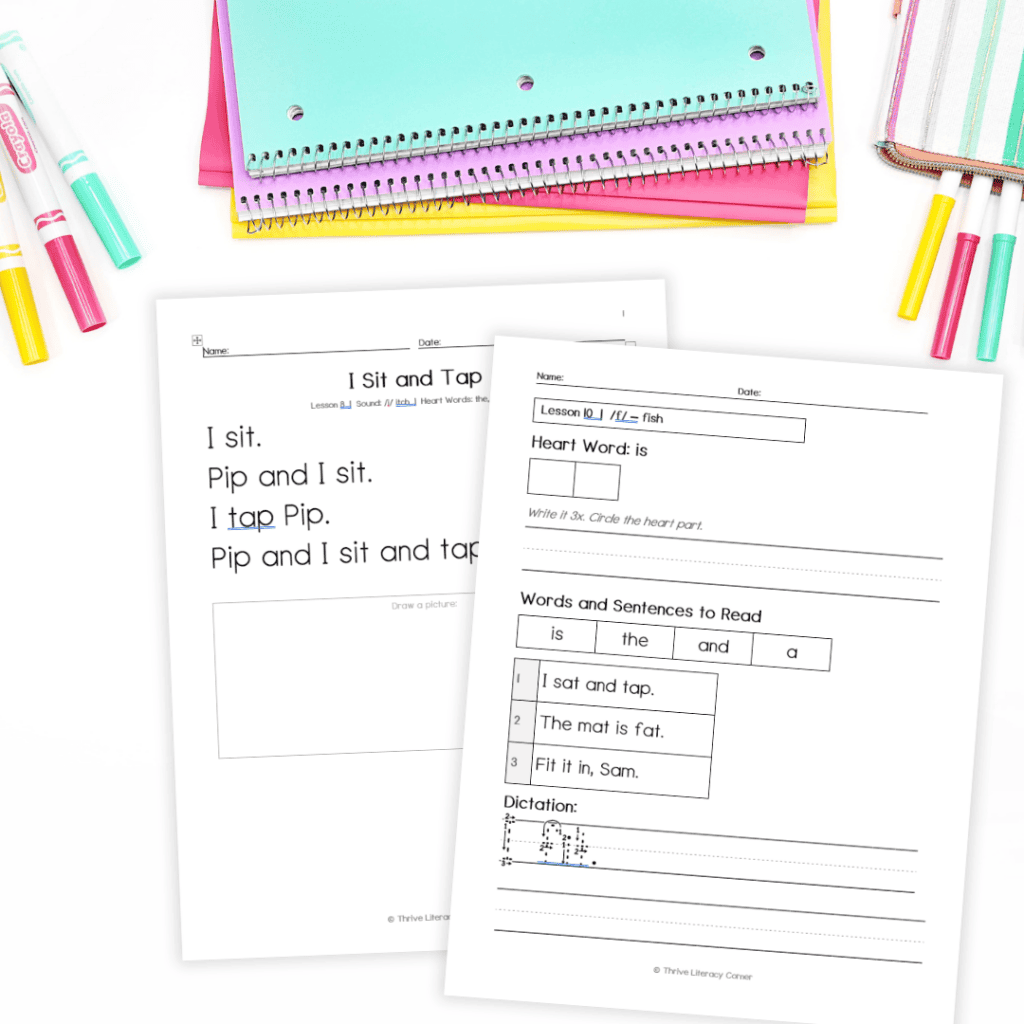
If you already have a program and just need the transfer piece, my decodable passages only use skills taught up to that point, which is what makes them usable for real transfer practice.
One Thing This Week
Run the audit. Pick the one part that never showed up, and add it to a single lesson.
You don’t have to rebuild your phonics block. Find the piece that isn’t there and put it back.
SCIENCE OF READING QUICK START GUIDE
Grab your FREE guide with the 5 tools you need to get started with SOR!
*Most school spam filters block my emails, so please use a personal email.