Is 3-Cueing Still in Your Classroom? Here’s How to Tell

This post may contain affiliate links, and I will earn a commission if you purchase through these links. Please read the disclosure policy for more details.
You’ve heard about the science of reading. You’ve made changes. Maybe you’ve swapped out some materials, added more phonics, stopped telling kids to “sound it out and skip it.”
But here’s something that doesn’t get talked about enough: 3-cueing can still be happening in your classroom even after you think you’ve let it go.
The most common ways 3-cueing shows up don’t look like 3-cueing at all. They look like reading routines. They look like classroom decorations. They look like the books you’ve been using for years.
This post breaks down what 3-cueing actually is, why it gets in the way of building real readers, and – most importantly – where it might still be hiding in your room right now.
What Is 3-Cueing, Exactly?
3-cueing is a word-reading approach built on the idea that readers use three types of cues to identify words:
- Semantic cues – Does it make sense?
- Syntactic cues – Does it sound right grammatically?
- Graphophonic cues – Do the letters and sounds match?
The theory, developed by Kenneth Goodman in the 1960s, suggested that proficient readers rely on print as little as possible, using meaning and context to anticipate words rather than decoding them fully.
The problem? That’s not actually how skilled reading works.
Eye movement research shows that good readers look at every letter when they read. And as readers get better, they rely more on the letters and sounds, not less. Struggling readers are the ones who use context and pictures as a workaround, because decoding isn’t working for them yet. (Stanovich, Cunningham, and Feeman, 1984).
In other words, we’ve been teaching the workaround as if it were the skill.
As Timothy Shanahan explains it, those other cueing systems aren’t really reading – they’re what happens when reading breaks down.
Why It Holds Readers Back
When students are taught to use meaning, pictures, or sentence structure to guess at words, they get good at guessing. Not at reading.
This matters because guessing doesn’t transfer. A student who figures out “horse” by looking at the picture on the page cannot use that same strategy to read “horse” in a chapter book with no pictures. A student who uses the first letter and context to predict words will hit a wall the moment the text gets harder or less predictable.
3-cueing shows up when teachers prompt students to figure out words they can’t read with any strategy that doesn’t ask the student to decode the word. That’s the core issue – it’s still reinforcing habits that don’t teach reading skills that will actually transfer.
The goal is for students to look at the word, process the letters and sounds, and then check if it makes sense. Not the other way around.
Where 3-Cueing Is Still Hiding in Your Classroom
This is the part most teachers don’t expect. Some of these will feel very familiar.
1. Those Cute Reading Strategy Posters
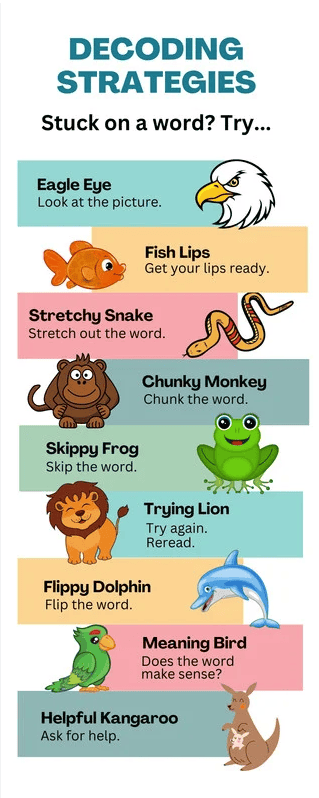
You probably know the ones. Eagle Eyes. Skippy Frog. Tryin’ Lion. Stretchy Snake. Lips the Fish.
These anchor chart characters have been staples of primary classrooms for decades. They’re adorable. They’re on Teachers Pay Teachers. And they teach students to guess.
“Eagle Eyes” tells students to look at the pictures for clues. “Skippy Frog” tells them to skip the word and come back. “Tryin’ Lion” encourages trying different sounds, which sounds phonics-adjacent, but without explicit decoding instruction, it’s still guessing with effort.
None of these strategies direct students to fully decode the word using what they know about letters and sounds. When a student gets stuck, the answer should be: look at the word, use your phonics knowledge, and work through it. Not: look at the picture, skip it, or try to guess from context.
If those posters are still on your wall, it’s time to take them down.
2. Predictable and Leveled Books
Predictable books – the ones where every page follows a pattern like “I see a red apple. I see a blue ball.” – feel like reading support, but they’re not.
When the sentence structure is identical on every page and only one word changes, students don’t need to read. They can use the picture and the pattern to guess the last word correctly almost every time. And they’ll look like they’re reading fluently.
I see this a lot – teachers giving out “decodable” text that is not truly controlled, and students may still be using 3-cueing to read those books without anyone realizing it.
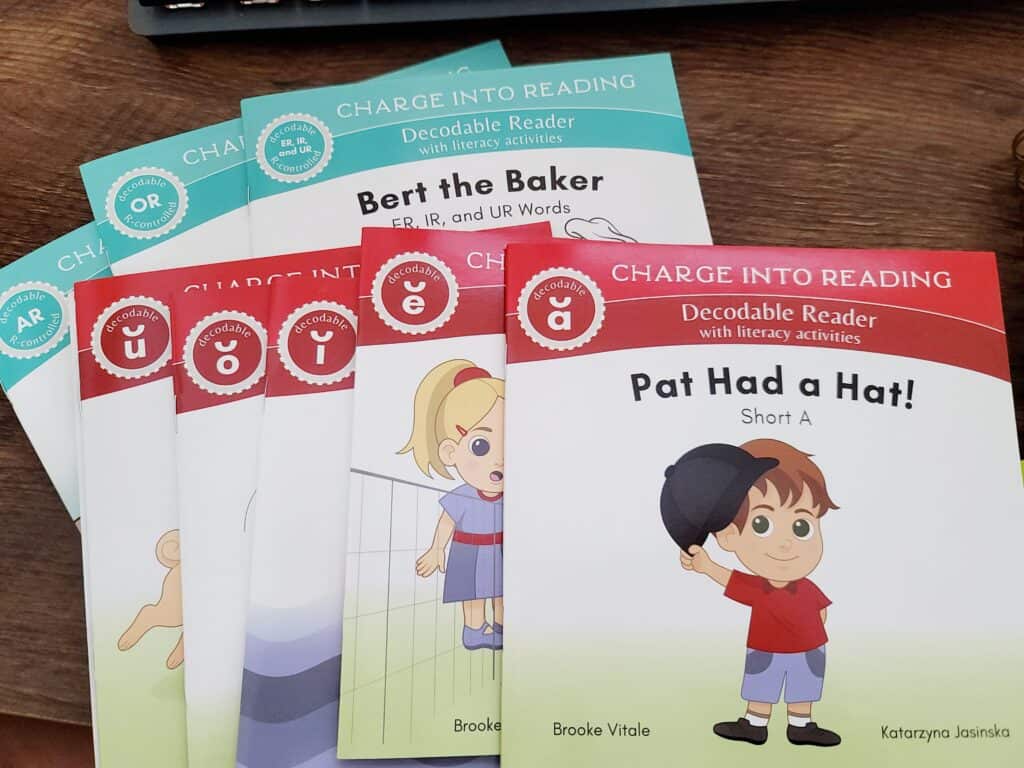
A truly decodable book only contains words built from phonics patterns students have already been taught, plus a small number of pre-taught irregular words. If a student can “read” the book by looking at pictures and following patterns, it’s not doing the decoding work.

3. Traditional Sight Word Activities
Flash cards. Rainbow writing. Tracing. Stamping. If the method relies on students memorizing the visual shape of a word, it’s a 3-cueing habit dressed up as intervention.
Traditional sight word instruction treats words like logos – something you recognize by how it looks, not by how it’s spelled. That approach works fine for some high-frequency words, but it doesn’t build the kind of word knowledge students need to read fluently across texts.
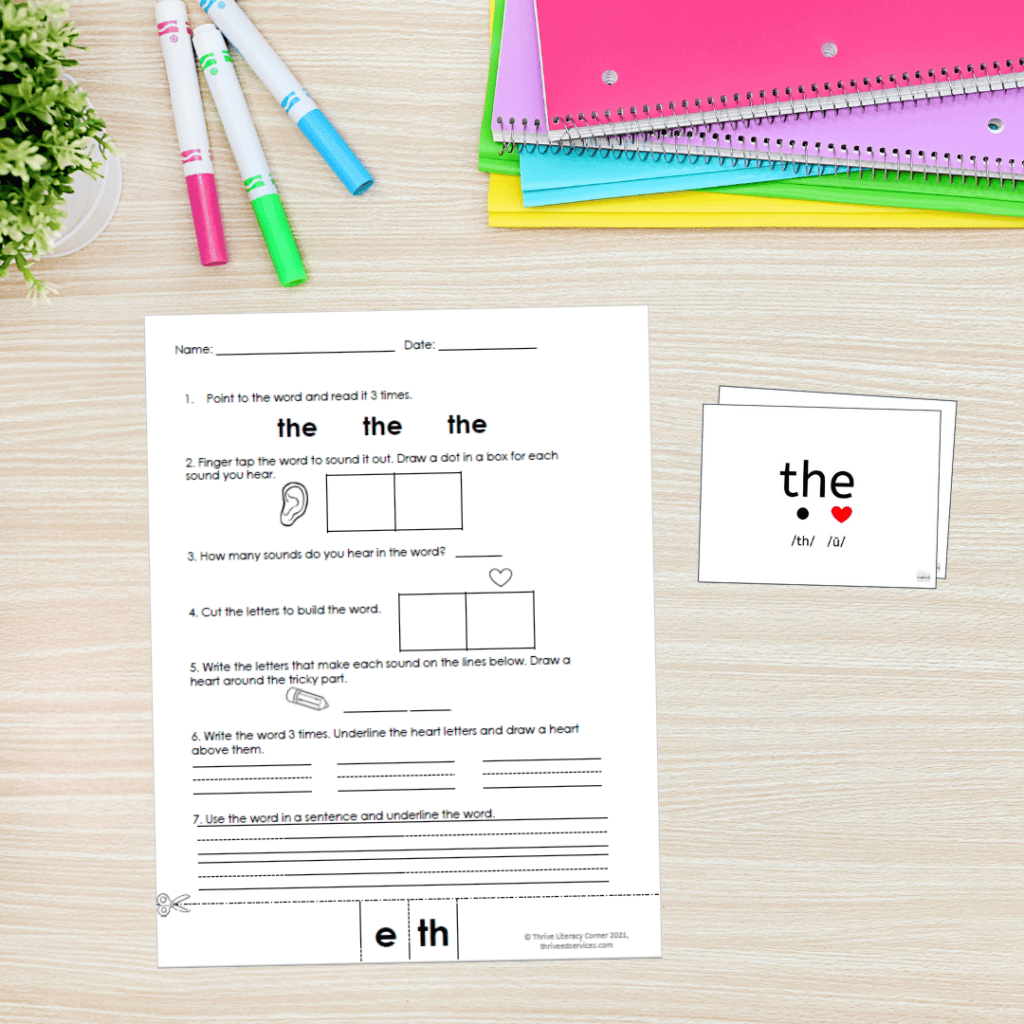
The research-backed alternative is heart word instruction – teaching students to map the sounds in a word to the letters, identify which parts are phonetically regular and which parts are the “heart” (the irregular part to memorize), and say the word while tracking through it. This builds real word knowledge, not just visual memory.

4. Letter Shape Boxes (Word Configuration Boxes)
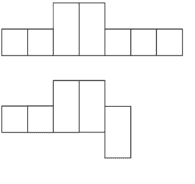
These are the boxes drawn around words to show their tall-letter, short-letter, and below-the-line shape. Students then match words to their shapes to help identify them.
The idea is that the outline of a word gives a visual cue to help remember it. And that is exactly the problem.
Readers should be looking at the letters inside the word, not the shape around it. When students learn to use shape as a reading strategy, they’re being trained to pay attention to the wrong thing. It’s a visual memory trick, not a decoding skill. It does not transfer.
Simple Swaps to Try Instead
You don’t need to overhaul everything at once. Start with what’s in front of you.
Replace the strategy posters with a simple decoding routine your students learn and use consistently. Something like: “Look at the word. Say each sound. Blend it. Check it.” Make that the habit.

Audit your decodable books. Check whether the words in the books match what your students have actually been taught. If a student is in week 3 of phonics instruction and the “decodable” book has words like “light” and “could,” it’s not decodable yet for that student.
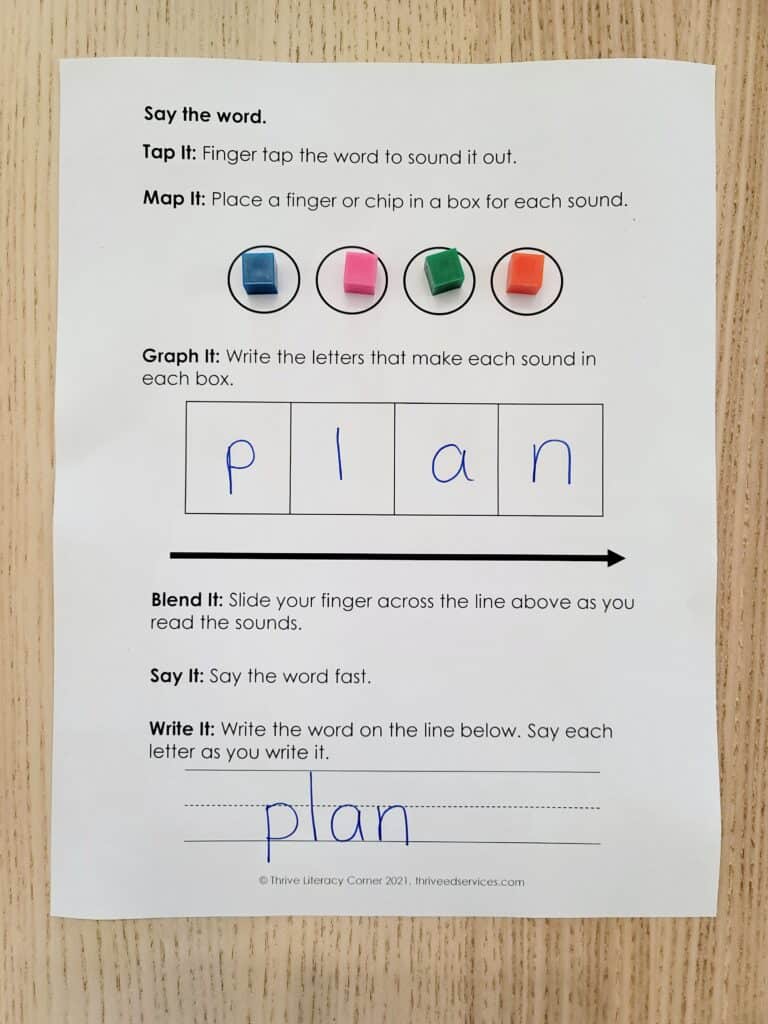
Shift sight word practice to heart word instruction. Instead of flash cards, teach students to map the word: say it, count the sounds, match sounds to letters, and identify the tricky part. This takes a few more minutes up front but builds lasting word knowledge.
Ditch the configuration boxes entirely. Replace them with word mapping, sound boxes, or any activity that requires students to look at and process the actual letters in the word.
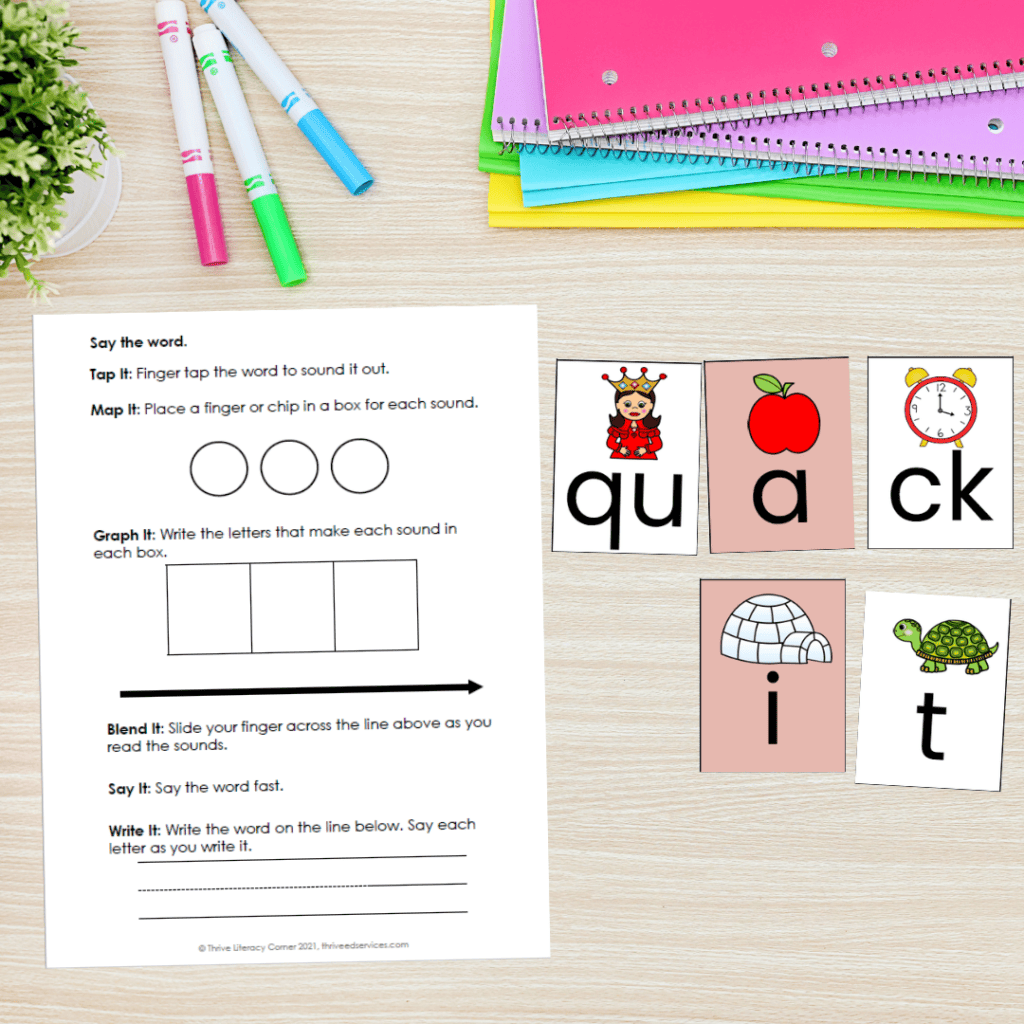
These swaps aren’t about doing more. They’re about making sure the time you’re already spending on reading instruction is actually building readers.
One More Thing Worth Saying
If you see yourself in any of this, that’s okay. These materials and methods were everywhere. They were in your teacher prep programs, your classroom libraries, your professional development. You weren’t doing something wrong – you were doing what you were taught.
The goal now is just to keep updating the practice as the knowledge grows.
And if you want a quick reference for explicit decoding strategies to use when students get stuck on words, grab my free Decoding Strategies Bookmarks inside my SOR Quick Start Guide below. They’re classroom-ready, evidence-based, and a lot more useful than Skippy Frog.
SCIENCE OF READING QUICK START GUIDE
Grab your FREE guide with the 5 tools you need to get started with SOR!
*Most school spam filters block my emails, so please use a personal email.

References
- Shanahan, T. (2024, November 16). Three-cueing and the law. Shanahan on Literacy. https://www.shanahanonliteracy.com/blog/three-cueing-and-the-law
- Stanovich, K. E., Cunningham, A. E., & Feeman, D. J. (1984). Relation between early reading acquisition and word decoding with and without context: A longitudinal study of first-grade children. Journal of Educational Psychology, 76(4), 668-677. https://doi.org/10.1037/0022-0663.76.4.668
- Goodman, K. S. (1967). Reading: A psycholinguistic guessing game. Journal of the Reading Specialist, 6(4), 126-135.