Teaching the QU Phonics Rule – What Most Programs Miss

This post may contain affiliate links, and I will earn a commission if you purchase through these links. Please read the disclosure policy for more details.
You’ve probably said it a hundred times: “Q always needs a U.”
And it’s true. But if that’s where the lesson ends, your students are memorizing a fact without understanding a function, and that gap matters more than most phonics programs will tell you.
Here’s the complete version of the rule: The letters Q and U work together to spell /kw/.
That one sentence changes everything.
Why “Q Needs U” Is Not Enough
When we teach “Q needs U” as a standalone fact, kids learn that these two letters belong together. What they don’t learn is why or what those letters are doing together.
Most students walk away thinking U is doing its usual vowel job. It isn’t.
In the qu pattern, U is not functioning as a vowel at all. It’s part of a consonant digraph team. It is not representing its own vowel sound. Instead, Q and U are working as a unit to produce the consonant blend /kw/, the same sounds you hear at the start of quack, quit, and quiz.
That distinction is not just a nerdy phonics detail. It actually matters for how students read, spell, and understand syllable patterns.
If a student thinks U is acting as a vowel in quiz, they’re going to have a harder time identifying the vowel in that syllable, which is the I, not the U. That confusion compounds over time.
What to Say Instead
You don’t have to overhaul your whole lesson. You just need one improved sentence:
“The letters Q and U work together to spell /kw/.”
You’re still communicating that Q and U go together. But now you’re also communicating what they’re doing, and you’re removing the implication that U is acting as a vowel.
Explicit, systematic instruction isn’t just about what we teach. It’s about teaching it with enough precision that kids understand the function of what they’re seeing.
Make This Rule Hands-On
If you want your students to really internalize the /kw/ pattern, they need to do something with it, not just hear it.
That’s where word mapping comes in.
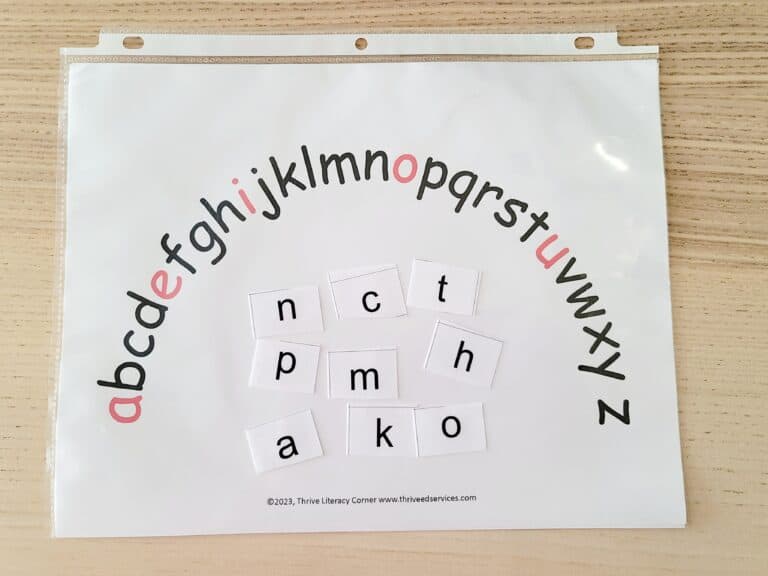
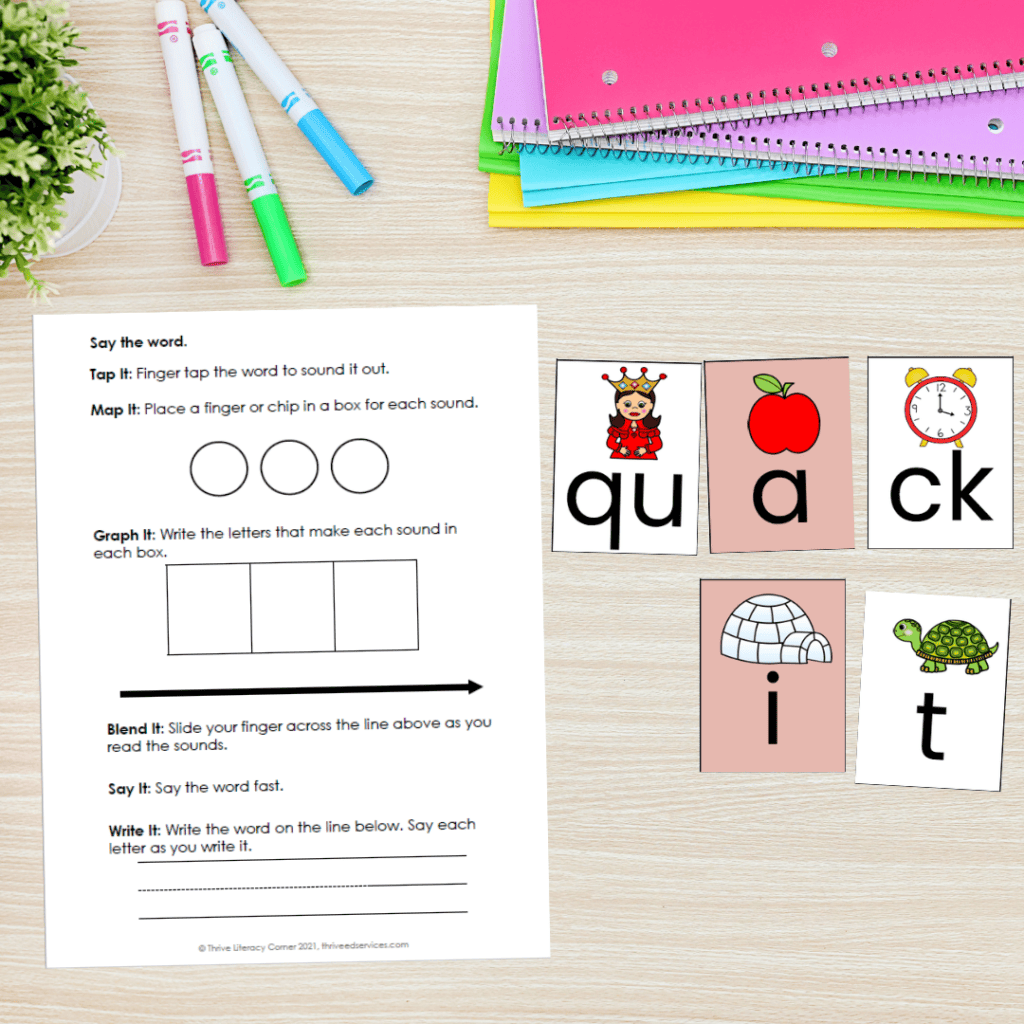
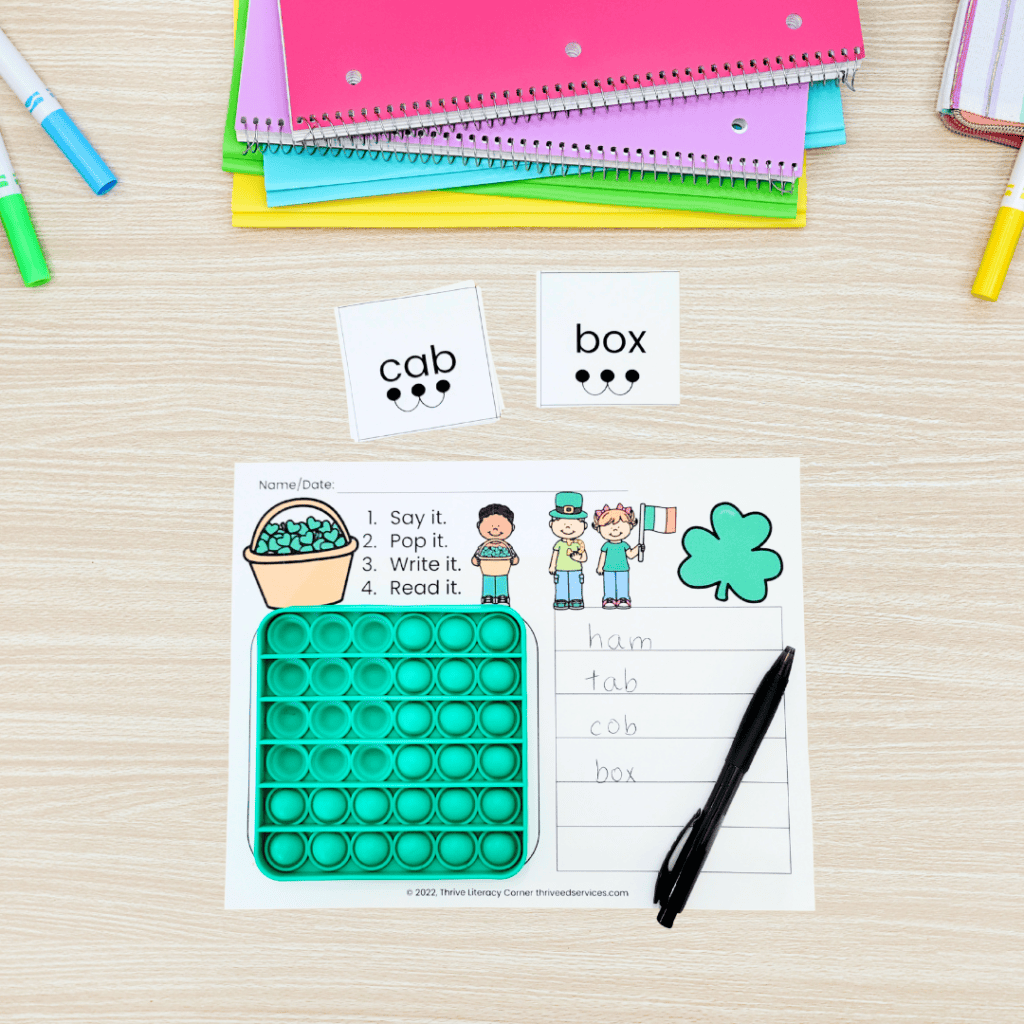
My Word Mapping Templates are designed for exactly this kind of practice. Students map words phoneme by phoneme, which makes it impossible to gloss over the U-is-not-a-vowel piece. When they push a sound for each phoneme, they feel the difference.
They’re structured, aligned to exactly the kind of explicit instruction we’re talking about here and come in seasonal options too!
Grab the Spring Pop-It Word Mapping Templates here
Why U Is Not Acting as a Vowel Here
Let’s get a little deeper, because this part matters.
In English spelling, we have vowels and consonants, and part of what makes phonics instruction strong is teaching students what role each letter is playing in a word.
In the qu pattern, the U is part of a consonant digraph. It is contributing to the /kw/ sound alongside Q, but it is not representing a vowel sound on its own. This means:
- The U in quit is not the vowel. The I is.
- The U in quick is not the vowel. The I is.
- The U in queen is not the vowel. The EE is.
When students understand this, they can identify the real vowel in a syllable, which supports everything from syllable division to vowel pattern identification later on.
This is the kind of rule clarity that separates rote memorization from actual phonics understanding.
When the Rule Does NOT Apply
Now, a brief note on exceptions.
There are a handful of loanwords in English where Q appears without U – words like Qatar, qigong, and a few others borrowed from other languages. These are edge cases, not patterns.
You don’t need to spend significant lesson time on them with early readers. But if an older student asks, or you’re teaching upper grades, it’s a reasonable note to add: “In most English words, Q and U always work together. There are a few words borrowed from other languages where Q appears alone, but we won’t see those in our reading for a while.”
Knowing the boundary of a rule is part of teaching the rule completely.
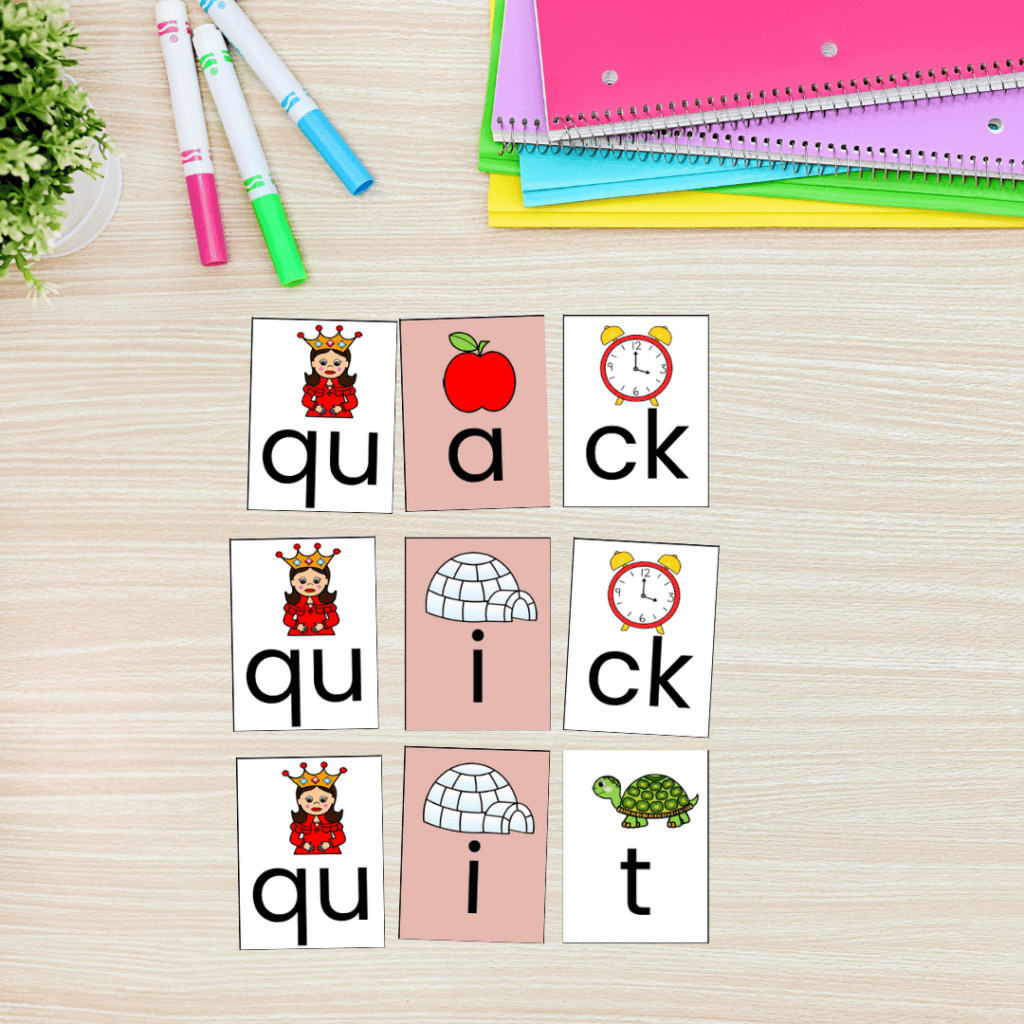
Grab the grapheme cards here
A Mini-Lesson Script for Teaching This Well
Here’s how you can introduce or revisit this pattern in just a few minutes:
Opening: “Today we’re learning how Q and U work together. These two letters always appear as a team in English words, and together they spell /kw/. Let me show you what I mean.”
Modeling: Write quack, quit, and quiz on the board. Point to the qu in each word and say: “Every time I see qu, I know those two letters are working together to spell /kw/.”
Word Mapping: Map one word together with students. For quit: /kw/ – /i/ – /t/. Ask students: “Where is the vowel in this word?” Guide them to identify the I.
Connected Text: Read one or two sentences together that include qu words. Have students identify qu and name the real vowel in each word.
Dictation: Dictate: quit, quick. Have students write the words and then identify the vowel in each.
That’s a complete, explicit lesson on this pattern – and it takes about 10 minutes.
You can also show the video below to your students .

The Bigger Picture: Teach the Rule, Not Just the Chant
“Q needs U” is a chant. It’s memorable, but that isn’t the same as understandable.
When I see phonics materials labeled Science of Reading aligned, I look closely at whether the instruction is actually explicit – whether it explains what letters are doing, models step-by-step each task, provides application and feedback, and is not just teaching things in random order. A lot of programs fall short there.
You have to know what to look for, actually.
Teaching the qu pattern completely means:
- Naming what the letters do together (/kw/)
- Clarifying that U is not acting as a vowel
- Helping students identify the true vowel in the syllable
- Acknowledging the edge cases briefly
And when your instruction is complete, your students don’t just memorize, they understand. That’s when reading and spelling start to click in a way that actually sticks.
Ready to Build a More Complete Phonics Routine?
If you’re looking for a way to bring this kind of structured, explicit practice into your daily lessons without spending hours planning it yourself, the Thriving Readers Starter Kit was built for exactly that.
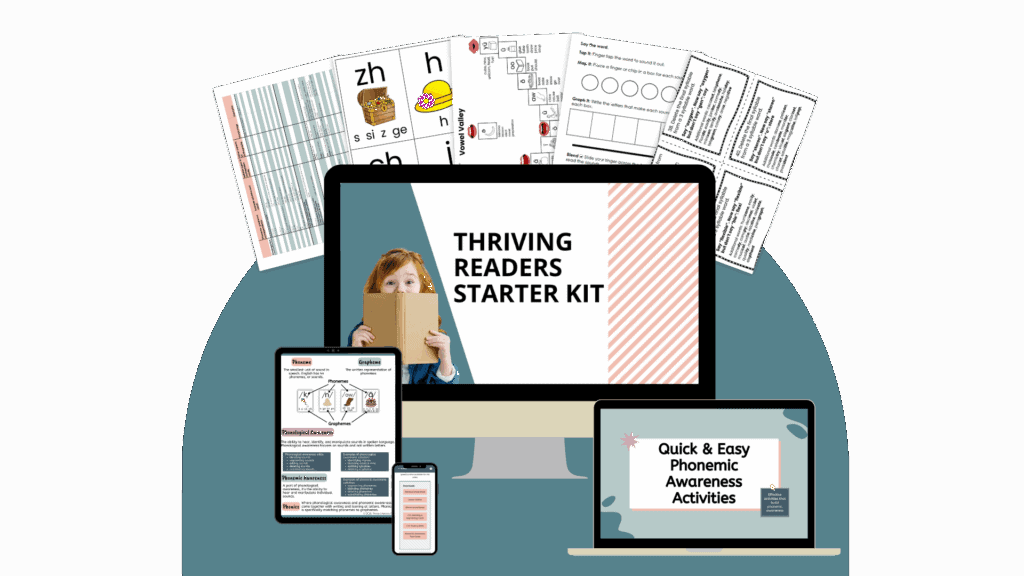
It includes training videos, a custom bot to help you build routines, and a full set of resources that work together, so you’re not piecing things together from a dozen different places. It saves you time and gives your instruction the coherence it deserves.
👉 Check out the Thriving Readers Starter Kit
Teaching the full rule isn’t about making phonics more complicated. It’s about giving your students the clarity they need to actually use what they learn.
And you’re already doing the right thing by looking for that.
Want more explicit phonics instruction tips like this? Subscribe to the Thrive Literacy Corner newsletter for weekly strategies delivered straight to your inbox.
Join my list and get access to my vault of freebies, plus weekly emails with tips, new posts, and promotions!
*Most school spam filters block my emails, so please use a personal email.